
Gyeongju is one of Korea’s most rewarding cities for history and culture, but a good trip depends on planning the sights in the right order. Many highlights around the historic center are easy to combine, while places such as Bulguksa Temple, Seokguram Grotto, and the Bomun area require extra travel time.
This Gyeongju travel guide is for first-time visitors who want a practical plan without turning the trip into a checklist. It covers how many days to stay, how to get there, how to travel around without a car, which sights fit naturally together, where to stay, and how to build a realistic one- or two-day itinerary.
- Quick Answer: Planning Your First Trip to Gyeongju
- How Many Days Do You Need in Gyeongju?
- How to Get to Gyeongju
- Getting Around Gyeongju Without a Car
- Best Things to Do in Gyeongju, Grouped by Area
- Gyeongju 1-Day vs 2-Day Itinerary
- Where to Stay in Gyeongju
- Best Time to Visit Gyeongju
- Practical Tips for Foreign Visitors
- Gyeongju Travel FAQ
- Plan Your Gyeongju Trip Around Areas, Not Checklists
Quick Answer: Planning Your First Trip to Gyeongju
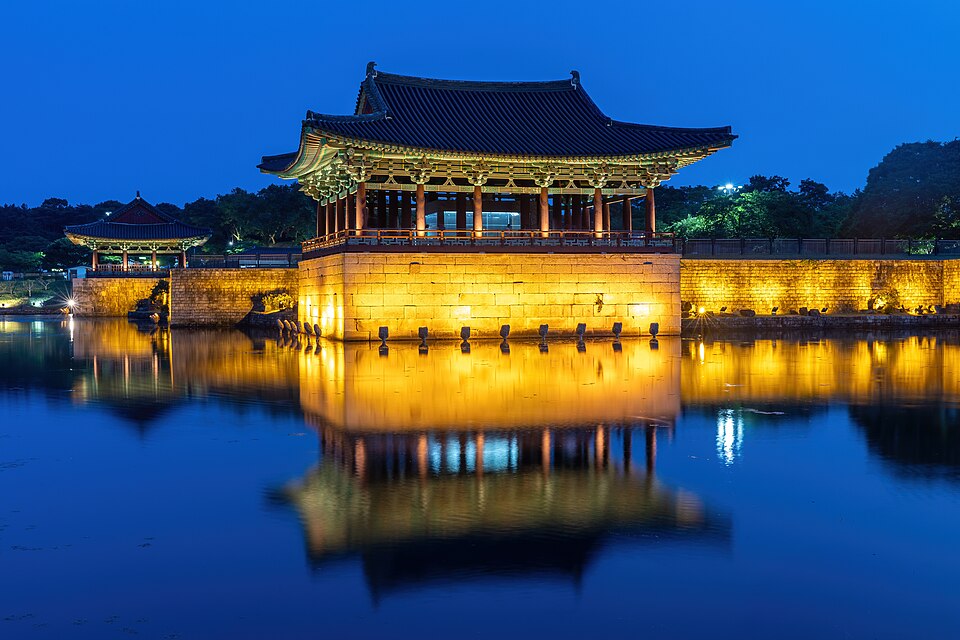
For most first-time visitors, two days in Gyeongju is the sweet spot. One day is enough for a focused trip around the historic center, but staying overnight gives you time for places farther out and lets you see landmarks such as Donggung Palace and Wolji Pond or Woljeonggyo Bridge after dark.
- Best trip length: 2 days for a first visit
- Day trip: Possible, especially from Busan, but you will need to limit the number of sights
- Car needed: No. Many major attractions can be reached by walking, local buses, or taxis
- Best area for first-time visitors: Around the historic center and Hwangnidan-gil for easy access to restaurants and several major sights
- Best planning strategy: Group attractions by area instead of crossing the city repeatedly
Gyeongju looks compact on a map, but its major sights are not all in the same neighborhood. Planning by area saves time and makes a short visit much easier.
How Many Days Do You Need in Gyeongju?
How long you need depends less on the number of attractions and more on how far you want to travel beyond central Gyeongju.
One Day: Focus on the Historic Center
A one-day trip works best if you stay around the historic center. Daereungwon Ancient Tomb Complex, Cheomseongdae, Woljeonggyo Bridge, the Gyeongju National Museum, and Donggung Palace and Wolji Pond can be combined into a relatively efficient route.
If you are visiting Gyeongju as a day trip from Busan, avoid trying to add every major attraction outside the center. Spending too much time in transit can turn a short visit into a rushed checklist.
Two Days: Add Temples and an Evening in Gyeongju
With two days, you can separate the historic center from attractions farther away. This makes it much easier to include Bulguksa Temple and Seokguram Grotto while still having time for the central sights, Hwangnidan-gil, and an evening walk around Gyeongju.
A two-day stay also gives you more flexibility if you prefer slower sightseeing rather than moving directly from one landmark to the next.
Three Days or More: Explore Beyond the Main Sights
A third day becomes worthwhile if you want to explore places such as Yangdong Folk Village, Bomun Tourist Complex, Namsan, or Gyeongju’s eastern coast. These areas are more spread out and are difficult to combine efficiently with the main historic sights on a short first visit.
For most travelers, you do not need to see every historic site in Gyeongju. Choosing a few areas that match your interests usually makes for a better trip than trying to cover the entire city.
How to Get to Gyeongju
Gyeongju is easy to reach from both Seoul and Busan by high-speed train or bus. The best option depends on whether you prioritize the fastest journey or a more convenient arrival point.
| From | Transport | Approx. travel time | Best for |
| Seoul | KTX to Gyeongju Station | About 2 hr 10 min | Fastest option |
| Seoul | Express bus | About 3 hr 35 min | Travelers who prefer a direct bus journey |
| Busan | KTX to Gyeongju Station | About 30 min | Fastest option |
| Busan | Express bus | About 50 min | An easy alternative to the train |
From Seoul to Gyeongju
For most travelers coming from Seoul, KTX is the simplest and fastest option. Direct high-speed trains run from Seoul Station to Gyeongju Station, with the journey taking around two hours and ten minutes on many services.
If this is your first time using Korea’s high-speed rail, our KTX Booking in Korea guide explains how to book, pay with a foreign card, and handle common booking problems.
An express bus is slower but can still be useful if the departure time fits your itinerary better. Buses from Seoul Express Bus Terminal take roughly three and a half hours.
For a full comparison of KTX and express buses, including current fares, arrival points, booking options and day-trip advice, see our Seoul to Gyeongju guide.
Official KORAIL Train Reservation
From Busan to Gyeongju
Busan is close enough that Gyeongju works as either a day trip or an overnight stop. KTX services from Busan Station can reach Gyeongju Station in about 30 minutes, while an express bus from Busan Central Bus Terminal takes about 50 minutes.
If you are already staying near Busan Station, the train is usually the most straightforward choice. If your accommodation is closer to the northern part of Busan or the bus terminal, compare the full door-to-door journey rather than choosing by travel time alone.
Gyeongju Station Is Not in the Historic Center
One detail catches many first-time visitors off guard: Gyeongju Station is outside the main historic center. After arriving by KTX, you still need a local bus or taxi to reach areas around Daereungwon, Hwangnidan-gil, and the central sightseeing district.
Older travel guides may call the same high-speed rail station Singyeongju Station. The current station name used by KORAIL is Gyeongju Station, so search for “Gyeongju” when booking your train.
Build this extra transfer into your itinerary, especially if you are visiting Gyeongju as a day trip.
Official Gyeongju Transportation Information
Getting Around Gyeongju Without a Car
You do not need a rental car for a typical first trip to Gyeongju. The historic center is easy to explore largely on foot, while buses and taxis are useful for attractions farther away.
Walking Around the Historic Center
Several of Gyeongju’s best-known sights are clustered around the historic center. Daereungwon, Hwangnidan-gil, Cheomseongdae, Woljeonggyo Bridge, and nearby historic areas can be combined without repeatedly taking transport.
Walking works particularly well here because the journey between sights is part of the experience. For attractions outside central Gyeongju, however, switch to a bus or taxi rather than trying to build the entire trip around walking.
Using Gyeongju City Buses
As of April 2026, the adult fare on a regular Gyeongju city bus is ₩1,500 in cash or ₩1,450 with a transportation card. Using a transportation card also allows one transfer within 30 minutes after tapping off, except when transferring to the same route.
A T-money card is useful in Gyeongju as well as on public transportation elsewhere in Korea.
Bus No. 10 is especially useful for visitors because it connects central sightseeing areas with the Bomun area and Bulguksa Temple. Routes and departure times can change, so check live transit information before leaving rather than planning around an old timetable.
When a Taxi Makes More Sense
Taxis are useful when you are traveling with luggage, arriving at Gyeongju Station, moving between attractions that require awkward bus transfers, or returning after an evening of sightseeing.
As of February 1, 2026, Gyeongju’s standard taxi base fare is ₩4,500 for the first 1.7 km. For two or more travelers, a short taxi ride can sometimes be worth the extra cost when it saves a long wait or transfer.
Use a Korean Map App for Live Routes
For buses and walking routes, NAVER Map is much more useful than relying on a fixed list of bus numbers in a travel guide. The app provides public-transport directions and real-time arrival information and supports English maps and navigation.
NAVER Map Download: Android | iPhone
Best Things to Do in Gyeongju, Grouped by Area
Gyeongju is much easier to plan when you group attractions by location. Instead of choosing sights one by one, build each part of your itinerary around one area.
Historic Center: The Best Place to Start
For a first visit, spend the most time in central Gyeongju. Daereungwon Ancient Tomb Complex, Hwangnidan-gil, Cheomseongdae, Woljeonggyo Bridge, the Gyeongju National Museum, and Donggung Palace and Wolji Pond can all fit naturally into the same part of your trip.
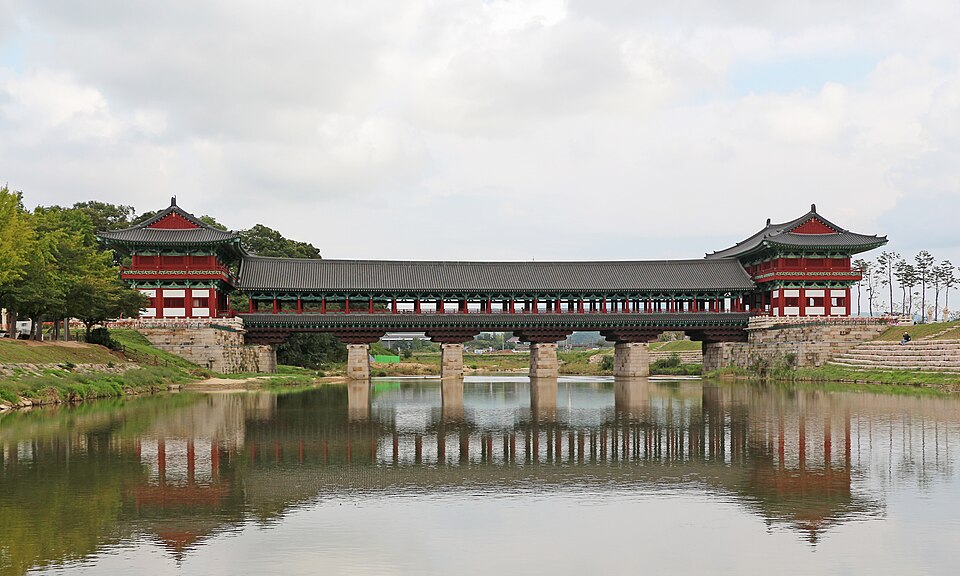
Start around Daereungwon and Hwangnidan-gil, then continue toward Cheomseongdae and the Wolseong historic area. Woljeonggyo Bridge works well later in the day, while Donggung Palace and Wolji Pond is especially popular after sunset.
This is the most efficient area for travelers with only one day in Gyeongju.
Bulguksa Temple and Seokguram Grotto
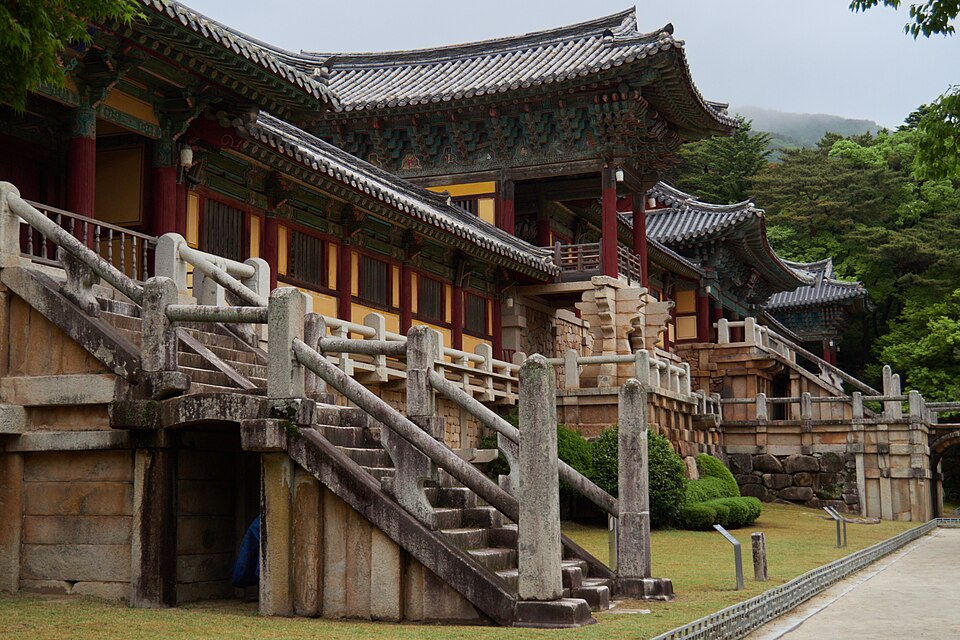
Bulguksa Temple and Seokguram Grotto sit outside the historic center and are best treated as a separate sightseeing block. Together, they form a UNESCO World Heritage property and are among Gyeongju’s most important Silla-era landmarks.
Visit Bulguksa first, then continue to Seokguram if it fits your schedule. Because this area requires extra travel time, trying to squeeze it between downtown sights usually makes a one-day itinerary unnecessarily rushed.
If you have two days in Gyeongju, this area fits naturally into the second day.
Bomun Tourist Complex: Lakeside and Family Attractions
Bomun Tourist Complex offers a different side of Gyeongju. Instead of concentrating on ancient tombs and temples, this area is built around Bomun Lake, resorts, leisure facilities, and family attractions.
It is worth adding if you have extra time, are traveling with children, or are staying in one of the resorts around the lake. For a short first trip focused mainly on Silla history, however, the historic center and Bulguksa area should take priority.
You do not need to visit Bomun simply because it appears on many Gyeongju itineraries. Include it when the lakeside setting or nearby attractions actually match your travel style.
Gyeongju 1-Day vs 2-Day Itinerary
A good Gyeongju itinerary is less about fitting in as many attractions as possible and more about avoiding unnecessary travel across the city. For a first visit, keep the historic center together and save the eastern temple area for a second day if you have one.
One-Day Gyeongju Itinerary
If you only have one day, stay focused on central Gyeongju.
Morning: Start at Daereungwon Ancient Tomb Complex, then explore Hwangnidan-gil and continue toward Cheomseongdae.
Afternoon: Visit the Gyeongju National Museum before walking through more of the historic area.
Evening: See Woljeonggyo Bridge around sunset, then finish at Donggung Palace and Wolji Pond after dark.
This route keeps most of the day within the historic center and avoids losing valuable time on longer bus journeys. If you are arriving from Busan and returning the same night, leave some buffer for the trip between central Gyeongju and Gyeongju Station.
Two-Day Gyeongju Itinerary
With two days, use the first day for the historic center and the second for sights farther east.
Day 1: Daereungwon → Hwangnidan-gil → Cheomseongdae → Gyeongju National Museum → Woljeonggyo Bridge → Donggung Palace and Wolji Pond
Day 2: Bulguksa Temple → Seokguram Grotto → optional Bomun Tourist Complex
Do not feel that you have to add Bomun just to fill the second day. If temples and Silla history are your priority, spending more time at Bulguksa and Seokguram before returning to central Gyeongju can make for a more relaxed trip.
If you have a third day, that is when places such as Yangdong Folk Village, Namsan, or the eastern coast become much easier to include without rushing.
Where to Stay in Gyeongju
For a first trip, where you stay matters more than choosing a specific hotel brand. The two most useful bases are the historic center and the Bomun area, but they suit very different types of trips.
Historic Center and Hwangnidan-gil: Best for First-Time Visitors
Stay around Hwangnidan-gil or the historic center if you want to explore much of central Gyeongju on foot. Daereungwon, Cheomseongdae, cafés, restaurants, and several evening sights are all within easy reach.
This area has a mix of conventional accommodation, guesthouses, and hanok-style stays, making it a good choice if you want to combine sightseeing with a more traditional atmosphere.
For most visitors spending only one or two nights in Gyeongju, this is the most convenient base.
Bomun Tourist Complex: Best for Resorts and Families
Bomun is a better fit if the accommodation itself is part of your trip. The lakeside district has large hotels, resorts, condominiums, and family-oriented leisure facilities around Bomun Lake.
It is quieter and more spacious than central Gyeongju, but you will rely more on buses, taxis, or a car when visiting the historic center. Gyeongju City describes Bomun as roughly 15–20 minutes by car from downtown.
Choose Bomun if you prefer resort facilities, are traveling with children, or want a more relaxed stay around the lake.
Should You Stay Near Gyeongju Station?
The high-speed rail station is outside the main sightseeing area, so staying close to the station is usually less convenient for a first sightseeing trip than staying downtown.
If you have an unusually early train or arrive very late, proximity to the station may matter more. Otherwise, it is generally better to stay closer to the places where you will spend your evenings and take a bus or taxi to the station when needed.
Best Time to Visit Gyeongju
Gyeongju can be visited year-round, but spring and autumn are the easiest seasons for a trip built around walking and outdoor historic sites.
Spring: Cherry Blossoms and Comfortable Walking
Spring is one of the most popular times to visit. Cherry blossoms usually appear around early April, with well-known viewing areas around Daereungwon, Cheomseongdae, Donggung Palace and Wolji Pond, and the Bomun Tourist Complex.
Blooming dates vary from year to year, so treat early April as a general guide rather than a guaranteed peak date. Later in April, double cherry blossoms around Bulguksa can extend the spring flower season.
Autumn: Mild Weather and Cultural Events
September through November is another excellent period for exploring Gyeongju on foot. October is especially attractive if you want cooler sightseeing weather along with seasonal scenery and cultural events.
For 2026 foliage timing and the best autumn destinations across the country, see our Korea Fall Foliage 2026 guide, which also includes Gyeongju and Bulguksa Temple.
Gyeongju’s annual Silla Cultural Festival is also traditionally held in October, although exact festival dates should always be checked for the year of your visit.
Summer: Possible, but Plan Around the Heat
Summer is workable, but hot and humid weather can make long days of walking tiring. Korea’s rainy season also overlaps part of early summer, so check the forecast before building a tightly scheduled outdoor itinerary.
If you visit in summer, leave more flexibility in the middle of the day and use buses or taxis when walking between distant sights is not necessary.
Winter: Cold but Still Practical
Winter is cold and dry, but Gyeongju’s major historic attractions remain suitable for sightseeing if you dress for the weather.
Shorter daylight hours make timing more important, especially if you want to combine daytime temples with evening sights such as Woljeonggyo Bridge or Donggung Palace and Wolji Pond.
Practical Tips for Foreign Visitors
A few practical details can make Gyeongju much easier to explore, especially if you are visiting without a car.
Keep Mobile Data Available
Public Wi-Fi is available at many major tourist sites, including parts of the historic center, Bulguksa, Seokguram, and Gyeongju Station. However, it is still better to have mobile data for live bus arrivals, navigation, translation, and last-minute route changes.
If you are traveling around Korea rather than visiting only Gyeongju, set up your SIM or eSIM before relying on public Wi-Fi for daily navigation.
Store Your Luggage Before Sightseeing
If Gyeongju is a stop between other Korean cities, you do not necessarily need to carry your bags through the historic center.
Luggage storage is available at Gyeongju Station, the express bus terminal, and several locations around Hwangnidan-gil. Fees and operating hours vary by location, so check the option closest to your arrival or departure point before leaving your bags.
This can be particularly useful for a day trip or when your accommodation does not allow early check-in.
Use Tourist Information Centers When You Need Local Help
Gyeongju operates tourist information centers for international visitors. The information center at Gyeongju Station is especially useful after arriving by KTX and provides assistance in Korean, English, Japanese, and Chinese.
For broader travel information or interpretation help anywhere in Korea, the 1330 Korea Travel Helpline also provides multilingual assistance by phone and online chat.
Official 1330 Korea Travel Helpline
Gyeongju Travel FAQ
Is Gyeongju Worth Visiting?
Yes, especially if you are interested in Korean history, traditional architecture, or UNESCO heritage. Gyeongju feels very different from Seoul or Busan and works particularly well as part of a trip through southeastern Korea.
Can You Visit Gyeongju as a Day Trip from Busan?
Yes. Gyeongju is close enough to Busan for a full-day trip, but keep the itinerary focused. The historic center is the easiest choice for one day, while adding Bulguksa and Seokguram makes the schedule much tighter.
Do You Need a Car in Gyeongju?
No. First-time visitors can see the main sights using a combination of walking, city buses, and occasional taxis. A car becomes more useful if you want to explore rural areas or several attractions outside the main sightseeing zones.
Is It Better to Stay Overnight in Gyeongju?
If your Korea itinerary allows it, staying at least one night makes the trip more relaxed. It also lets you enjoy Gyeongju’s illuminated evening sights without worrying about returning to another city the same day.
Plan Your Gyeongju Trip Around Areas, Not Checklists
Gyeongju is easiest to enjoy when you plan by area rather than trying to see every famous sight.
For a first visit, spend most of your time in the historic center, add Bulguksa and Seokguram if you have a second day, and use buses or taxis for the longer gaps between sightseeing areas.
If your schedule allows it, staying overnight is worth considering. It gives you more time to explore at a comfortable pace and enjoy Gyeongju after the day-trip crowds begin to leave.
If Gyeongju is part of a wider regional trip, see our Gyeongsangbuk-do Travel Guide for Andong, Pohang, Yeongju, Mungyeong and Ulleungdo.
If you are traveling through Daegu before or after Gyeongju, see our Daegu Travel Guide for transport, neighborhoods, local food, and ideas for a one- or two-day stay.
If you are continuing toward Korea’s southeast coast, see our Ulsan Travel Guide for coastal attractions, transport, local food, and ideas for a one- or two-day stay.