

Daejeon is easy to overlook when planning a first trip to South Korea, but it offers a very different experience from Seoul, Busan, or Korea’s historic cities. Known for science and research, the city also has large urban parks, hot springs, mountain trails, local markets, and a food scene worth making time for.
For a first visit, Hanbat Arboretum and the Expo area are good places to start, while Yuseong offers hot springs and a more relaxed side of the city. Travelers with extra time can add science museums, Gyejoksan Mountain, traditional markets, or a stop for some of Daejeon’s best-known local food.
This Daejeon Travel Guide covers the best things to do, how to reach the city, how to get around, where to stay, what to eat, and how many days you actually need. It is designed to help foreign travelers decide whether Daejeon works best as a day trip, an overnight stop, or a longer break in central Korea.
Quick Answer: Is Daejeon Worth Visiting?
Yes—especially if you want to see a side of Korea that feels less tourist-focused than Seoul, Busan, or Gyeongju.
Daejeon works particularly well for travelers interested in science, urban parks, hot springs, hiking, and local food. Its central location also makes it practical as a stop between other parts of Korea rather than a destination that requires a long detour.
For most first-time visitors, one full day is enough to see the main highlights. Stay overnight if you want to visit Yuseong Hot Springs, explore more museums, hike, or enjoy the city at a slower pace.
If you want to add a nearby day trip, Sejong is connected to Daejeon by BRT; see our Sejong Travel Guide for transport, attractions, and a practical one-day itinerary.
If your Korea itinerary is already very short, Daejeon is not an essential first-trip stop. But with extra time, it can be a good break from Korea’s busiest tourist cities.
Best Things to Do in Daejeon
Daejeon’s main attractions are spread across several parts of the city, so grouping nearby sights makes a first visit much easier. Start with the Hanbat Arboretum and Expo Park area, then choose between Yuseong, science museums, Gyejoksan Mountain, or downtown depending on your interests.
Hanbat Arboretum and Expo Park
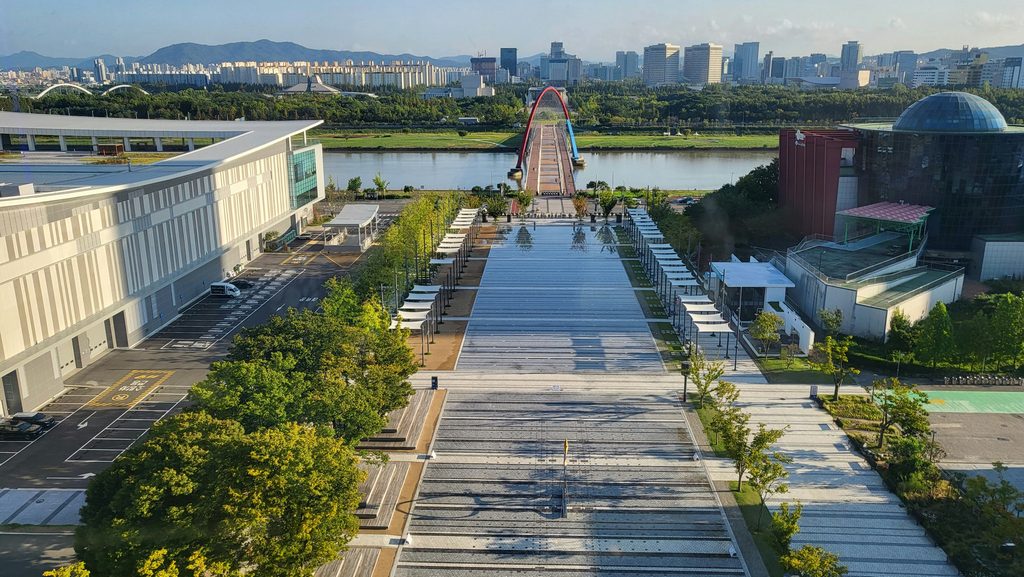
Hanbat Arboretum is one of the easiest places to start a Daejeon itinerary. The large urban garden offers a quiet break from the city and can easily be combined with the nearby Expo Park area.
Admission is free. From April to October, the East and West Gardens are open from 5:00 AM to 9:00 PM, with last entry at 8:00 PM. From November to March, they are open from 7:00 AM to 7:00 PM, with last entry at 6:00 PM. The East Garden normally closes on Mondays, while the West Garden closes on Tuesdays.
After the arboretum, continue toward Expo Park and Hanbit Tower for a look at one of Daejeon’s most recognizable landmarks and the legacy of the 1993 Daejeon Expo. This area works especially well for travelers who want a mix of green space, modern city scenery, and Daejeon’s science-focused identity.
Official Hanbat Arboretum Visitor Information
National Science Museum
Daejeon is known as one of Korea’s major science and research cities, and the National Science Museum is the best place for travelers who want to see that side of the city.
The museum includes science and technology, natural history, future technology, astronomy, outdoor exhibits, and a children’s science museum. Many of the main exhibition halls are free to enter, while several hands-on attractions and the planetarium require a separate ticket or reservation.
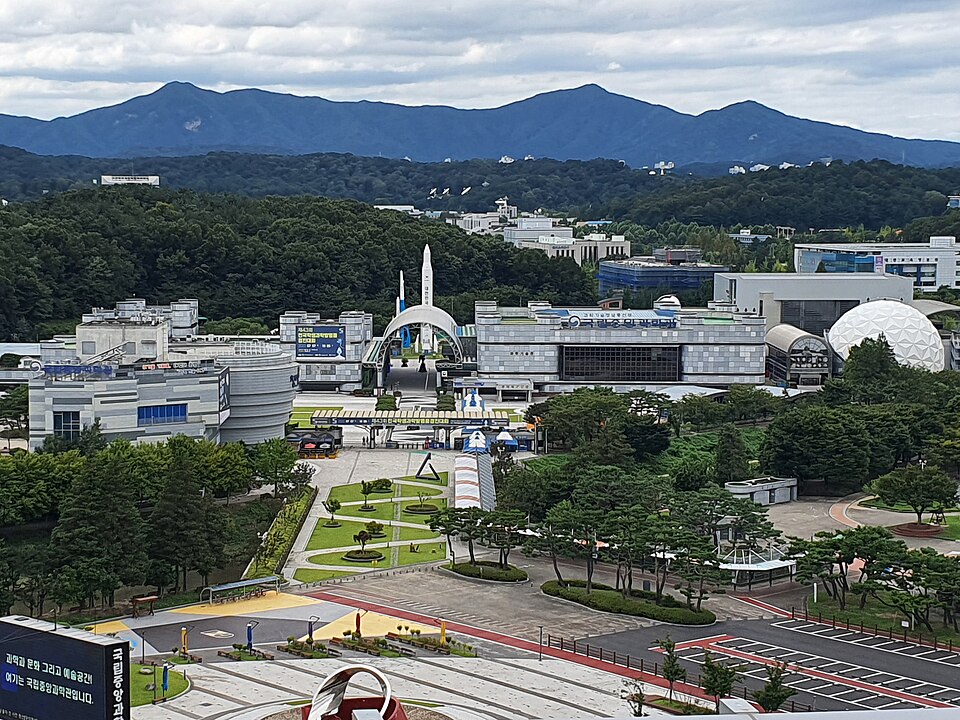
Regular opening hours are 9:30 AM to 5:30 PM, with last ticketing at 5:00 PM. The museum is normally closed on Mondays and on specified major holidays, so check the official schedule before visiting.
This is a particularly good stop for families, science fans, or travelers visiting Daejeon in bad weather. If science museums are not a priority for you, you can skip it and spend more time around Yuseong or central Daejeon instead.
Official National Science Museum Visitor Information
Yuseong Hot Springs
Yuseong is Daejeon’s best-known hot spring district and a good place to slow down after museums or sightseeing.
The easiest experience for short-term visitors is the outdoor foot bath in Yuseong Hot Spring Park. It uses natural hot spring water and is free to use, making it a simple stop even if you are not staying at a spa hotel or visiting a public bathhouse.
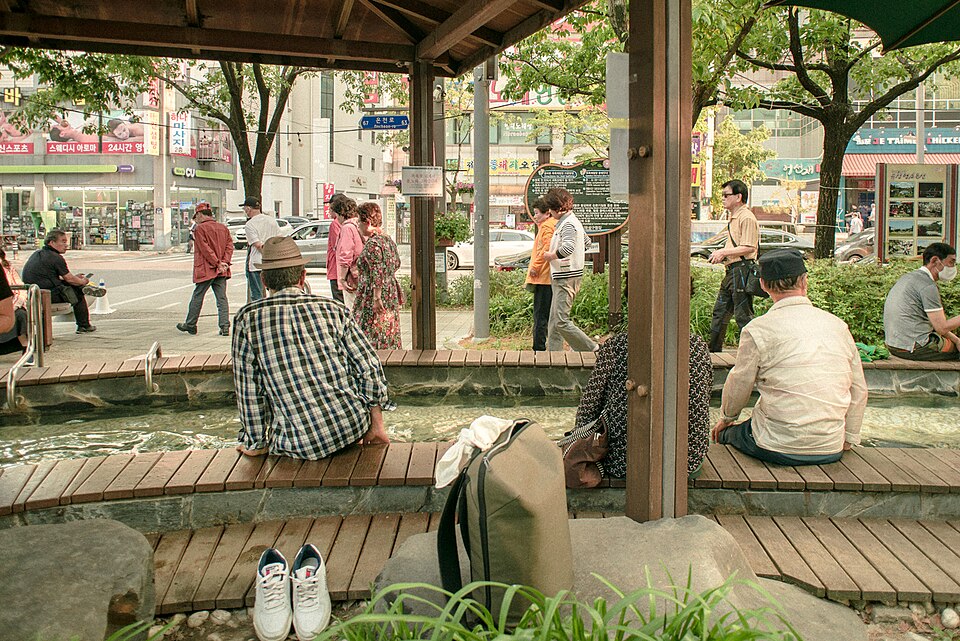
The main outdoor foot bath operates daily from 8:00 AM to 10:00 PM, with water generally maintained at around 39–42°C. A separate traditional-medicine-themed foot bath area is also available nearby.
Yuseong is easy to reach by subway and works especially well in the late afternoon or evening. Pair it with dinner around Bongmyeong-dong or use it as a relaxed end to a day around the Expo and science museum area.
Official Yuseong Hot Springs Information
Official Yuseong Foot Bath Hours & Visitor Information
Gyejoksan Red Clay Trail
For something completely different from Daejeon’s museums and urban attractions, head to the Gyejoksan Red Clay Trail in Jangdong Forest Park.
The 14.5-kilometer forest trail is famous for its soft red-clay sections, where visitors can take off their shoes and walk barefoot beneath the trees. You do not need to complete the entire route—a shorter barefoot walk is enough to experience what makes the trail unusual.
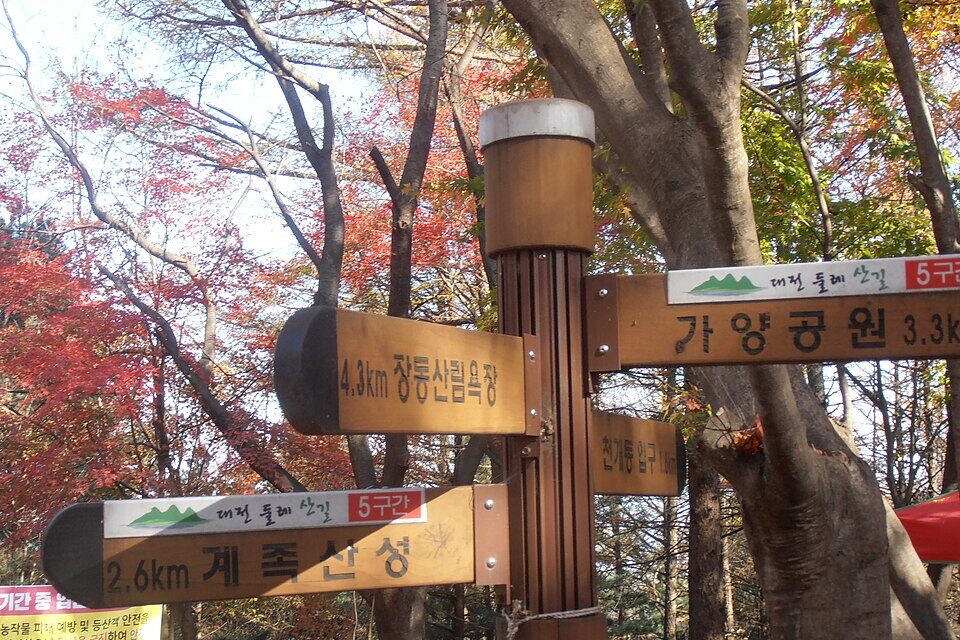
The official tourism listing currently shows the trail as open year-round from 9:00 AM to midnight. For most travelers, however, visiting during daylight is the more practical choice, especially if you are unfamiliar with the mountain.
Choose Gyejoksan if you enjoy walking, forests, or outdoor activities. If you only have one day in Daejeon and prefer museums, food, and easy city sightseeing, this is one attraction you can leave for a longer visit.
Official Gyejoksan Red Clay Trail Visitor Information
Sungsimdang and Daejeon’s Local Food
Sungsimdang is one of Daejeon’s most recognizable local brands and an easy food stop for first-time visitors. The bakery began near Daejeon Station in 1956 and has grown into one of the city’s best-known attractions.
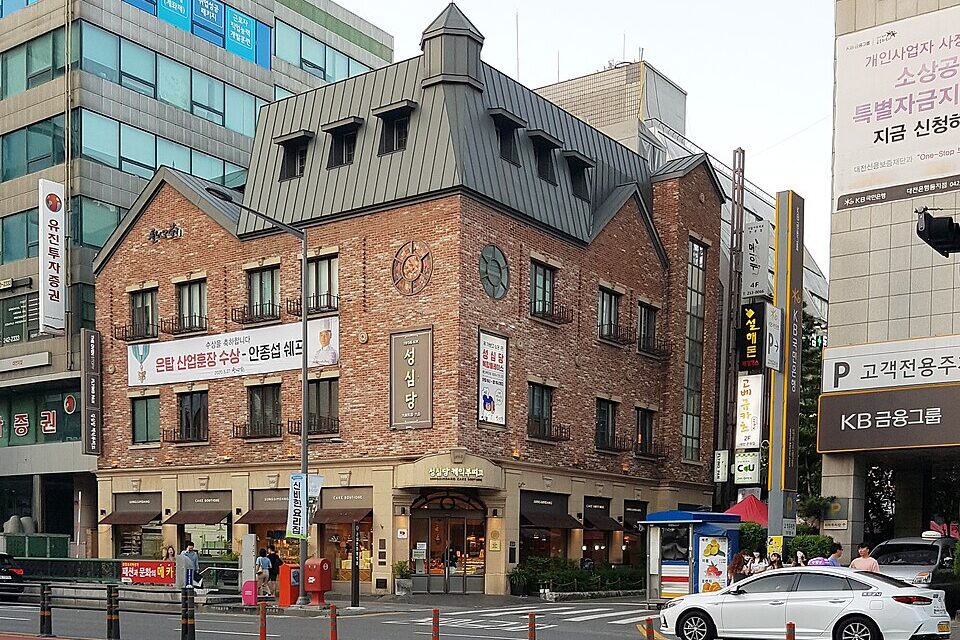
The main branch in Eunhaeng-dong is open daily from 8:00 AM to 10:00 PM. Two of its best-known items are twigim soboro, a fried soboro bun filled with sweet red bean paste, and Pantalong leek bread, a savory bread made with leeks, egg, and ham.
Sungsimdang is worth trying, but Daejeon’s food scene goes beyond bread. The city is also known for kalguksu, handmade knife-cut noodle soup, and dubu duruchigi, tofu cooked in a spicy red-pepper-based sauce.
If you only have one meal in central Daejeon, choose between a classic kalguksu restaurant and a dubu duruchigi specialist, then stop at Sungsimdang for bread or dessert afterward.
Sungsimdang Visitor Information in English
Official Sungsimdang Main Store Information
How to Get to Daejeon
Daejeon is one of Korea’s easiest regional cities to reach by public transportation. For most international travelers, the train is the simplest option, especially when coming from Seoul, Busan, Daegu, or other cities along the main rail corridor.
By KTX Train
For most travelers, KTX is the easiest way to reach Daejeon. Daejeon Station is served by high-speed trains and places you close to the city center, making it convenient for both day trips and overnight stays.
Use Daejeon Station, not a similarly named station, when searching for tickets. Train frequency and travel times vary by departure city and service, so check the exact schedule for your travel date rather than relying on a fixed timetable.
If you are coming from Seoul, taking the train also makes Daejeon practical as a stop on a longer journey south toward Daegu, Gyeongju, or Busan.
Official KORAIL Train Reservation
How to Get Around Daejeon
Daejeon is easier to navigate than Seoul, but many attractions are spread across different parts of the city. For most visitors, the best combination is subway, city bus, and occasional taxi rides.
Subway and City Bus
Daejeon currently has one operating subway line running between Panam and Banseok, with 22 stations. It connects useful areas including Daejeon Station, Jungang-ro, City Hall, Government Complex, Yuseong Hot Springs, and the northern part of the city.
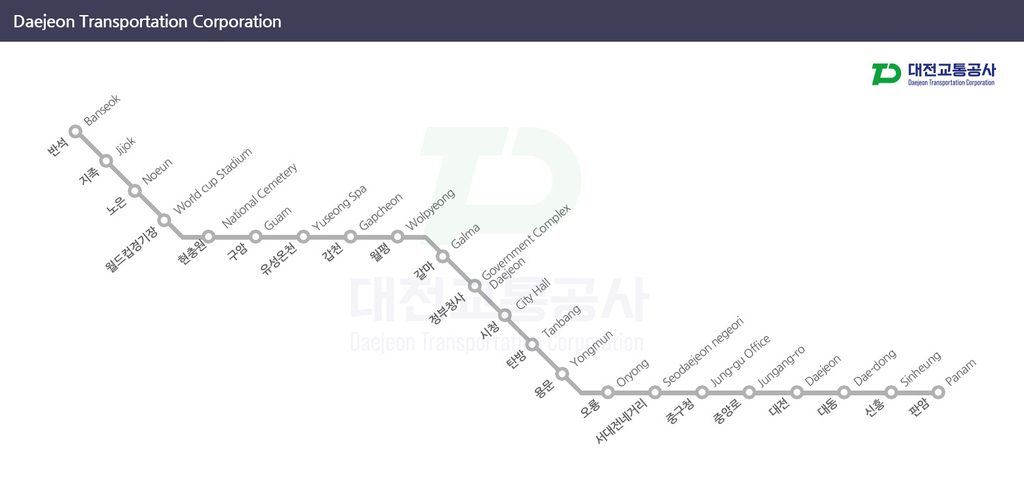
As of September 2026, the adult subway fare with a transportation card is ₩1,550 for the first fare zone and ₩1,650 for the second zone. A regular single-use ticket costs ₩150 more.
City buses cover areas that the subway does not reach. The current adult city-bus fare is ₩1,500 with a transportation card or ₩1,700 in cash.
Using a transportation card is strongly recommended because bus–subway transfers are discounted. Transfers generally need to be made within 30 minutes, and a transportation card is required for the transfer discount.
A T-money card is one of the easiest choices for foreign travelers and can also be used in many other Korean cities.
Taxi and Navigation Apps
Taxis are useful for places that are inconvenient to reach by subway, especially attractions farther from central Daejeon or when you are traveling with luggage.
For everyday navigation, NAVER Map is one of the most useful apps for foreign travelers in Korea. It provides subway, bus, walking, and driving directions, and the app supports English. KakaoMap is another good option and also provides public transportation and walking routes.
For calling a taxi, foreign visitors can use k.ride, Kakao Mobility’s global ride-hailing app. It works in South Korea and supports multilingual destination searches, translated communication with drivers, and in-app payment.
If you plan to use buses frequently, keeping NAVER Map or KakaoMap open while traveling makes it much easier to check the correct stop, arrival time, and transfer route.
Download NAVER Map: iPhone | Android
Download KakaoMap: iPhone | Android
Download k.ride: iPhone | Android
Where to Stay in Daejeon
For most visitors, the best area to stay in Daejeon depends on whether you prioritize train access, city-center convenience, or hot springs and science attractions.
| Area | Best For | Main Advantage | Keep in Mind |
| Daejeon Station & Jungang-ro | Short stays and first-time visitors | Easy KTX access, Sungsimdang, markets and downtown sights | Farther from Yuseong and the Expo area |
| Dunsan-dong | Restaurants, shopping and a central city base | Close to City Hall, shopping and many restaurants | Less convenient for travelers arriving late by KTX |
| Yuseong & Bongmyeong-dong | Hot springs, science attractions and a slower stay | Easy access to Yuseong Hot Springs and several tourist hotels | Longer trip to Daejeon Station |
Daejeon Station and Jungang-ro
This is the most convenient area for a short visit. You can arrive by KTX, leave your luggage, and reach Sungsimdang, Jungang Market, and the old downtown area without spending much time on local transportation.
If you are staying only one night or using Daejeon as a stop between Seoul and southern Korea, this is usually the simplest base.
Dunsan-dong
Dunsan is a modern commercial area around Daejeon City Hall and the Government Complex. It has plenty of restaurants, cafés, department stores, and everyday conveniences, making it a practical choice for travelers who want a more modern city-center atmosphere.
It also sits on Daejeon Metro Line 1, so getting around by subway is relatively easy.
Yuseong and Bongmyeong-dong
Choose Yuseong if hot springs, the National Science Museum, or the Expo area are high on your itinerary.
The neighborhood around Yuseong Hot Springs has a concentration of hotels and restaurants, and the district’s official tourism site lists several tourist hotels around the hot-spring area. Some properties in the area also use Yuseong hot-spring water.
For a first trip, Daejeon Station is the easiest choice for a short stay, while Yuseong is better if you want a more relaxed overnight experience.
Official Yuseong Tourist Hotels
What to Eat in Daejeon
Daejeon is best known for bread, kalguksu, and dubu duruchigi, so you do not need a long restaurant checklist to experience the city’s local food.
| Food | What It Is | Best For |
| Twigim soboro & Pantalong leek bread | Sungsimdang’s best-known sweet and savory bakery items | First-time visitors and easy take-away snacks |
| Kalguksu | Handmade knife-cut noodles served in a warm broth | A filling local meal, especially in cooler weather |
| Dubu duruchigi | Tofu cooked in a spicy red-pepper-based sauce | Travelers who want a more distinctly local Daejeon dish |
| Traditional market snacks | Tteokbokki, sundae, noodles and other casual Korean street foods | Budget meals and travelers near Daejeon Station |
If you only have time for two food stops, try kalguksu or dubu duruchigi for a proper meal, then visit Sungsimdang for bread or dessert.
Daejeon Kalguksu Guide from VISITKOREA
Daejeon Jungang Market is another convenient option near Daejeon Station. Its covered market area has casual Korean food stalls and works well if you want to try several inexpensive dishes without making a separate restaurant reservation.
How Many Days Do You Need in Daejeon?
For most first-time visitors, one full day is enough to see Daejeon’s main highlights.
A one-day visit works best if you focus on the Expo and science area, Yuseong Hot Springs, and central Daejeon for local food and Sungsimdang.
One Day in Daejeon
A practical first-time itinerary could look like this:
Morning: Hanbat Arboretum and Expo Park
Late morning or early afternoon: National Science Museum
Afternoon: Yuseong Hot Springs foot bath
Evening: Kalguksu or dubu duruchigi, followed by Sungsimdang
This gives you a good mix of Daejeon’s science, green space, hot springs, and local food without trying to cover too much.
Stay Overnight If You Want More Time
Stay for one night and two days if you want to add Gyejoksan Red Clay Trail, spend more time around Yuseong, visit additional museums, or explore the city at a slower pace.
An overnight stay is also more comfortable if Daejeon is part of a longer trip through central or southern Korea rather than a return day trip from Seoul.
For most travelers, one day is enough for the essentials, while two days gives Daejeon a much more relaxed pace.
Best Time to Visit Daejeon
The best times to visit Daejeon are generally spring and autumn, when temperatures are comfortable for walking, parks, and outdoor attractions.
Spring, from April to May, is a good time for Hanbat Arboretum, city parks, and outdoor sightseeing. Temperatures are usually mild, although weekends can be busier during the blossom season.
Autumn, especially October and early November, is another excellent period. Cooler temperatures make places such as Gyejoksan Red Clay Trail easier to enjoy, and Daejeon also hosts several major cultural and food festivals during this period.
Summer can be hot and humid, so museums, cafés, and indoor attractions become more useful during the middle of the day. Winter is cold, but Daejeon still works well for a short trip because many of its science attractions are indoors and Yuseong Hot Springs can be particularly appealing in colder weather.
If outdoor sightseeing is your priority, April–May and October–early November are the easiest months to recommend.
Practical Tips for Visiting Daejeon
A few simple preparations can make traveling around Daejeon much easier.
- Keep some cash for your transportation card. T-money is useful on local buses and the subway, but foreign-issued credit cards may not work for purchasing or topping up a transportation card. Carrying a small amount of Korean won is the safest option.
- Have mobile data available. NAVER Map, bus arrival information, taxi apps, and translation tools are much easier to use with a working data connection.
- Check opening days before visiting museums. Some major attractions in Daejeon close on specific weekdays, so confirm the official schedule before building your itinerary.
- Allow extra time for attractions outside the subway corridor. Places such as Gyejoksan require bus or taxi connections, while central Daejeon and Yuseong are easier to explore by subway.
- Use the 1330 Korea Travel Helpline if you need assistance. The service provides travel information and interpretation support for international visitors by phone and online chat.
Expect roadwork in some parts of the city. Construction of Daejeon Metro Line 2 is underway, and temporary lane closures can affect bus and taxi travel times. Check NAVER Map or KakaoMap before leaving.
For more help preparing for your trip, see our Korea SIM & eSIM Guide and Korea Travel Tips for First-Time Visitors.
Daejeon Travel FAQ
Is Daejeon worth visiting?
Yes, especially if you want a less tourist-heavy city with science museums, large parks, hot springs, hiking, and distinctive local food. Daejeon works particularly well as a one-day stop or an overnight break while traveling through central Korea.
Can you visit Daejeon as a day trip from Seoul?
Yes. High-speed trains make Daejeon practical for a day trip from Seoul. For a comfortable visit, focus on two or three areas rather than trying to see every attraction in one day.
How many days do you need in Daejeon?
One full day is enough for the main highlights. Stay for one night and two days if you want to add Gyejoksan Red Clay Trail, spend more time around Yuseong, or explore the city at a slower pace.
What is Daejeon famous for?
Daejeon is best known for science and research, Yuseong Hot Springs, Sungsimdang bakery, kalguksu, dubu duruchigi, and attractions such as Hanbat Arboretum and Gyejoksan Red Clay Trail.
Can I use a T-money card in Daejeon?
Yes. T-money can be used on Daejeon city buses and the subway. Using a transportation card is also more convenient for transfers than paying individual fares in cash.
Is Daejeon easy to travel without a car?
Yes. Daejeon Station, downtown, Yuseong, and several major attractions can be reached by subway and bus. For places farther from the subway line, such as Gyejoksan, combining public transportation with a taxi can save time.
Final Thoughts
Daejeon is not a city that needs several days on a first trip to Korea, but it can be a rewarding stop if you want something different from the country’s most tourist-heavy destinations.
A one-day visit is enough to combine science attractions, green spaces, Yuseong Hot Springs, and local food, while an overnight stay gives you time to add Gyejoksan or explore the city at a slower pace.
Its central location and fast rail connections also make Daejeon easy to include between Seoul and southern Korea.
If you enjoy science, parks, hot springs, hiking, and local food, Daejeon is well worth considering as a short stop on your Korea itinerary.