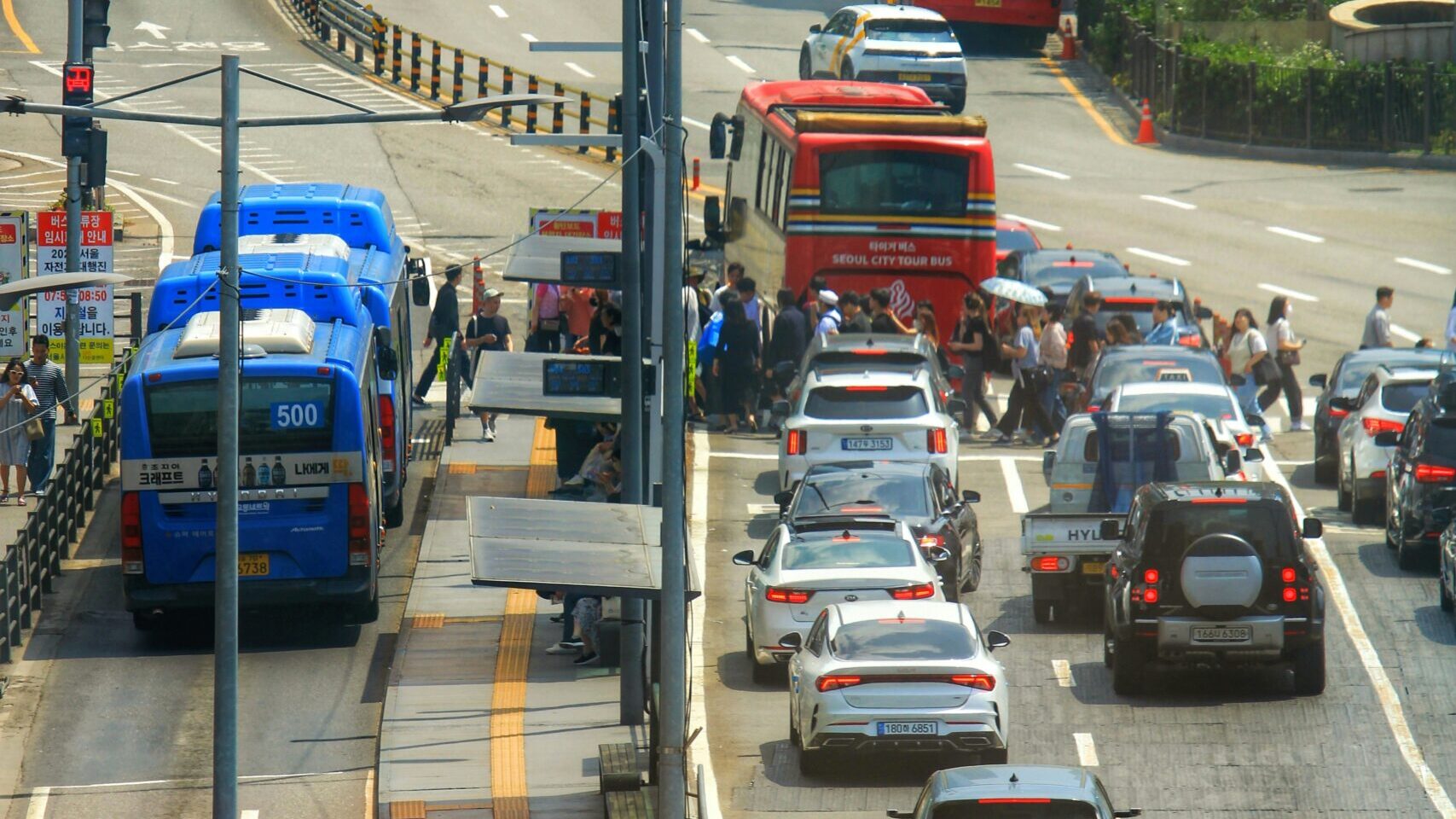
Getting around Seoul is easier than it may seem at first. The city has an extensive subway and bus network, and taxis are widely available when public transportation is not the most convenient option.
For first-time visitors, however, the difficult part is often not finding a train or bus. It is figuring out how to pay, which transportation card to use, when to tap your card, and which option makes the most sense for your trip.
This Seoul transportation guide explains how to use the subway, buses, taxis, T-money, and other transportation options from a traveler’s point of view. It also covers fares, transfers, payment methods, useful apps, and practical mistakes to avoid while getting around Seoul.
- Seoul Transportation at a Glance
- How Much Does Public Transportation Cost in Seoul?
- How to Use the Seoul Subway
- Using a T-money Card in Seoul
- T-money vs Climate Card: Which Is Better?
- Can You Use the Climate Card to Incheon Airport?
- Using Buses in Seoul
- Taking a Taxi in Seoul
- Best Apps for Getting Around Seoul
- Avoiding Rush Hour in Seoul
- What Is the Best Way to Get Around Seoul?
- Frequently Asked Questions
Seoul Transportation at a Glance
For most travelers, the subway is the easiest way to get around Seoul, while buses are useful for routes that are less convenient by subway.
A T-money card is the simplest all-around payment option for most visitors because it works across subways and buses and makes transfers easier.
Depending on your itinerary, a short-term Climate Card may be worth considering if you expect to use public transportation frequently within its coverage area.
Taxis are best used when traveling late at night, carrying luggage, or when public transportation would require an inconvenient route.
In most cases:
- Subway: Best for sightseeing and longer trips across the city
- Bus: Best for direct local routes and areas between subway stations
- T-money: Best flexible payment option for most travelers
- Climate Card: Best for frequent public transportation use within eligible areas
- Taxi: Best for late nights, luggage, or inconvenient routes
You do not need to choose just one. The easiest way to travel around Seoul is usually to combine them depending on the situation.
How Much Does Public Transportation Cost in Seoul?
Public transportation in Seoul is relatively affordable, even if you travel several times a day.
As of September 2026, the adult base subway fare is ₩1,550 with a transportation card and ₩1,650 for a single-journey ticket.
Bus fares depend on the type of bus you take.
| Transportation | Adult Base Fare |
| Subway with a transportation card | ₩1,550 |
| Subway single-journey ticket | ₩1,650 |
| Blue/Green city bus | ₩1,500 |
| Yellow circulation bus | ₩1,400 |
| Local village bus | ₩1,200 |
| Red rapid bus | ₩3,000 |
| Owl night bus | ₩2,500 |
For subway trips, the final fare may be higher on longer journeys because Seoul uses a distance-based fare system. Using a transportation card also allows you to receive eligible transfer discounts between subways and buses.
There is also a 20% early-morning discount on the first eligible ride before 6:30 AM when using a transportation card.
How to Use the Seoul Subway
The subway is usually the easiest way to travel between major areas of Seoul, including Myeongdong, Hongdae, Gangnam, Jongno, and Jamsil.
Each subway line has its own color, and stations are identified by both names and station numbers. English signage is widely available, which makes the system relatively easy to navigate even if you do not speak Korean.
To ride the subway:
- Find the correct station entrance and check the line number or color.
- Tap your T-money or other compatible transportation card at the ticket gate.
- Follow the signs for the correct direction and destination.
- Transfer inside the station if your route requires another line.
- Tap the same card again when leaving your destination station.
If you do not have a transportation card, you can buy a single-journey ticket from a vending machine inside the station. These machines offer foreign-language options.
A single-journey ticket requires a ₩500 refundable deposit. After reaching your destination, insert the card into a deposit refund machine to get the ₩500 back.
Most subway services start from around 5:30 AM, but last-train times vary by line, station, day, and operator. Some services run past midnight on weekdays, so always check the last train for your specific route.
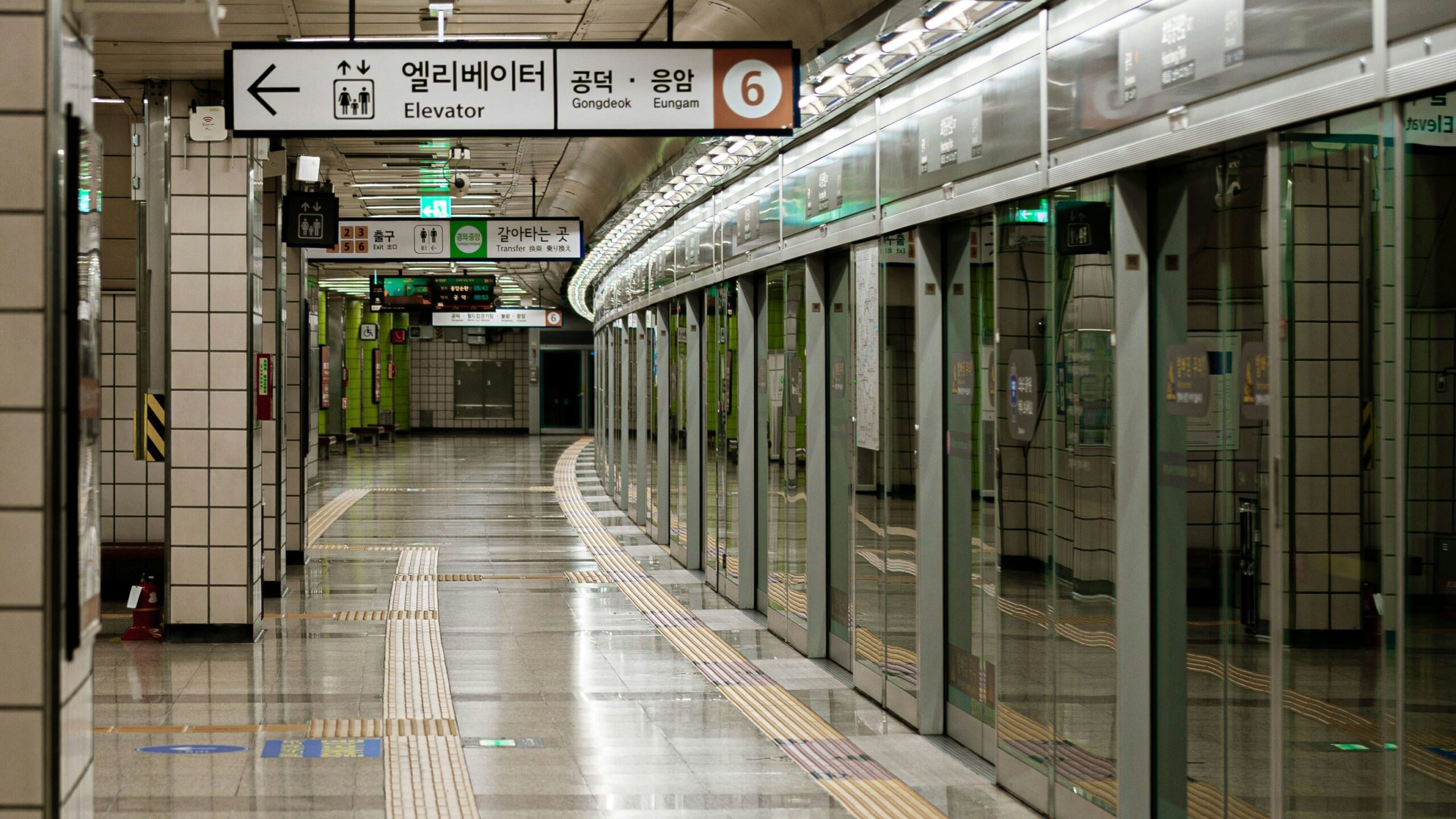
Local tip: Check the exit number before leaving the station. Large subway stations can have many exits, and choosing the wrong one can add a surprisingly long walk to your trip.
Subway Transfers and Transfer Discounts
If you are changing from one subway line to another, follow the Transfer signs inside the station. You normally do not need to leave the paid area or tap out between subway lines.
Transfers between the subway and buses work differently. When using a transportation card, Seoul’s integrated fare system can reduce the cost of eligible subway-to-bus, bus-to-subway, and bus-to-bus transfers.
To receive the transfer discount:
- Always tap your transportation card when entering and leaving.
- Make the next transfer within 30 minutes after getting off.
- Between 9 PM and 7 AM, the transfer window is extended to 60 minutes.
- Up to four transfers are allowed, for a total of five rides.
Additional fares may still apply depending on the total distance traveled.
Important: If you forget to tap your card when getting off a bus, you may lose the transfer discount.
Using a T-money Card in Seoul
For most visitors, a T-money card is the simplest and most flexible way to pay for transportation in Seoul.
T-money is a rechargeable prepaid transportation card that can be used on subways, buses, and many taxis. Instead of buying a separate ticket for every trip, you load money onto the card and tap it when you travel.
A standard T-money card usually costs around ₩3,000–₩5,000, not including the money you add for transportation. You can buy one at major convenience stores such as CU, GS25, and 7-Eleven, as well as at many subway stations.
For where to buy, top up, use, and refund the card, see our complete T-money Card Guide.
Important: Bring Some Korean Won Cash
For a standard physical T-money card, do not rely on a foreign-issued credit card for recharging. Cash in Korean won remains the most reliable option at convenience stores and many subway stations, and available payment methods can vary by location and card type.
This is different from Seoul’s newer ticket machines on Lines 1–8, which accept international credit and debit cards for certain products, including single-journey tickets and short-term Climate Cards.
International card payments at these machines may include an average service fee of about 3.7%.
So even if a machine displays Visa or Mastercard, do not assume that it can reload a regular T-money card.
T-money vs Climate Card: Which Is Better?
For most first-time visitors, T-money is the safer and more flexible choice. However, a short-term Climate Card can save money if you expect to use eligible public transportation frequently during your stay.
The main difference is simple: T-money charges you for each trip, while the Climate Card gives you unlimited rides within its covered transportation network for a fixed period.
| Pass | Best For | How You Pay | Main Limitation |
| T-money | Most travelers and flexible itineraries | Pay per ride | You need to keep enough balance on the card |
| Climate Card | Frequent subway and bus users in Seoul | Fixed-price unlimited pass | Not valid on every subway line or bus outside its coverage area |
Short-term Climate Card prices are:
| Pass | Price |
| 1 day | ₩5,000 |
| 2 days | ₩8,000 |
| 3 days | ₩10,000 |
| 5 days | ₩15,000 |
| 7 days | ₩20,000 |
A physical Climate Card costs an additional ₩3,000.
One important detail is that short-term passes are based on calendar days, not 24-hour periods. For example, if you load a 1-day pass in the afternoon, it is valid only until the end of transportation service that same day.
The Climate Card covers many Seoul subway lines and Seoul-licensed buses, but there are important exclusions. For example, the Shinbundang Line, intercity and airport buses, and some subway sections outside the service area are not covered.
Important update: Starting October 1, 2026, short-term Climate Card passes will be valid for travel within Seoul and for trips ending at Incheon International Airport. The existing short-term pass coverage in Gimpo, Goyang, Gwacheon, Guri, Seongnam, Hanam, and Namyangju will no longer be included.
Which One Should You Choose?
Choose T-money if:
- You want the simplest option with broad transportation coverage.
- You expect to take only a few rides each day.
- Your itinerary includes destinations outside central Seoul or outside the Climate Card service area.
- You want one card that is easy to keep using elsewhere in Korea.
Choose a short-term Climate Card if:
- You plan to take the subway or bus many times each day.
- Most of your trips are within the Climate Card coverage area.
- You prefer paying a fixed amount instead of checking your remaining balance.
For many travelers, T-money is still the easiest default choice. The Climate Card becomes more attractive when your itinerary involves frequent sightseeing trips across Seoul.
If you are also comparing sightseeing passes, see our Discover Seoul Pass guide. Unlike the Climate Card, the Discover Seoul Pass is primarily an attraction pass rather than an unlimited public transportation pass.
Want the full breakdown? Read our Seoul Climate Card Guide for current prices, coverage, airport rules, and a T-money cost comparison.
Can You Use the Climate Card to Incheon Airport?
Yes, but only in one direction.
If you board the Airport Railroad (AREX) within the Climate Card service area, you can use the card to exit at Incheon International Airport Terminal 1 or Terminal 2.
However, you cannot use a Climate Card to board at Incheon Airport Terminal 1 or Terminal 2. This means travelers arriving in Korea cannot use the Climate Card for their first trip from Incheon Airport into Seoul.
For your arrival journey, you will need another option such as a regular AREX ticket, T-money, an airport bus, or a taxi.
For a detailed comparison of airport transportation options, see our Incheon Airport Guide.
Using Buses in Seoul
Seoul buses are useful when a subway route requires a long walk or an inconvenient transfer. They can also take you closer to neighborhoods and attractions that are not directly next to a subway station.
Bus colors indicate the general type of route:
- Blue buses: Longer routes connecting major areas within Seoul
- Green buses: Local routes that often connect neighborhoods with subway stations and major bus routes
- Yellow buses: Circulation routes serving central areas
- Red buses: Longer-distance express routes connecting Seoul with surrounding cities
- Local buses: Short neighborhood routes, usually using smaller green buses
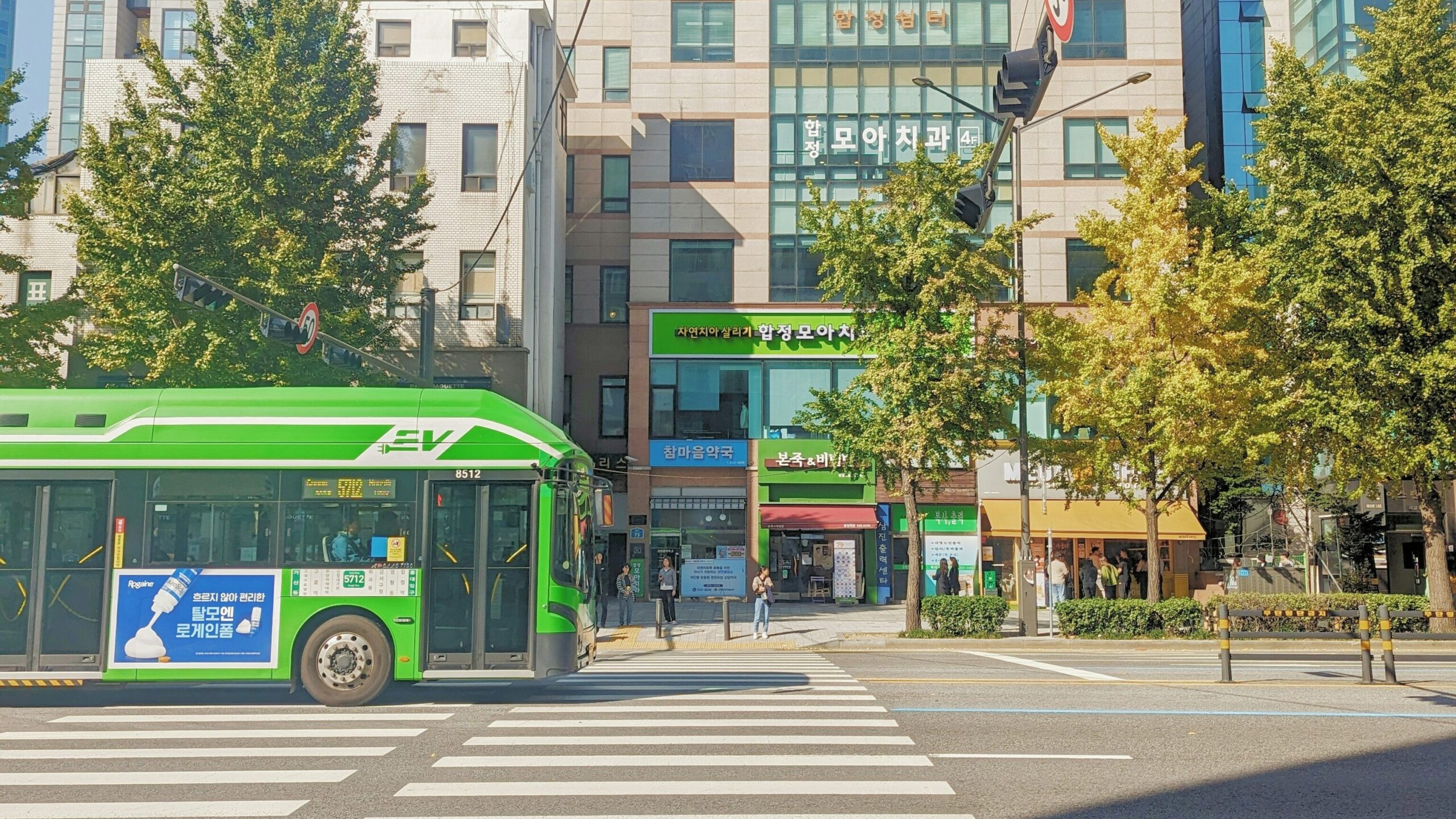
For most visitors, you do not need to memorize the bus colors. A navigation app can tell you the exact bus number, stop, and direction to use.
How to Ride a Seoul Bus
Most Seoul city buses are designed for passengers to board through the front door and exit through the rear door.
- Check the bus number and direction before boarding.
- Board through the front door and tap your T-money or other compatible transportation card on the reader.
- Follow your route on a navigation app or watch the onboard stop information.
- Press the stop button before your destination.
- Tap your transportation card again at the reader near the exit as you get off.
Do not forget to tap when getting off. This is especially important if you plan to transfer to another bus or the subway, because the system uses your exit tap to calculate the fare and transfer discount.
Taking a Taxi in Seoul
Taxis are a useful backup when the subway has stopped running, you are carrying heavy luggage, or your destination requires an inconvenient public transportation route.
Regular Seoul taxis have a daytime base fare of ₩4,800 for the first 1.6 km. The fare then increases according to distance and time.
Late-night surcharges apply between 10 PM and 4 AM:
- 10 PM–11 PM: 20% surcharge
- 11 PM–2 AM: 40% surcharge
- 2 AM–4 AM: 20% surcharge
This means the late-night base fare rises to ₩5,800 between 10 PM and 11 PM and between 2 AM and 4 AM, and to ₩6,700 between 11 PM and 2 AM.
How to Pay and Use a Seoul Taxi
You can usually pay the fare by cash, credit card, or a compatible transportation card such as T-money. Seoul taxis use meters, so you normally pay the amount shown when you reach your destination.
If you hail a taxi on the street, it helps to have your destination saved in Korean on your phone. Showing the Korean address or the name of a nearby subway station can be easier than trying to explain the destination verbally.
Taxi-hailing apps can be even easier for international travelers because your destination is entered before the ride and you can usually see an estimated fare before requesting the taxi.
Local tip: Late-night taxi fares can rise quickly because of the surcharge, so check whether a night bus is available before taking a long taxi ride.
For a full comparison of k.ride, Kakao T, Uber and TABA, including foreign-card support, phone number requirements and late-night use, see our Korea Taxi Apps for Foreigners guide.
Best Apps for Getting Around Seoul
A good navigation app makes getting around Seoul much easier, especially when you need to find the correct subway exit, bus stop, or walking route.
For most international travelers, NAVER Map and KakaoMap are the two most useful options to install before arriving in Korea.
NAVER Map
NAVER Map provides subway, bus, walking, and driving directions throughout Korea. It supports English and can show real-time public transportation information, including estimated departure and arrival times.
It is especially useful for checking subway exits, bus stops, walking routes, and nearby places.
KakaoMap
KakaoMap is another strong option for navigating Seoul. It provides routes for public transportation, walking, driving, and cycling, and its interface is available in English.
It can also provide notifications for when to get on or off public transportation, which can be helpful when using unfamiliar bus routes.
Which App Should You Use?
If you only want to install one app, NAVER Map is a good starting point for most international visitors because of its multilingual support and detailed public transportation information.
KakaoMap is a useful alternative, and some travelers prefer its interface or route suggestions.
Google Maps can still be useful for saving places and general orientation, but for detailed local transit and walking routes in Seoul, it is a good idea to have NAVER Map or KakaoMap available as well.
Local tip: Before leaving your hotel, check the subway exit number suggested by your navigation app. At large stations, using the wrong exit can put you several blocks away from your destination.
Avoiding Rush Hour in Seoul
Seoul’s subway and buses can become very crowded during weekday commuting hours, especially on major routes and at large transfer stations.
If your schedule is flexible, try to avoid traveling during the busiest periods:
- Morning: Around 8 AM–9 AM
- Evening: Around 5 PM–7 PM
The evening rush is usually heavier, with 6 PM–7 PM among the busiest times on Seoul’s subway system.
Crowding can be especially noticeable at major stations such as Hongik University, Gangnam, Jamsil, Seoul Station, and other busy transfer points.
If you are traveling with large luggage, children, or several bags, moving outside rush hour can make your trip much easier.
Local tip: At large stations, the fastest route on a navigation app is not always the easiest route with luggage. A slightly longer route with fewer transfers or better elevator access can be more comfortable.
What Is the Best Way to Get Around Seoul?
For most travelers, the easiest way to get around Seoul is to use the subway for most sightseeing trips, a T-money card for flexible payment, and buses when they provide a more direct route.
A short-term Climate Card can be a good alternative if you expect to use eligible public transportation frequently during your stay.
Taxis are best kept as a backup for late nights, heavy luggage, or routes that would otherwise require several transfers.
If this is your first trip to Seoul, a simple setup works well:
- Use T-money as your default transportation card.
- Take the subway for most major sightseeing areas.
- Use buses when they provide a more direct local route.
- Consider a Climate Card only if you expect to ride public transportation frequently.
- Use taxis when convenience matters more than cost.
You do not need to master every part of Seoul’s transportation system before your trip. Once you understand how to pay, how to transfer, and which navigation app to use, getting around the city becomes much easier.
For a broader pre-trip checklist, our Korea Travel Tips for First-Time Visitors guide covers mobile data, payments, translation, emergency numbers, weather, and other practical basics beyond transportation.
If you are still deciding which neighborhood to use as your base, our Where to Stay in Seoul guide compares Myeongdong, Hongdae, Jongno, Gangnam, Jamsil, Seoul Station, and Itaewon by transportation, nightlife, and travel style.
Planning day trips beyond the city? Our Gyeonggi-do Travel Guide compares Suwon, Paju, Yongin, Gapyeong, Pocheon, and other destinations you can visit from Seoul.
Frequently Asked Questions
Can I use a foreign credit card directly at Seoul subway gates?
Not generally. As of 2026, international Visa and Mastercard cards can be used at compatible ticket machines on Seoul Metro Lines 1–8 to purchase single-journey tickets and short-term Climate Cards.
This does not mean that you can simply tap any foreign credit card at the subway gate. For most travelers, using T-money, a Climate Card, or a single-journey ticket is still the safer option.
Does the Seoul subway run 24 hours?
No. Seoul’s subway does not run 24 hours. Most services start from around 5:30 AM, while last-train times vary by line, station, day, and operator. Some services run past midnight on weekdays.
Always check the last train for your specific route if you are traveling late at night.
Do I need to tap my card when getting off a Seoul bus?
Yes. Tap your transportation card when you board and again when you get off.
The exit tap is especially important if you want to receive an eligible transfer discount when changing to another bus or the subway.
Is T-money or the Climate Card better for tourists?
For most visitors, T-money is the easiest and most flexible choice, especially if you plan to travel outside Seoul or only take a few rides each day.
A short-term Climate Card can be better value if you expect to take public transportation frequently and most of your trips are within its covered Seoul network.