
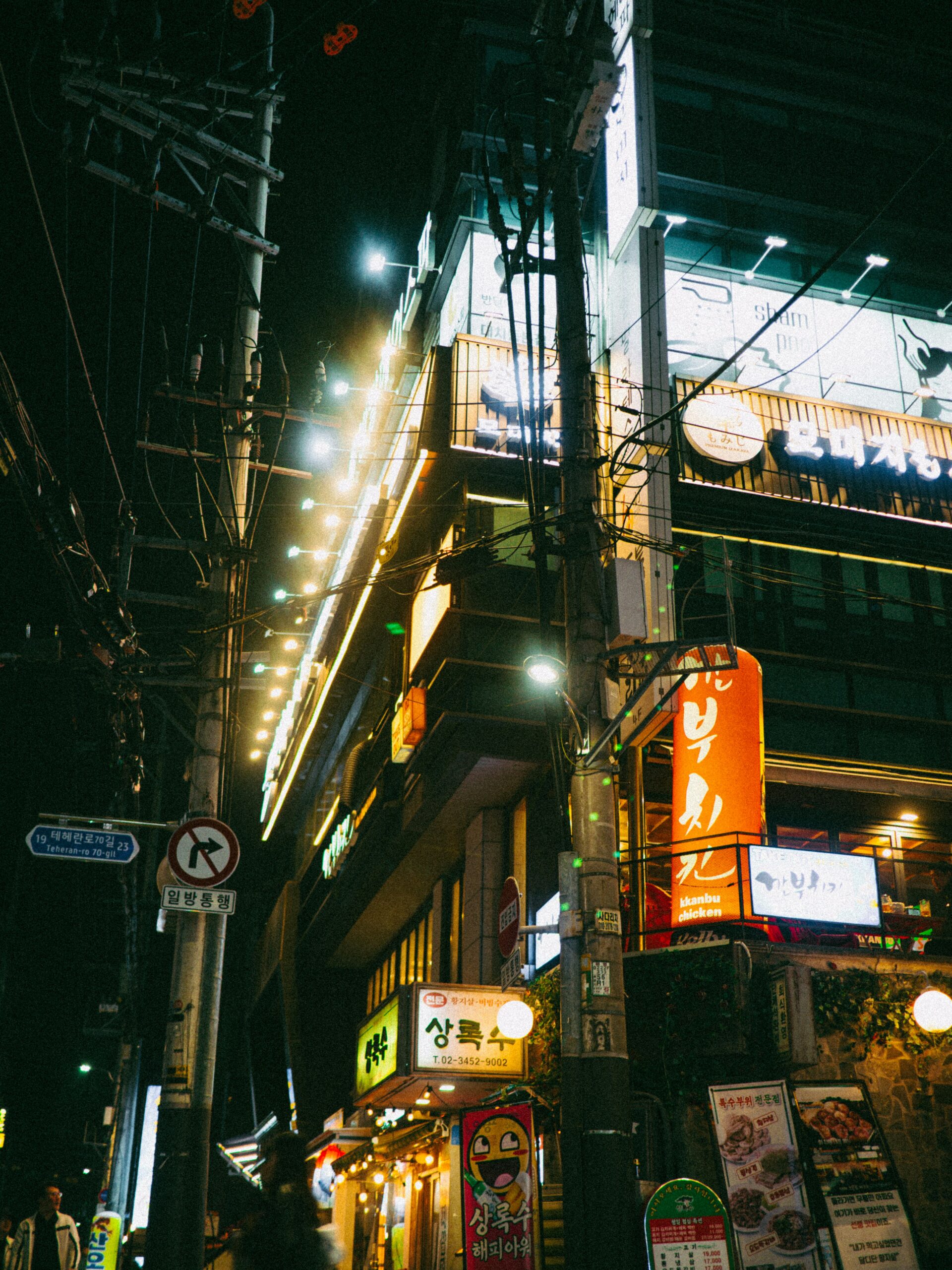
Seoul nightlife can feel confusing when you are visiting for the first time. Hongdae, Itaewon and Gangnam are all famous places to go out, but they offer very different experiences—and choosing the wrong area can mean spending your night somewhere that does not match your age, music taste, budget or travel style.
The best nightlife area in Seoul also depends on more than the neighborhood. A club that is popular with people in their early 20s may feel very different from a cocktail bar or underground music venue, and individual venues can have their own entry policies, dress expectations and event schedules. Being old enough to drink in Korea does not automatically mean every club will admit every guest.
This guide helps you choose where to go based on what you actually want from the night. We will compare Seoul’s main nightlife areas, then look at age, music, budget, solo nightlife, club entry, ID, late-night transportation and alternatives for travelers who would rather visit bars, pocha, live music venues or noraebang than clubs.
If you already know which neighborhood you want, you can also jump to our detailed Hongdae, Itaewon and Gangnam nightlife guides for venue-specific information.
- Seoul Nightlife at a Glance: Which Area Is Right for You?
- Hongdae vs Itaewon vs Gangnam: The Main Differences
- More Seoul Nightlife Areas Worth Knowing
- Where Should You Go Based on Your Age?
- Choose Seoul Nightlife by Music, Not Just Neighborhood
- Going Out Alone in Seoul
- Foreigner Entry, ID and Club Door Policies
- What Time Does Seoul Nightlife Actually Start?
- How Much Does a Night Out in Seoul Cost?
- Don’t Like Clubs? Seoul Nightlife Is Much Bigger Than That
- Should You Visit Multiple Nightlife Areas in One Night?
- Getting Home After the Last Subway
- Choose Your Nightlife Area Based on Where You’re Staying
- Before You Go Out: 10 Things to Check
- Seoul Nightlife FAQ
Seoul Nightlife at a Glance: Which Area Is Right for You?
There is no single “best” nightlife district in Seoul. The right area depends on whether you want crowded clubs, international bars, underground music, upscale lounges or a more relaxed night of drinking and food.
For most first-time visitors, Hongdae, Itaewon and Gangnam are the three main areas to compare. But they are not your only options. Euljiro, Jongno and other neighborhoods can be better choices if clubs are not the main reason you are going out.
Use this quick comparison as a starting point. Later in this guide, we will look more closely at age, music, budget, solo travel and late-night transportation.
| Area | Best For | Typical Crowd | Nightlife Style | Budget | Good for First-Time Foreign Visitors? |
|---|---|---|---|---|---|
| Hongdae | Energetic, casual nights | Mostly younger crowd | Clubs, bars, live music | $–$$ | Yes, but check individual venue entry policies |
| Itaewon | Variety and an international crowd | Wider mix of ages and nationalities | Bars, clubs, pubs, LGBTQ+ nightlife | $$ | Yes |
| Gangnam & Apgujeong | Upscale nights out | Varies by venue, often more polished | Large clubs, lounges, cocktail bars | $$–$$$ | Yes, but some venues can be more selective |
| Euljiro | Drinking and bar-hopping without big clubs | Mixed adult crowd | Small bars, cocktails, beer, late-night food | $–$$ | Yes |
| Jongno & Ikseon-dong | Korean-style evening drinks | Mixed | Bars, restaurants, pocha-style drinking | $–$$ | Yes |
| Seongsu | A more relaxed evening | Mixed | Wine, cocktails, restaurants and trendy bars | $$ | Yes |
If your priority is dancing and a high-energy crowd, start by comparing Hongdae, Itaewon and Gangnam. If you would rather spend the night moving between bars, eating and drinking, or having conversations without committing to a large club, do not overlook neighborhoods such as Euljiro and Jongno.
One important rule applies everywhere: choose the venue as carefully as the neighborhood. Two places a few minutes apart can have completely different crowds, music, prices and entry policies.
Hongdae vs Itaewon vs Gangnam: The Main Differences
Hongdae, Itaewon and Gangnam are often grouped together as Seoul’s main nightlife districts, but they are not interchangeable. Your choice can affect the age of the crowd around you, how much you spend, what kind of music you hear, how easy it is to meet other travelers and even how much attention you need to pay to individual venue entry policies.
The easiest way to choose is to think about the kind of night you want rather than which district is the most famous.
Hongdae: Young, Casual and High-Energy
Hongdae is the natural starting point if you want a busy, casual night with lots of choices within walking distance. The area combines bars, clubs, live music, restaurants and late-night streets, so you do not necessarily need a detailed plan before arriving.
Its university-area character also means the nightlife generally skews younger than in Itaewon. That does not mean travelers in their 30s cannot enjoy Hongdae, but choosing the right venue becomes more important as you move away from casual bars and into clubs with their own door policies.
Hongdae makes the most sense if your priorities are energy, variety and a relatively casual night rather than an upscale experience.
For specific clubs, music styles, age considerations, addresses and entry tips, see our detailed Hongdae Nightlife Guide.
Itaewon: International and the Most Varied
Itaewon is usually the easiest of the three areas to understand for international visitors because foreigners are a normal part of the nightlife crowd. You can move between casual pubs, cocktail bars, social party bars, LGBTQ+ nightlife in Itaewon and underground music clubs without leaving the neighborhood.
The crowd is also more mixed than the stereotypical university nightlife associated with Hongdae. That makes Itaewon particularly useful for travelers who are unsure whether they want to spend the whole night clubbing or simply want an area where they can change plans as the night develops.
Itaewon is not one single nightlife scene, however. A social bar and an underground DJ venue a few streets apart may attract completely different crowds. Check the actual venue and event rather than assuming everything in Itaewon has the same atmosphere.
For current venues, music, entry policies and late-night transportation, see our detailed Itaewon Nightlife Guide.
Gangnam & Apgujeong: Upscale and More Selective
Gangnam nightlife is a better fit when you want a more polished night involving large clubs, lounges, table service or higher-end bars. The wider Gangnam scene also extends beyond Gangnam Station itself, with nightlife around Sinsa, Apgujeong and Cheongdam.
This is where planning ahead matters more. Some venues place greater emphasis on reservations, dress, group composition or table culture, and a night here can become considerably more expensive than a casual bar-hopping night in Hongdae.
Foreign visitors do go out in Gangnam and Apgujeong, but “foreigner-friendly” should never be interpreted as guaranteed entry. Venue-specific rules still matter, particularly at clubs with selective door policies.
Choose Gangnam or Apgujeong if the venue itself is part of the experience you want—not simply because Gangnam is one of Seoul’s most famous districts.
For current entrance fees, reservations, dress codes, venue policies and nightlife areas, see our detailed Gangnam Nightlife Guide.
More Seoul Nightlife Areas Worth Knowing
Hongdae, Itaewon and Gangnam get most of the attention, but Seoul nightlife does not stop there. If you care more about drinking, food, atmosphere or conversation than spending the night in a large club, some of the city’s central and eastern neighborhoods may suit you better.
Euljiro: Outdoor Drinking, Hidden Bars and Old Seoul
Euljiro is one of the best alternatives to Seoul’s major club districts. By day, parts of the neighborhood are still filled with printing, hardware and small industrial businesses. After work, the same streets become a mix of old-school beer halls, outdoor tables and small bars hidden inside aging commercial buildings.
One of the area’s best-known experiences is Euljiro Nogari Alley, where beer is traditionally paired with nogari, or dried young pollock. The atmosphere is much more about sitting, drinking, eating and moving between small places than spending an entire night inside one large club.
Euljiro can also be confusing for first-time visitors. Some bars are upstairs or behind entrances that are easy to miss, and the neighborhood changes quickly as businesses move, close or redevelop. Check the exact venue and its current hours before heading out rather than expecting every bar you find online to still be operating.
Choose Euljiro if you want a distinctly Seoul night out without making clubs the center of your evening.
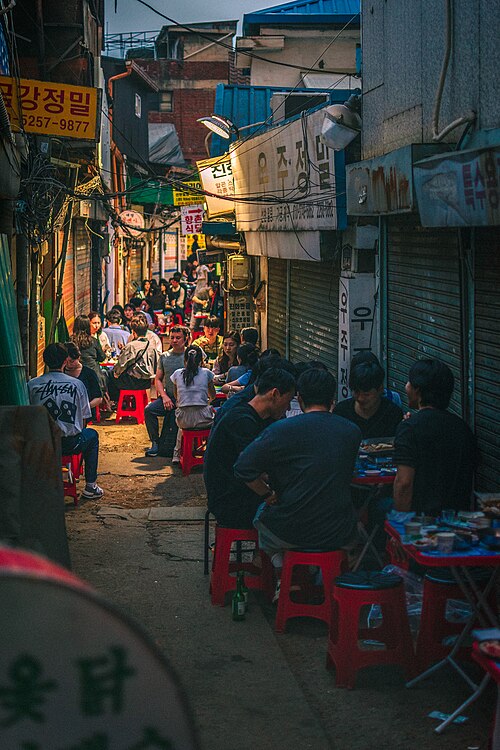
Photo: Seoul Tourism Organization / Seoul Tourism Archive (KOGL Type 1)Jongno & Ikseon-dong: Food, Drinks and Hanok Alleys
Jongno gives you a different kind of night. Around Jongno 3-ga, restaurants, drinking streets and small bars make it easy to build an evening around Korean food and alcohol rather than clubbing.
Nearby Ikseon-dong adds a more polished setting. Its narrow hanok alleys are filled with restaurants, cafés and bars, making it particularly attractive if you want dinner and drinks somewhere visually distinctive.
Do not choose Ikseon-dong expecting an all-night club district. It works better as an evening destination or as the first part of a night before moving elsewhere.
Jongno also has nightlife communities and identities that are not immediately obvious to first-time visitors, so the atmosphere can change noticeably from one street to another. Exploring with some idea of where you are going is more useful here than treating the entire neighborhood as one nightlife zone.
Seongsu: Better for a Stylish Evening Than an All-Night Party
Seongsu is famous for cafés, pop-ups, restaurants and converted industrial spaces, but its evening scene has also expanded to include wine bars, cocktail bars and music-focused venues.
It is a useful option for travelers who want to dress up for dinner, have wine or cocktails and continue the evening without entering a major club district. It can also work well for a date night or a quieter night with friends.
But Seongsu should not be treated as a substitute for Hongdae or Itaewon if your main goal is club-hopping until early morning. Think of it as a place for a stylish evening that can extend into the night rather than one of Seoul’s primary late-night party districts.
That distinction matters when choosing where to stay and how much of your night you want to spend traveling between neighborhoods.
Where Should You Go Based on Your Age?
Age matters in Seoul nightlife, but there are three different things to consider: Korea’s legal age rules, the admission policy of an individual venue, and the age of the crowd you will actually find inside.
They are not the same thing.
Being legally old enough to drink does not guarantee admission to every club. And being in your 30s or 40s certainly does not mean you are too old for Seoul nightlife—it simply makes choosing the right venue and type of night more important.
Legal Age, Venue Policy and Crowd Age Are Different
Under Korea’s current youth protection rules, people are no longer treated as minors from January 1 of the year they turn 19.
That is only the legal starting point.
Individual nightlife venues can have their own admission policies, and some youth-oriented clubs have been reported to use upper-age limits. This is especially worth checking in Hongdae, although age-related door policies can also occur elsewhere in Seoul.
Then there is crowd age. A bar may have no upper-age restriction at all but still attract mostly university-age customers. You may be able to enter without a problem and still find that the atmosphere is not what you were looking for.
So instead of asking, “Am I too old for Seoul nightlife?” ask, “What kind of Seoul nightlife fits me?”
Seoul Nightlife in Your 20s
Travelers in their 20s have the widest range of club-focused options.
Hongdae is an obvious starting point for busy streets, casual bars, dancing and a generally younger crowd. Itaewon works well if you want a more international mix or the flexibility to move between very different bars and clubs during the same night.
Gangnam and Apgujeong can also be good choices if you prefer a more polished or upscale experience and are comfortable with a higher budget.
But age should not be your only filter. A 25-year-old looking for underground techno may have more in common with an older music-focused crowd than with visitors at a mainstream university-area club.
Seoul Nightlife in Your 30s
This is where choosing the venue becomes more important than simply choosing the neighborhood.
Itaewon is a useful starting point because its nightlife covers a broad range of bars, clubs, music scenes and international crowds. Gangnam and Apgujeong can also make sense if you prefer lounges, cocktails or a more upscale night.
Hongdae is not automatically off-limits once you turn 30. Its restaurants, bars, live music venues and many other nightlife spots remain options. The issue is that some youth-oriented clubs may apply their own upper-age policies or attract a crowd much younger than you want.
If a club’s age policy is unclear, ask the door staff before spending a long time in line.
Seoul Nightlife in Your 40s and Beyond
There is plenty to do after dark in Seoul without trying to fit into a university-age club scene.
Cocktail bars, whisky bars, wine bars, jazz venues, live music, Korean drinking spots, hotel bars and late-night restaurants can all be better choices depending on what you enjoy.
Itaewon can still be useful because of its variety, while Euljiro and Jongno work well for nights built around food and drinks. Apgujeong, Cheongdam and other upscale areas may suit travelers looking for cocktails, lounges or a more polished evening.
If you do want to dance, do not choose a club based on neighborhood reputation alone. Check the specific venue, the event being held that night and any admission policy before you go.
The important point is that Seoul nightlife does not have an expiration date. The experience simply changes depending on where—and how—you choose to spend the night.
Choose Seoul Nightlife by Music, Not Just Neighborhood
Choosing a nightlife district is only half the decision. In Seoul, the music can change dramatically from one venue to another—and sometimes from one night to the next at the same venue.
If music matters to you, check the actual event or DJ lineup before deciding where to go.
Hip-Hop
Hip-hop has a strong presence in Seoul nightlife, particularly around Hongdae and parts of Gangnam and Itaewon.
But “hip-hop club” can mean very different things. Some venues lean toward Korean hip-hop, while others mix international hip-hop, R&B and mainstream tracks. The crowd and music can also change depending on the night.
If hip-hop is the main reason you are going out, check the venue’s current social media or event schedule instead of relying only on an old list of recommended clubs.
House & Techno
Seoul has an established underground electronic music scene, with house and techno events appearing at dedicated clubs, smaller music venues and event spaces.
Itaewon has long been associated with part of this scene, but do not assume that one neighborhood owns Seoul techno. Venues close, scenes move and promoters use different spaces.
For electronic music, the event matters as much as the address. Check the lineup, promoter and music description for the night you plan to visit.
EDM & Mainstream Dance
Travelers looking for large dance floors, recognizable tracks and a more conventional big-club experience will generally have different priorities from someone looking for underground techno.
Larger club environments are more commonly associated with areas such as Gangnam, while Hongdae also offers plenty of high-energy dance nightlife.
Here, admission policies, cover charges, dress expectations and table culture can matter just as much as the music.
Indie & Live Music
Not every Seoul night needs a DJ.
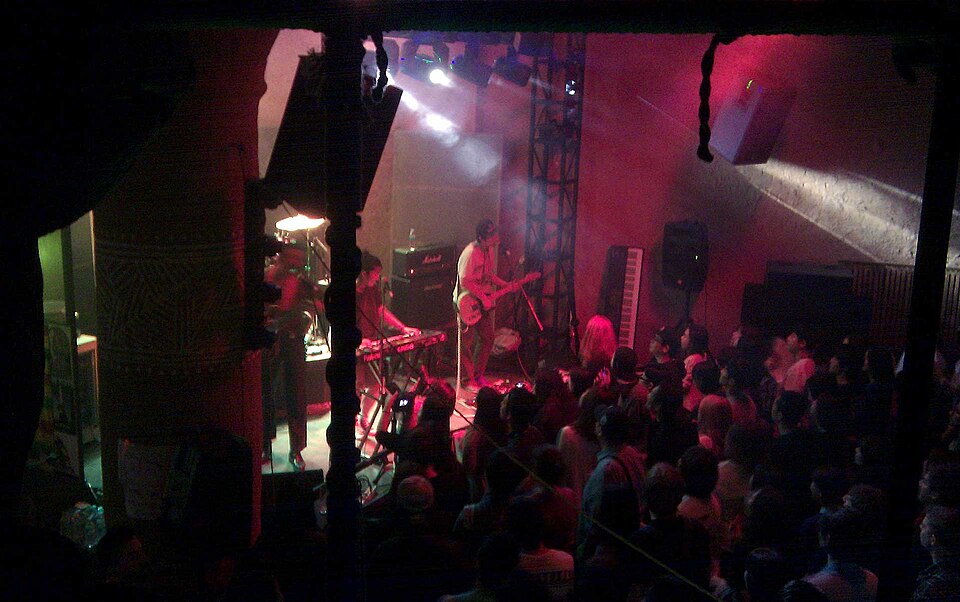
Hongdae remains strongly associated with live music and its long-running indie scene. Small performance venues can be a better choice if you would rather watch a band than spend the night in a large dance club.
Always check who is performing and whether tickets need to be booked in advance. A venue that looks like a casual nightlife stop online may be operating around a scheduled performance that night.
Jazz
Seoul also has a substantial jazz and live-music scene, making it a useful alternative for travelers who want drinks and music without a typical club environment.
Rather than choosing a jazz venue based purely on neighborhood, check the night’s performance schedule, admission or minimum-order policy, and whether reservations are recommended.
This can be particularly useful for couples, solo travelers and anyone looking for a slower night out.
What If You Want K-Pop?
Do not assume that a nightclub in Seoul will automatically play K-pop.
Many clubs focus on hip-hop, house, techno, EDM or other genres, and even venues that play mainstream music may not deliver the K-pop-heavy night international visitors sometimes expect.
If dancing to K-pop is specifically what you want, look for an event that actually advertises K-pop rather than choosing a club simply because it is in Korea.
Check the Event, Not Just the Club
This is one of the most useful rules for planning nightlife in Seoul.
A club name tells you where you are going. The event tells you what kind of night you are actually going to have.
Before leaving your hotel, check the venue’s latest official social media or event page for the DJ or performers, music genre, opening time, admission price, reservation information and any special entry rules.
This is especially important for underground electronic music and live performances, where the experience can change completely from one night to the next.
Going Out Alone in Seoul
Going out alone in Seoul is completely possible, but the experience depends heavily on the type of venue you choose.
A busy pub, music event or bar with shared social spaces can be relatively easy to visit alone. A club with selective door policies or a nightlife scene built around groups and table reservations may feel very different.
If meeting people is important to you, choose the venue for its atmosphere rather than simply heading to the biggest club you can find.
Solo Female Travelers
Solo female travelers can enjoy Seoul nightlife, but the usual precautions still matter.
Keep control of your drink, avoid accepting an already-open drink from someone you do not know, and do not leave your phone, wallet or bag unattended. If you meet someone during the night, you do not need to share your accommodation details or follow them to another location simply because you have been drinking together.
Before going out, save your accommodation address in Korean as well as English. This is particularly useful if you need to show the address to a taxi driver late at night.
For a first solo night, an established bar, live-music venue or organized event may also be easier to navigate than choosing an unfamiliar club at random.
Solo Male Travelers
Traveling alone as a man does not automatically prevent you from entering Seoul clubs, but admission should never be assumed.
Some venues use door policies that can vary according to the night, event, age, dress or group composition. A solo traveler may therefore have a different experience at two clubs in the same neighborhood.
If a particular club is your main destination, check its latest official information before traveling across Seoul for it. Once you arrive, ask the door staff about entry before joining a long queue if anything is unclear.
Bars, pubs, live-music venues and ticketed DJ events can also be easier choices when the main goal is to enjoy the night rather than enter one specific high-demand club.
All-Male and Mixed Groups
Group composition can matter at some nightlife venues, particularly places with selective admission or table-focused nightlife.
That does not mean there is a Seoul-wide rule against groups of men. There isn’t one universal door policy covering every club, and it would be misleading to treat one venue’s rule as a rule for an entire neighborhood.
For groups, the practical approach is simple: check the specific venue before going, especially if you are traveling a long distance, planning to arrive late or choosing a club where admission is a major part of the night’s plan.
The Best Places to Go Alone Are Not Always Clubs
If your real goal is to meet people rather than simply dance, broaden your options.
Social bars, pubs, live performances, organized music events and some smaller nightlife venues can make conversation much easier than a loud dance floor. Itaewon’s international crowd can be particularly convenient for visitors who want a variety of options within the same area.
And if a place feels uncomfortable once you arrive, leave and try somewhere else. One of the advantages of Seoul’s major nightlife districts is that you rarely need to make one venue your entire night.
Foreigner Entry, ID and Club Door Policies
One of the easiest ways to ruin a night out in Seoul is to arrive at a club without acceptable identification.
Being a foreign visitor does not automatically make club entry difficult, but every venue can have its own rules. Your age, ID, clothing, group composition and the event being held that night can all affect admission.
Korea’s official Mobile Residence Card
What ID Should Foreigners Carry?
If you are visiting Korea as a tourist and plan to enter clubs, the safest choice is your original physical passport.
Do not assume that a photo, screenshot or photocopy of your passport will be accepted. Some Seoul clubs explicitly require foreign guests to show the physical passport at the door and reject copies or phone images.
A driver’s license or other ID issued in your home country should not be treated as a guaranteed substitute either. If carrying your passport is unavoidable, keep it secured in a zipped inner pocket or small crossbody bag rather than somewhere it can easily fall out.
Foreign residents of Korea are in a different situation. Korea has an official mobile foreign resident ID system with the same legal validity as the corresponding physical residence card. However, tourists generally do not have access to this system, and individual nightlife venues may still have their own ID-verification procedures.
When a particular venue matters to your plans, confirm its accepted ID before you go.
Age Restrictions and Venue-Specific Rules
Meeting Korea’s legal drinking-age requirement does not guarantee admission to every club.
Individual venues may impose additional policies involving age, event admission, reservations, group composition or other door criteria. These policies can also change over time.
This is especially important if you are visiting a youth-oriented club, are in your 30s or older, or are traveling across Seoul specifically for one venue.
Do not rely on an old blog post or a review from several years ago. Check the venue’s latest official information and, if necessary, ask staff directly.
Dress Codes
There is no single dress code for every club in Seoul.
A casual outfit may be completely normal at one Hongdae venue while an upscale Gangnam club may expect a more polished appearance. Some clubs specifically restrict items such as beachwear, sportswear, flip-flops or similarly casual clothing.
If you are unsure, clean and simple clothing with proper shoes is the safer choice.
More importantly, check the actual venue. “Gangnam dress code” or “Hongdae dress code” is too broad to describe every door in those neighborhoods.
Why Entry Is Never Guaranteed
A guest list, reservation inquiry or the fact that other foreigners entered previously should not be interpreted as a universal guarantee of admission.
Capacity, the event, age policies, dress requirements and venue-specific door decisions can all affect what happens when you arrive.
This is also why the phrase “foreigner-friendly” needs some caution. It can mean that a venue regularly serves international guests or that English communication is relatively easy. It does not necessarily mean that every foreign visitor will be admitted regardless of the venue’s other rules.
Ask Before You Wait
If there is one practical rule worth remembering, it is this: do not spend an hour in line before finding out whether you can enter.
If you are unsure about an age policy, your ID, dress code or another admission rule, politely ask the door staff before joining a long queue.
This matters especially on busy Friday and Saturday nights, when discovering a problem after waiting can waste a significant part of your evening.
And if one venue says no, do not assume the entire neighborhood is closed to you. Seoul’s major nightlife districts contain many different types of bars, clubs and music venues with different policies.
What Time Does Seoul Nightlife Actually Start?
One of the most common mistakes first-time visitors make is going to a Seoul club too early.
Seoul nightlife usually builds gradually. Dinner comes first, bars get busier later in the evening, and many dance clubs do not reach their busiest period until well after midnight.
The exact timing varies by neighborhood, venue, event and day of the week, but a typical night can look something like this:
7–9 PM: Dinner and the Start of the Night
This is a good time for Korean barbecue, pocha-style food, rooftop drinks or a first round of beer and soju.
In areas such as Hongdae, you may also find busking and busy pedestrian streets before the club scene really begins.
If you only want dinner and a few drinks, there is no reason to wait until midnight to experience Seoul after dark.
9 PM–Midnight: Bars Fill Up
This is when bars, pubs and drinking streets become more active.
It is a useful time for bar-hopping in Itaewon, drinks around Euljiro or Jongno, or starting the evening in Hongdae before moving somewhere with dancing later.
Some clubs are already open during this period, but arriving early can mean walking into a room that has not filled up yet.
Midnight–2 AM: Clubs Come Alive
After midnight, the balance shifts.
Queues can grow, dance floors fill and many clubs move into the busiest part of their night. In Hongdae in particular, a venue that feels quiet at 10:30 PM can feel completely different at 1 or 2 AM.
This is also the point when transportation becomes part of your decision. Depending on your route and day, the last subway may already have departed.
2–4 AM: Late-Night Seoul
For many club-focused nights, 2 AM is not the end.
Some venues remain busy well into the early morning, while other bars and clubs may already be approaching closing time. Never assume that every Seoul club stays open until sunrise—check the specific venue before planning your night around it.
This is also a popular time for late-night food. Korean barbecue, soup, noodles, convenience stores and other late-night options can become part of the night rather than simply the meal before it.
Around Dawn: Taxi, Night Bus or the First Train?
If you stay out until morning, you may eventually reach the point where waiting for the subway to restart makes more sense than taking a taxi across the city.
But do not plan around a universal “5:30 AM first train.” The first available train depends on the station, line, direction and day.
Check your actual route in a current transit app before deciding to wait.
The same applies to the last train at night. Seoul does not have one single subway closing time, and weekend or holiday schedules can differ from weekday service.
The practical rule is simple: before you start drinking, decide whether you plan to catch the last train, use a night bus or taxi, or stay out until public transportation starts again.
How Much Does a Night Out in Seoul Cost?
A night out in Seoul can be surprisingly affordable—or extremely expensive.
The biggest difference is not simply which neighborhood you choose. It is whether you are drinking casually, paying club cover charges and buying individual drinks, or entering the world of reserved tables and bottle service.
Prices also change by venue, event and day of the week, so use the figures below as planning ranges rather than fixed prices.
Club Entry
For regular admission, Hongdae is generally the easiest major nightlife area to do on a smaller budget. Many clubs charge around ₩5,000–₩20,000, while some venues or time slots may offer free entry.
In Itaewon, regular club and event admission commonly falls around ₩10,000–₩30,000, although the exact price can depend heavily on the event.
Gangnam club admission can also start in the tens of thousands of won, but the important difference is what happens once tables and bottle service enter the picture.
Always check whether your cover includes a drink and whether the price changes after a certain time.
Drinks
A basic beer in a casual Hongdae bar may cost roughly ₩4,000–₩6,000, while drinks in Itaewon and upscale areas can cost considerably more.
Cocktails vary even more. A simple drink at a casual bar and a cocktail at a high-end Gangnam lounge should not be treated as the same expense.
If you plan to visit several bars, drinks can easily become a larger part of your budget than club admission itself.
Late-Night Food
Do not forget food when calculating your night.
Late-night eating is a normal part of going out in Korea, whether that means Korean soup, barbecue, noodles, fried chicken, convenience-store food or a kebab after leaving a club.
A simple late-night meal can still be inexpensive, but a full restaurant meal shared with drinks can add substantially more to the night.
VIP Tables and Bottle Service
This is where Seoul nightlife prices can jump dramatically.
A regular club cover and a VIP table are two completely different products. At some upscale Gangnam clubs, table reservations can involve minimum spending of hundreds of thousands of won or more for the group, with premium weekend tables reaching well above ₩1 million.
Do not assume that a quoted table price is simply a fee for somewhere to sit. Depending on the venue, it may represent a minimum amount your group must spend on bottles and other orders.
If you are considering a table, confirm the total minimum spend, what is included, whether the amount is for the entire group, and whether any additional charges apply before agreeing to the reservation.
Three Realistic Ways to Budget Your Night
You do not need a VIP budget to experience Seoul nightlife.
A budget night might mean dinner or inexpensive drinks in Hongdae, one club with a modest cover charge, a few drinks and late-night food.
A mid-range night could include cocktails or bar-hopping in Itaewon, paid club or event admission, several drinks and a taxi back to your accommodation.
An upscale night in Gangnam or Apgujeong can involve premium cocktails, club admission, taxis and possibly a reserved table or bottle service. Once a table is involved, the total can move into a completely different price category.
The safest way to budget is to decide before you go out whether you want to pay per drink or reserve a table. Those two choices can turn the same night in Seoul into very different bills.
| Area | Typical Club Entry | Typical Beer / Basic Drink | Cost Character |
|---|---|---|---|
| Hongdae | Free–₩20,000 | About ₩4,000–₩8,000 | Best suited to a lower-budget night |
| Itaewon | Free–₩30,000 | About ₩6,000–₩15,000+ | Wide range from casual to premium |
| Gangnam | About ₩10,000–₩30,000+ | About ₩10,000–₩20,000+ | Regular entry can be affordable, but tables can be very expensive |
Don’t Like Clubs? Seoul Nightlife Is Much Bigger Than That
You do not need to enter a club to have a proper night out in Seoul.
For many Koreans, a night out is built around several rounds: dinner and drinks at one place, another bar or drinking spot afterward, and perhaps noraebang or late-night food before going home. If crowded dance floors are not your thing, this side of Seoul nightlife may actually be more interesting.
Pocha and Yajang
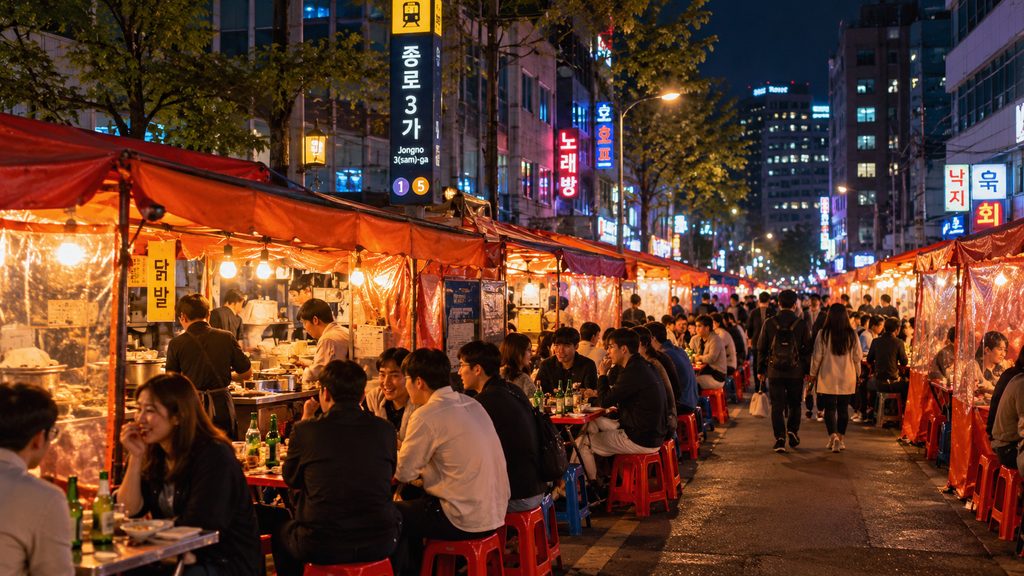
A pocha is a casual Korean drinking spot where alcohol and food are meant to be enjoyed together. Depending on the place, that could mean everything from fish cake and pancakes to grilled dishes, seafood or spicy stews.
You may also hear the word “yajang,” which refers to drinking at tables set up outdoors. The experience is less about cocktails or dancing and more about sitting outside with food, beer or soju and watching the neighborhood around you.
Euljiro is particularly well known for this style of evening, but casual Korean drinking culture can be found throughout Seoul.
One useful thing for foreign visitors to know is that many Korean drinking places expect you to order food rather than treating the table like a Western-style bar where you can order only one drink. Ordering systems and minimum requirements vary by business, so check the menu rather than assuming every pocha works the same way.
Cocktail, Whisky and Wine Bars
Seoul also has a large bar scene that sits almost completely outside club culture.
Itaewon and the surrounding neighborhoods offer everything from casual cocktails to specialist bars, while areas such as Apgujeong and Cheongdam lean toward more polished and expensive nights out. Euljiro and other central neighborhoods add smaller bars hidden inside older buildings.
Reservations can matter at small or popular bars, especially on Friday and Saturday nights. Some venues also have limited seating or operate around a specific concept, so checking before making a long trip is worthwhile.
Noraebang
Noraebang—Korean karaoke—is one of the easiest ways to extend a night after dinner or drinks.
Unlike karaoke bars where you perform in front of strangers, a typical noraebang gives your group a private room with microphones and a song system.
Many song systems include English and other international tracks as well as Korean music, although the selection depends on the machine and venue.
Pricing is usually based on room time rather than admission per person, making it particularly convenient for small groups. Some places stay open very late, but hours vary.
Jazz and Live Music
If you want to listen rather than dance, Seoul has jazz clubs, small concert venues and other live-music options.
The most important thing is to check the performance schedule. A venue may require a ticket, reservation, cover charge or minimum drink order, and the experience can change completely depending on who is performing that night.
This is another situation where choosing the event first can be more useful than choosing a neighborhood first.
Late-Night Korean Food
Food is not simply what you eat before nightlife in Seoul. It can be part of the nightlife itself.
After drinking, Koreans often continue the night with another meal or snack. Depending on the neighborhood and hour, that might mean gukbap, gamjatang, barbecue, noodles, fried chicken or convenience-store food.
This also gives you an easy alternative if the club you planned to visit does not work out. Instead of treating the night as ruined, switch to food, drinks, karaoke or another nearby bar.
Seoul is at its best after dark when you do not assume that one club has to determine whether the night was successful.
Should You Visit Multiple Nightlife Areas in One Night?
Hongdae, Itaewon and Gangnam may all be in Seoul, but trying to visit all three in one night is usually less convenient than it sounds.
Each district has enough bars, clubs, restaurants and late-night options to fill an entire evening. Moving across the city also means leaving one atmosphere just as it is getting busy, spending time in transit and potentially paying late-night taxi surcharges.
For most travelers, choosing one main nightlife area is the better plan.
Hongdae and Itaewon: The Easiest Combination
If you really want to experience two major nightlife districts in the same night, Hongdae and Itaewon are one of the more practical combinations.
Before the subway stops running, the journey can be relatively straightforward. If you are near Sangsu Station in the Hongdae area, Line 6 connects directly toward Itaewon. From around Hongik University Station, allow additional time for walking and transfers.
A taxi can also make the move convenient later at night, although travel time and the fare increase when traffic is heavy or late-night surcharges apply.
One reasonable plan is to start with dinner and drinks in Hongdae before moving to Itaewon later in the night—or do the reverse if a specific event determines where you need to be at a particular time.
But you do not need to visit both simply to feel that you have experienced Seoul nightlife.
Itaewon and Gangnam: Possible, but Plan the Move
Combining Itaewon with Gangnam or Apgujeong is also possible, particularly by taxi.
This can make sense when you have a specific reservation, DJ event or club you want to visit in the second area.
What makes less sense is leaving a good night in Itaewon simply to arrive in Gangnam without knowing where you are going. Gangnam nightlife is spread across several areas, and your actual destination could be around Gangnam Station, Sinsa, Apgujeong, Cheongdam or somewhere else entirely.
Always route the specific venue rather than entering “Gangnam” as if it were one nightlife street.
Hongdae and Gangnam: Think Twice
Hongdae and Gangnam sit on very different sides of the city.
They are connected by Subway Line 2, but traveling between the actual nightlife streets takes more time than simply looking at a subway map might suggest. Once you include walking to the station, waiting for a train and reaching your final venue, a cross-city move can consume a significant part of the night.
After subway service ends, a taxi becomes much more convenient—but also more expensive, particularly during Seoul’s late-night surcharge periods.
Unless you have a specific event or reservation in both areas, it is usually better to choose one.
Three Nightlife Districts in One Night?
Hongdae → Itaewon → Gangnam may look like an efficient way to see everything.
In reality, it often means seeing less.
You spend more time checking maps, waiting for transportation, finding the next venue and paying for taxis instead of enjoying the neighborhood you are already in.
A better strategy for a multi-night Seoul trip is to give different nights different purposes: perhaps Hongdae for a casual high-energy night, Itaewon for bars and a more international mix, and Gangnam or Apgujeong for a more upscale evening.
If you only have one night, choose the area that best matches your age, music preference, budget and nightlife style—and stay flexible within that neighborhood.
Getting Home After the Last Subway
Getting to a nightlife district in Seoul is usually easy. Getting back to your hotel at 2 or 3 AM requires a little more planning.
Seoul’s subway does not run 24 hours, and the last train depends on the station, line, direction and day. Do not assume that “the subway closes at midnight” means you can enter any station just before midnight and still reach your destination.
Check the complete route before you start drinking, including your final transfer.
If you miss the last train, you still have several options.
For a complete explanation of Seoul’s subway, buses, taxis and T-money, see our Seoul Transportation Guide.
Seoul’s late-night transportation information
Seoul Night Buses
Seoul operates late-night buses identified by route numbers beginning with “N.”
These routes connect different parts of the city during the hours when regular subway service is unavailable and can be much cheaper than taking a taxi across Seoul.
However, a night bus is not simply a replacement for every subway route. The network is smaller, intervals can be longer, and the nearest stop may still require a walk or transfer.
Check the specific N-bus route and arrival information before leaving your venue rather than assuming one will take you directly to your hotel.
Taking a Taxi Late at Night
Taxis are usually the simplest option when your accommodation is not conveniently connected by a night bus.
For regular Seoul taxis, the standard daytime base fare is ₩4,800. Late-night surcharges currently apply from 10 PM to 4 AM:
- 10–11 PM: 20% surcharge
- 11 PM–2 AM: 40% surcharge
- 2–4 AM: 20% surcharge
That makes 11 PM to 2 AM the most expensive period for a regular metered taxi.
Traffic and demand can also affect how easy it is to find a taxi in busy nightlife districts, so do not wait until your phone battery is almost dead before arranging your ride.
official Seoul taxi fare guide
If you expect to use taxis after a night out, our Korea Taxi Apps for Foreigners guide compares k.ride, Kakao T, Uber and TABA, including foreign-card support, late-night use and app differences.
Taxi Apps for Foreign Travelers
Using a taxi app can be easier than trying to explain your destination verbally after a night out.
Seoul’s official tourism information recommends TABA as a multilingual taxi app designed for international travelers. It works with the Seoul Metropolitan Government and Tmoney, supports searches in multiple languages and allows travelers to register using their existing mobile number.
Whichever service you use, enter your exact accommodation rather than only the neighborhood name.
It is also useful to save your hotel’s name and address in Korean before going out.
Staying Out Until the Subway Starts Again
Another option is simply to stay out until morning.
Seoul subway trains generally begin operating again from around 5:30 AM, but this is only a rough guide. The first train available to you depends on the station, line and direction.
If you are considering this strategy, check the first train for your actual route before deciding that waiting until morning will work.
Late-night restaurants, cafés, convenience stores and other businesses can help fill the gap, but opening hours vary widely.
Plan the Trip Home Before Your First Drink
The easiest approach is to make the transportation decision before the night begins.
Check your last subway, see whether an N-bus can take you near your accommodation, estimate the taxi distance and save your hotel’s Korean address.
Then decide whether your plan is:
- Catch the last subway.
- Take an N-bus.
- Take a taxi.
- Stay out until morning transportation resumes.
Doing this before you go out is much easier than trying to solve the same problem at 3 AM with a low phone battery.
Choose Your Nightlife Area Based on Where You’re Staying
Where you stay in Seoul can make a surprisingly large difference to your nightlife experience.
During the day, crossing the city is usually just part of sightseeing. At 2 or 3 AM, after the subway has stopped running, the same journey may mean a longer and more expensive taxi ride.
If nightlife is an important part of your trip, consider your accommodation before deciding where to spend every night.
Staying in Hongdae
If you are staying in Hongdae, Yeonnam-dong or around Hongik University Station, Hongdae is the obvious choice for the easiest night out.
You can have dinner, visit bars or clubs and potentially walk back to your accommodation without worrying about the last subway.
Itaewon is also a reasonable option when you want a different atmosphere, but returning late at night may require a taxi or night bus.
Going to Gangnam is certainly possible, but doing it repeatedly just for nightlife means crossing a large part of Seoul each time.
Staying in Itaewon
Itaewon is one of the most flexible bases if nightlife is a priority.
You already have a large selection of bars, clubs, restaurants and LGBTQ+ nightlife nearby, and you can choose nights when you do not need transportation at all.
It is also positioned more conveniently between western Seoul and the Gangnam side of the city than Hongdae is.
That does not make every nightlife district “close,” but it can make Itaewon a practical base for travelers who want to experience several different scenes during the same trip.
Staying in Gangnam, Sinsa or Apgujeong
If your accommodation is south of the Han River, consider using Gangnam, Sinsa, Apgujeong and nearby areas for at least some of your nights.
This is particularly useful if you prefer cocktails, lounges, upscale bars or larger club environments.
You can still visit Hongdae or Itaewon, but check how you plan to return before going out. A cross-city taxi after the subway stops can add a noticeable amount to the cost of the night.
Staying in Myeongdong, Jongno or Central Seoul
Central Seoul gives you a different advantage.
Jongno, Ikseon-dong and Euljiro are convenient for food, pocha, bars and a less club-focused evening, while the major club districts remain accessible when you want them.
This can be a particularly good setup for travelers who want nightlife to be part of their trip without choosing accommodation inside a major party district.
If you spend the night in Hongdae, Itaewon or Gangnam, however, plan the return journey rather than assuming you can walk back or take the subway at any hour.
Don’t Choose a Nightlife District in Isolation
A nightlife area that looks perfect on paper may be less appealing if getting back to your hotel requires an expensive cross-city taxi every night.
For a short trip, convenience matters.
If two neighborhoods both match the type of nightlife you want, the one closer to your accommodation is often the more practical choice. Save the longer journey for a night when there is a particular club, performance, DJ or event that makes the trip worthwhile.
If you have not booked accommodation yet, see our Where to Stay in Seoul guide before choosing your base.
Before You Go Out: 10 Things to Check
A few minutes of preparation can prevent most of the common problems foreign travelers run into during a night out in Seoul.
Before leaving your accommodation, check these 10 things:
- Bring acceptable ID.
If you are visiting Korea as a tourist and plan to enter clubs, carrying your original physical passport is the safest option. Do not assume a photo or photocopy will be accepted. - Check the venue’s age policy.
Being legally old enough to drink does not guarantee entry to every club. Look for any venue-specific age restrictions before traveling there. - Check tonight’s event and music.
Do not choose a club based only on its name or neighborhood. Check the current DJ, performers or event so you know what kind of music to expect. - Check the dress code.
Seoul does not have one universal club dress code. A casual Hongdae venue and an upscale Gangnam club may have very different expectations. - Confirm the entrance fee or reservation.
Cover charges can change depending on the event, day and arrival time. If you reserved a table, confirm the minimum spend and exactly what is included. - Know how you are getting home.
Check your last subway before you start drinking. If you plan to stay later, know whether you will use a night bus, taxi or wait for morning transportation. - Save your accommodation address in Korean.
Keep the hotel or guesthouse name and full address on your phone. A screenshot can also help if your mobile data becomes unreliable. - Charge your phone—and consider a power bank.
Maps, translation, taxi apps and messaging all become much more important late at night. Do not begin the evening with a nearly empty battery. - Keep your valuables secure.
Carry only what you need and keep your passport, phone, wallet and cards somewhere difficult to lose while moving through crowded streets or venues. - Have a backup plan.
A club may be full, an event may not match your expectations or you may simply change your mind. Save one or two nearby alternatives so a rejected entry or disappointing venue does not end your night.
The most important thing is not to over-plan every hour. Prepare for the things that can cause problems—ID, entry, transportation and your phone—then leave enough flexibility to change venues if the night develops differently than expected.
Seoul Nightlife FAQ
Can foreigners enter clubs in Seoul?
Yes. Many clubs in Hongdae, Itaewon and Gangnam regularly receive international visitors.
However, entry is never guaranteed simply because a venue is known as foreigner-friendly. Individual clubs can have their own rules involving age, ID, dress, reservations, group composition or the event being held that night.
Check the specific venue before you go.
Do I need my passport to enter a club in Seoul?
If you are visiting Korea as a tourist, your original physical passport is the safest ID to carry when entering clubs.
Do not assume that a passport photo, screenshot, photocopy or driver’s license from your home country will be accepted.
Foreign residents with Korean-issued identification have different options, but tourists planning to visit clubs should check the venue’s current ID policy and be prepared to show their physical passport.
Is Hongdae nightlife good if you are over 30?
It can be.
Hongdae has much more than youth-oriented dance clubs, including bars, restaurants, live music and other late-night venues. Travelers in their 30s and older can still have an excellent night there.
The important distinction is that some individual clubs may use their own upper-age admission policies or attract a predominantly younger crowd.
If you are over 30 and a particular club is important to you, check its current policy before waiting in line.
Do clubs in Seoul play K-pop?
Some do, but you should not assume that every club in Seoul plays K-pop.
Many venues focus on hip-hop, house, techno, EDM, R&B or other genres. Music can also change depending on the DJ or event.
If dancing to K-pop is one of your priorities, look for a venue or event that specifically advertises K-pop.
What time do clubs get busy in Seoul?
Many club-focused nights become much busier after midnight, with some venues reaching their strongest crowds around 1–3 AM.
That is not a universal schedule. The neighborhood, venue, event and day of the week all make a difference.
Check opening hours and the night’s event before going, especially if you are planning your transportation around the last subway.
Which Seoul nightlife area is best for first-time visitors?
There is no single best area for everyone.
Choose Hongdae if you want a younger, casual and energetic atmosphere; Itaewon if you want an international crowd and a wide variety of nightlife; and Gangnam or Apgujeong if you are looking for a more polished or upscale night.
If clubs are not important to you, Euljiro and Jongno can be better choices for Korean drinking culture, food and bar-hopping.
Your age, music preference, budget, accommodation location and preferred type of night are more useful decision factors than simply choosing Seoul’s most famous nightlife district.