
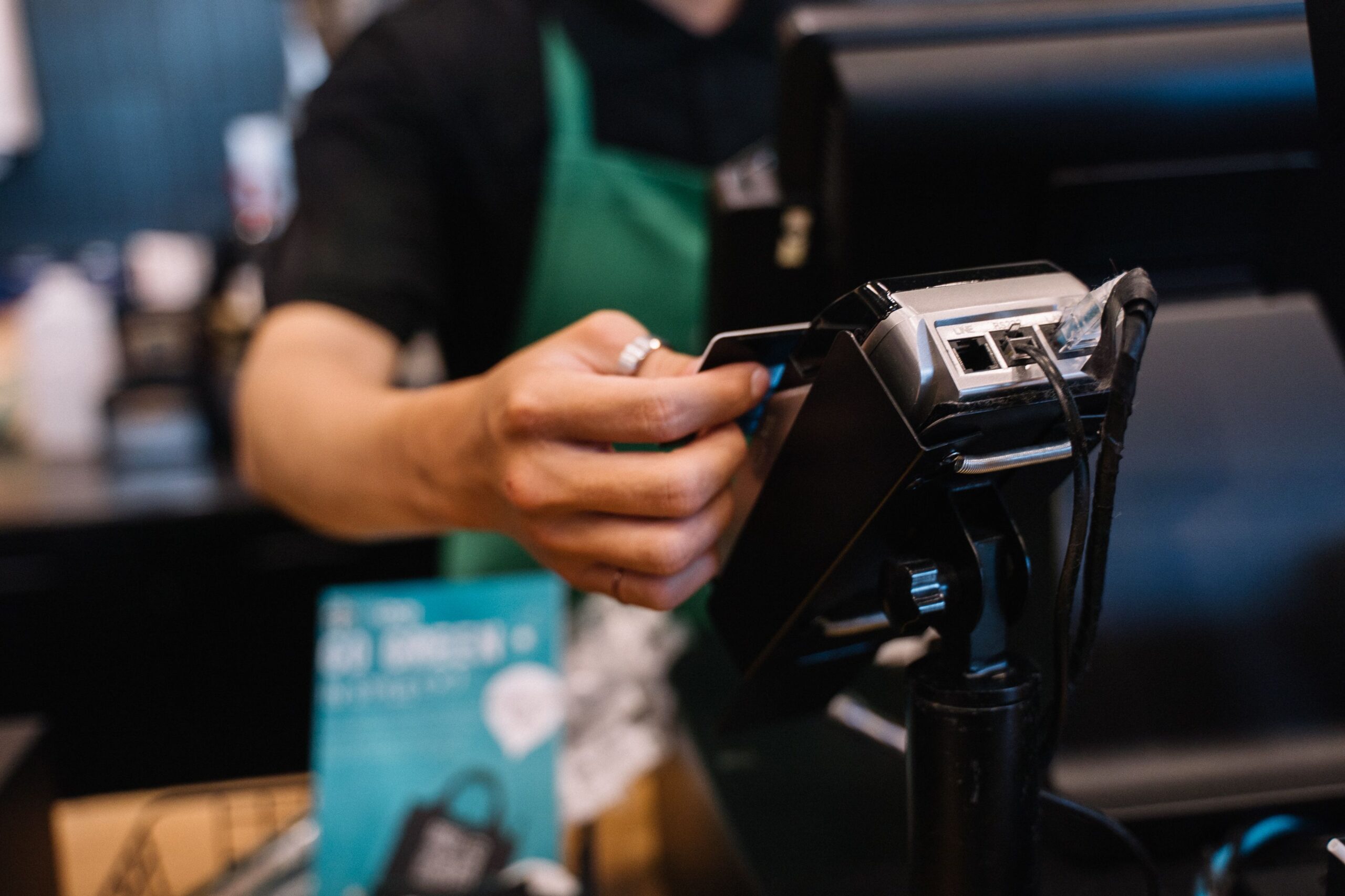
Knowing how to pay in Korea as a tourist is generally simple, but the system can be confusing at first. Foreign Visa and Mastercard cards work at most hotels, restaurants, cafés, convenience stores and major shops, but that does not mean one card will work for every part of your trip.
Public transportation is the biggest exception. You normally cannot tap a foreign credit card directly at a Seoul subway gate or regular bus reader. Most travelers still use a T-money card for everyday public transport, while cash remains useful for topping up a physical T-money card and for some markets, small vendors and other situations where international cards may not work.
The easiest strategy is not to choose between cash and cards. Bring at least one international credit or debit card, keep a modest amount of Korean won as backup, and use a separate transit payment method such as T-money. This guide explains what works, where foreign cards can fail, and which payment method makes the most sense in each situation.
- Quick Answer: What Should Tourists Use to Pay in Korea?
- Do Foreign Credit and Debit Cards Work in Korea?
- How Much Cash Should You Carry in Korea?
- Using T-money for Public Transportation
- Should You Use a Seoul Climate Card Instead?
- Mobile Payments in Korea: Apple Pay and Korean Payment Apps
- Should Tourists Use WOWPASS in Korea?
- Why Does My Foreign Card Get Declined in Korea?
- Paying at Restaurants, Cafés, Convenience Stores and Kiosks
- Paying for Taxis in Korea
- Paying Online and Booking in Korea
- Using ATMs and Withdrawing Cash in Korea
- Should You Exchange Money Before Arriving in Korea?
- How to Pay in Korea: Best Payment Setup for Tourists
- Frequently Asked Questions About Paying in Korea
- Final Tips for Paying in Korea
Quick Answer: What Should Tourists Use to Pay in Korea?
For most tourists, the best setup is an international credit or debit card + some Korean won + a T-money card for public transportation. You do not need to rely entirely on cash, and you usually do not need a special Korean payment app for a short trip.
| Payment method | Best for | Foreign tourist use | Key limitation |
|---|---|---|---|
| International credit/debit card | Hotels, restaurants, cafés, shopping, convenience stores | Best everyday payment option | Can fail at some kiosks, online services or smaller merchants |
| Korean won cash | Markets, small purchases, backup | Keep some with you | Carrying large amounts is unnecessary |
| T-money | Subway, buses and other local transit | Very useful for most travelers | A physical card usually needs cash for purchase/top-up |
| Seoul Climate Card | Unlimited eligible Seoul transit for a fixed period | Useful for some Seoul itineraries | Coverage and value depend on your route and trip length |
| Mobile wallet | Contactless payments at supported merchants | Useful as a backup | Acceptance varies by wallet, card issuer and terminal |
| Tourist prepaid card | Spending and sometimes currency/top-up features | Optional | Not necessary for every traveler |
If you want the simplest setup, use your regular international card for everyday purchases, T-money for buses and subways, and cash only when needed. Travelers staying mainly in Seoul should also compare T-money with the Seoul Climate Card before buying a transit pass.
Do Foreign Credit and Debit Cards Work in Korea?
Yes. International credit and debit cards are widely accepted in South Korea, especially at hotels, department stores, convenience stores, cafés, restaurants, tourist attractions and larger retail shops. Visa and Mastercard are generally the most practical cards to bring, while American Express, JCB and UnionPay are also accepted at many businesses.
For normal in-person purchases, most travelers can use an international card as their main payment method. You generally do not need to exchange large amounts of cash before arriving in Korea.
However, card acceptance is not completely universal. A foreign card can still fail even when a Korean-issued card would work. This is more likely to happen with some self-service systems, Korean apps, online reservations or services built around local payment and identity-verification systems.
This is why it is useful to separate two questions: “Does this business accept cards?” and “Does this particular system accept foreign-issued cards?” A restaurant may accept your Visa at the counter while its Korean reservation or ordering service requires a Korean phone number or a locally supported payment method.
For a short trip, the safest approach is to use an international card for most everyday purchases while keeping another payment option available for transportation and occasional payment failures.
How Much Cash Should You Carry in Korea?
You do not need to carry a large amount of cash in South Korea. For many short-term travelers, KRW 50,000–100,000 is a reasonable starting amount for backup, rather than money you should expect to spend entirely in cash. You can exchange or withdraw more later if necessary.
Cash is still useful in a few situations:
- topping up a standard physical T-money card
- some traditional markets, street stalls and very small businesses
- places where your foreign-issued card is unexpectedly declined
- small purchases where keeping a backup payment method is simply more convenient
The biggest reason many tourists still carry Korean won is transportation. According to current Korea tourism guidance, standard prepaid T-money cards purchased or topped up at convenience stores and subway stations generally require cash rather than a foreign-issued credit card. Seoul now has some important exceptions, including newer subway machines that accept international cards for single-journey tickets and short-term Climate Cards, but that does not make ordinary T-money completely cashless for tourists.
There is also no need to exchange your entire travel budget before your trip. Korea has banks and authorized currency-exchange services, including facilities at major airports, so it is usually better to keep a modest cash reserve and obtain more only if you actually need it.
Using T-money for Public Transportation
Even if you plan to pay for most of your trip with a foreign credit card, you will usually need a separate transportation card for subways and city buses in Korea. For most visitors, T-money is the simplest option.
A standard T-money card can be used on subways and buses across much of Korea and also works for transfers between eligible services. You tap the card when entering and leaving the subway, and when boarding and getting off a bus.
The important payment distinction is that you generally cannot tap a foreign-issued Visa or Mastercard directly at a regular subway gate or bus card reader. Korea is gradually expanding international-card support, but the regular transit system still relies mainly on prepaid transportation cards such as T-money.
Physical T-money cards are widely sold at convenience stores and subway stations. According to current Korea Tourism Organization guidance, standard physical T-money purchases and top-ups generally require Korean won cash when using convenience stores or regular subway facilities. This is different from Seoul’s newer ticket machines, which can accept international cards for certain products such as single-journey tickets and short-term Climate Cards.
For most first-time visitors, the easiest setup is simple: use T-money for everyday subway and bus rides, and keep your international card for normal purchases.
Should You Use a Seoul Climate Card Instead?
If most of your trip is in Seoul and you expect to use public transportation frequently, a short-term Seoul Climate Card may be more convenient than paying for every ride with T-money.
Tourist passes are currently available for 1, 2, 3, 5 and 7 days, with prices ranging from KRW 5,000 for one day to KRW 20,000 for seven days. The pass covers eligible Seoul subway lines and Seoul-licensed buses, but it does not cover every route in the metropolitan area.
The Climate Card is therefore not automatically better than T-money. T-money is more flexible for travelers moving between Seoul, Gyeonggi-do, airports and other parts of Korea, while the Climate Card can make more sense for travelers taking many eligible rides within Seoul.
International visitors also have an important advantage in 2026: compatible international credit and debit cards can now be used at newer Seoul subway vending machines to purchase or recharge short-term Climate Cards.
International visitors also have an important advantage in 2026: compatible international credit and debit cards can now be used at newer Seoul subway vending machines to purchase or recharge short-term Climate Cards. International-card payments at these machines currently include an average service fee of about 3.7%.
Before buying one, compare your itinerary, how many days you will stay in Seoul and whether your planned routes are inside the Climate Card service area.
Mobile Payments in Korea: Apple Pay and Korean Payment Apps
Mobile payment can be useful in Korea, but tourists should not rely on a phone wallet as their only way to pay.
Apple Pay
Apple Pay is available in South Korea. If you already have an eligible card in Apple Wallet, you can use it at Korean stores and other businesses that support Apple Pay or compatible contactless payments, subject to your card issuer’s international-use rules.
The main limitation is merchant acceptance. Not every Korean card terminal supports contactless payment, so carry your physical credit or debit card even if you normally use Apple Pay at home.
Apple Pay also does not replace T-money for normal subway and bus travel. A foreign card in Apple Wallet should not be treated as a universal tap-to-ride transit card in Korea.
NAVER Pay and NAVER Map Payments
NAVER has become more useful for short-term international visitors. In June 2026, NAVER introduced passport verification for foreign travelers, allowing eligible visitors with overseas passports to access services such as NAVER Map reservations, orders and payments without needing a Korean mobile phone number.
Foreign visitors without Korean identity-verification methods can also use supported global-user payment functions with overseas credit or debit cards. Availability still depends on the individual restaurant, attraction or service supporting NAVER’s foreign-user booking and payment system.
Do You Need a Korean Payment App?
For most short trips, no. An international Visa or Mastercard, T-money and some Korean won are enough for most travelers.
Korean mobile-payment services can be convenient in specific situations, but installing several local payment apps before your trip is usually unnecessary. Start with your regular card and transit card, then use a tourist-compatible digital payment option only when it solves a specific booking or payment problem.
Should Tourists Use WOWPASS in Korea?
WOWPASS is a prepaid travel card designed for international visitors to Korea. It combines a Korean prepaid payment card, foreign-currency exchange features and T-money transportation functions in one physical card.
The main advantage is payment compatibility. The WOWPASS payment balance can be used at offline merchants that accept Korean credit or debit cards, including some places where an international card may not work. You can also add money through supported international cards, e-wallets or foreign-currency cash.
However, WOWPASS is optional, not something every tourist needs. If your regular Visa or Mastercard works reliably in Korea and you are comfortable carrying a separate T-money card, that setup is already enough for most trips.
WOWPASS can be more useful if you want one travel-focused app to monitor your spending, exchange foreign cash into Korean won, or have a prepaid backup for places where your international card is rejected.
One detail is easy to miss: the WOWPASS spending balance and its built-in T-money transportation balance are separate balances. Adding money for shopping does not automatically add the same amount to T-money.
| Setup | Best for | Main advantage | Main drawback |
|---|---|---|---|
| International card + T-money | Most tourists | Simple, no extra prepaid spending card required | Foreign card may occasionally fail |
| WOWPASS | Travelers wanting a prepaid backup, currency exchange or all-in-one travel app | Korean prepaid payment compatibility plus built-in T-money | Requires another card/account, and T-money uses a separate balance |
For most first-time visitors, start with your international card and T-money rather than assuming you need WOWPASS. Consider WOWPASS if foreign-card compatibility, prepaid spending control or currency exchange convenience is especially important to you.
Why Does My Foreign Card Get Declined in Korea?
A foreign card working at one store does not guarantee that it will work everywhere in Korea. Payment failures are more common with self-service kiosks, Korean apps and online booking systems than at ordinary staffed checkout counters.
Common reasons include:
- the terminal or payment system does not support foreign-issued cards
- the service requires a Korean-issued card or a locally supported payment method
- an online purchase requires identity verification or a Korean account
- your bank blocks the transaction as an overseas or unusual purchase
- contactless payment fails even though inserting the physical card may work
This does not necessarily mean there is a problem with your card. Korea has many different payment systems, and a merchant that accepts international cards at a staffed counter may use a different provider for its kiosk, app or website.
Some services are becoming easier for international visitors. For example, NAVER introduced passport verification in 2026 so eligible foreign travelers can use supported NAVER Map bookings, orders and payments without a Korean mobile phone number. But this does not mean every Korean app, website or reservation service now accepts foreign cards.
What to Do If Your Card Is Declined
If a payment fails, try these steps before assuming the card is unusable in Korea:
- Try the physical card instead of contactless payment.
- If possible, try a second Visa or Mastercard from a different bank or card network.
- At a restaurant or shop, ask whether you can pay at the staffed counter instead of the kiosk.
- Check your banking app for an overseas-payment block, fraud alert or approval request.
- For online bookings, look for an international or foreigner-specific booking page rather than the domestic Korean checkout.
- If none of those options work, use Korean won cash or another tourist-compatible payment method.
The safest approach is to bring at least two independent ways to pay. A physical international card, a backup card, some Korean won and your transportation card give you enough alternatives for most short trips.
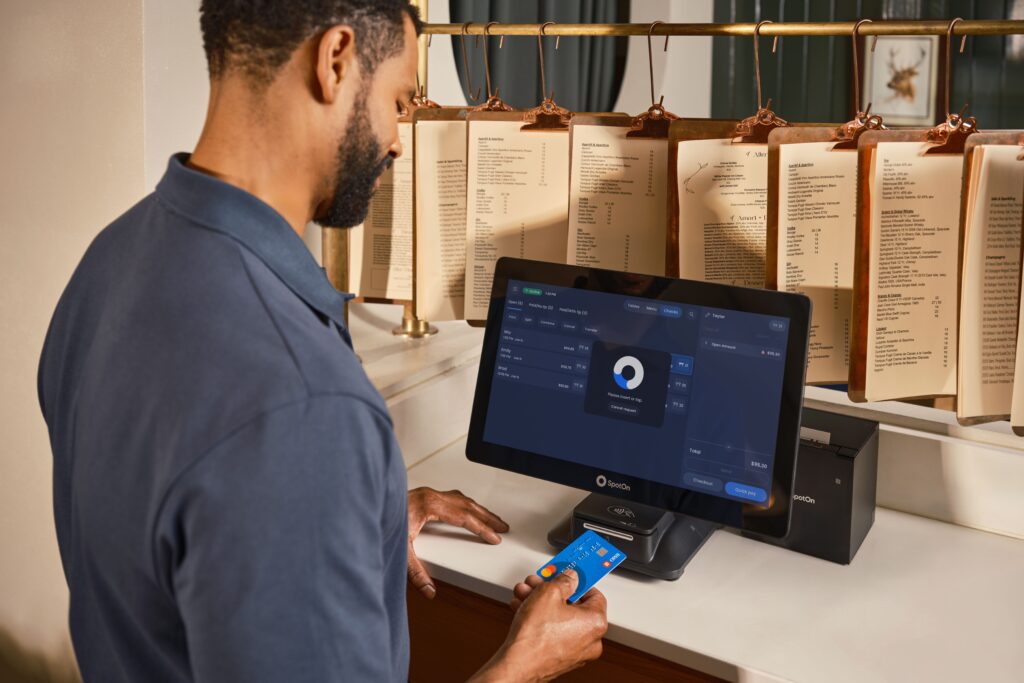
Paying at Restaurants, Cafés, Convenience Stores and Kiosks
For everyday spending in Korea, try your international credit or debit card first. Restaurants, cafés, convenience stores and larger retail businesses are generally card-friendly, and many travelers can make most daily purchases without using cash.
The experience can be slightly different at self-service kiosks. A restaurant or café may accept your foreign card at the staffed counter even if the ordering kiosk does not. If a kiosk rejects your card, do not immediately assume the entire business is cash-only. Try inserting the physical card if possible, or ask whether you can pay at the counter.
At convenience stores, an international card is usually the easiest payment method for normal purchases. However, services sold through the same store can follow different payment rules. For example, buying or topping up a physical T-money card generally requires Korean won cash, even though you may be able to pay for snacks or drinks at the same convenience store with your foreign card.
For small independent businesses, markets and street stalls, keep some cash available as a backup rather than assuming every seller accepts an international card.
| Place | Try first | Backup | Practical tip |
|---|---|---|---|
| Restaurant or café | International card | Cash or another card | If the kiosk fails, ask to pay at the counter |
| Convenience store | International card | Cash | T-money purchase/top-up may follow different payment rules |
| Self-service kiosk | Physical card | Staffed counter or another payment method | Foreign-card support varies by system |
| Market or street stall | Card if accepted | Korean won cash | Keep some small cash available |
Paying for Taxis in Korea
Taxis are one of the easier places to use an international card in Korea. Regular taxi card terminals generally accept foreign-issued credit cards, and you can also pay many taxi fares with cash or a compatible transportation card.
If you hail a taxi on the street, you can usually pay the driver at the end of the ride. Keep your physical card available rather than relying only on contactless payment.
Taxi apps add another option: in-app payment with a registered international card. Tourist-friendly services such as k.ride allow international travelers to register overseas-issued cards, while other apps may have different account, phone-number or payment requirements.
One important rule is to check how the ride is being charged. If your taxi app is set to automatic or prepaid payment, do not pay the driver a second time at the destination.
For most visitors, the simplest choice is to pay directly by card when taking a street taxi, or use a taxi app that clearly supports your international card when you want app-based pickup and payment.
Compare Korea taxi apps for foreigners: k.ride, Kakao T, Uber & TABA
Paying Online and Booking in Korea
Online payment in Korea can be more complicated than paying at a physical store. The key is to use a booking channel that specifically supports international travelers and foreign-issued cards.
Transportation is a good example. KTX tickets can be booked through KORAIL’s foreign-language services, while international-friendly booking channels are also available for express and intercity buses. Current Korea Tourism Organization guidance identifies foreign-card-compatible options for rail and long-distance bus bookings.
Problems are more likely when you enter a domestic Korean checkout flow that was designed mainly for local users. Depending on the service, you may encounter requirements for a Korean phone number, local identity verification or a Korean-supported payment method.
Restaurant reservations can have the same issue. Some domestic reservation systems require Korean verification or do not accept international cards, while services designed for foreign visitors, such as CATCHTABLE Global, support reservations without a Korean phone number and allow deposits to be paid with overseas-issued cards.
When an online payment fails, look for an English, global or foreigner-specific version of the service before trying random payment methods repeatedly. In many cases, the international booking route has different account and payment requirements from the domestic version.
Before You Enter Your Card Details
Before paying online, check:
- whether you are using the official international or English booking page
- whether foreign-issued cards are explicitly supported
- whether a Korean phone number or identity verification is required
- whether the ticket or reservation will be issued digitally or must be collected
- the cancellation and refund rules before payment
For KTX tickets and long-distance bus bookings, use the dedicated guides below rather than relying on a domestic checkout page you cannot fully understand.
Using ATMs and Withdrawing Cash in Korea
If you need more Korean won during your trip, withdrawing cash from an ATM is usually easier than carrying a large amount from home.
Incheon Airport ATM Information
Look for a Global ATM or a machine displaying the network logo supported by your card, such as Visa/PLUS or Mastercard/Cirrus. International-card-compatible ATMs are commonly found at airports, subway stations, banks, convenience stores and major shopping areas. Incheon Airport, for example, currently lists multiple ATMs operated by major Korean banks in both Terminal 1 and Terminal 2.
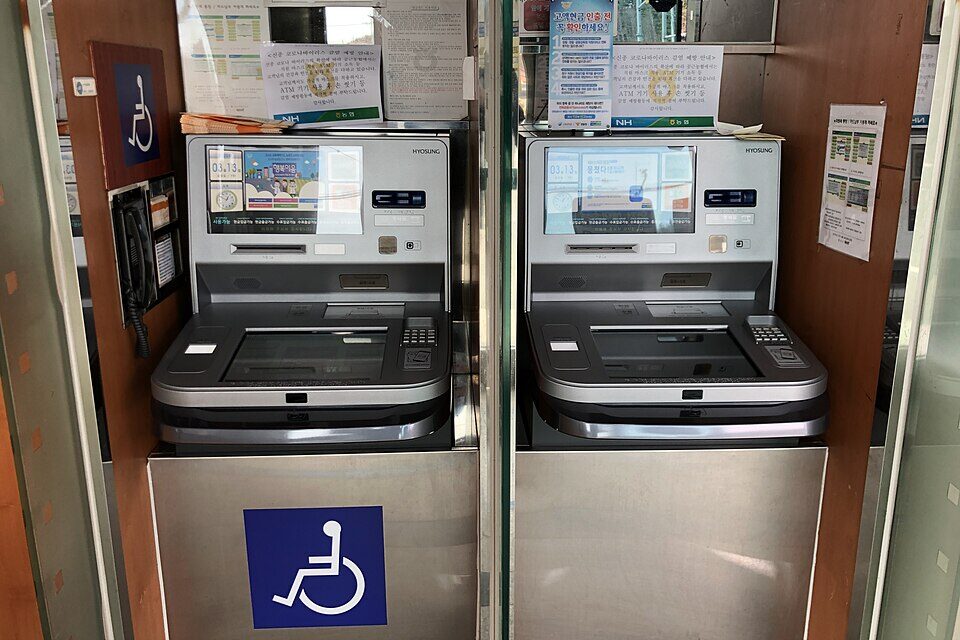
Before traveling, make sure your card is enabled for international ATM withdrawals and know your PIN. Your own bank may charge an overseas withdrawal or foreign-exchange fee, and the Korean ATM operator may also charge a separate fee. Check the amount shown on the screen before confirming the withdrawal.
If the ATM offers to charge the withdrawal in your home currency instead of Korean won, this is called Dynamic Currency Conversion (DCC). The conversion can include an additional markup. If you prefer your card issuer to handle the currency conversion, choose Korean won rather than accepting the ATM’s home-currency conversion.
If one ATM rejects your card, try another major-bank or Global ATM before assuming the card cannot be used in Korea. Different ATM networks can have different compatibility.
Should You Exchange Money Before Arriving in Korea?
You do not need to exchange your entire travel budget into Korean won before arriving in Korea.
If you prefer to arrive with some cash already in your wallet, exchanging a small amount before departure can be convenient. However, international travelers can also exchange foreign currency after arrival or withdraw Korean won from a compatible ATM.
Incheon International Airport has bank branches, currency-exchange counters and ATMs in both passenger terminals, including some currency-exchange locations that currently operate 24 hours. Opening hours vary by location, so check the airport’s current information if you are arriving very early or late.
For most travelers, a practical approach is to obtain only the cash you expect to need at first, then use your international card for everyday purchases and withdraw or exchange additional Korean won only when necessary.
When comparing exchange options, look at the actual exchange rate and any fees rather than choosing solely based on convenience.
How to Pay in Korea: Best Payment Setup for Tourists
You do not need a complicated payment setup for most trips to South Korea. A physical international credit or debit card, a backup payment method, a transit card and some Korean won will cover most situations.
The exact combination depends on how you travel. A visitor spending several days mainly in Seoul may prefer a short-term Climate Card, while someone traveling around multiple Korean cities will usually get more flexibility from T-money.
WOWPASS or another tourist prepaid card can be useful if you want a Korean prepaid payment option or additional currency-exchange features, but it is not essential for every visitor.
Whatever setup you choose, avoid depending on a single card or phone wallet. Keeping at least one alternative payment method makes occasional kiosk, app or foreign-card compatibility problems much easier to handle.
| Traveler type | Main payment | Transportation | Backup |
|---|---|---|---|
| First-time visitor | International credit/debit card | T-money | Korean won + second card |
| Mostly staying in Seoul | International credit/debit card | Compare Climate Card with T-money | Korean won |
| Traveling around Korea | International credit/debit card | T-money | Korean won + second card |
| Worried about foreign-card acceptance | International card + optional WOWPASS | T-money | Korean won |
For most travelers, the simplest recommendation is international card + T-money + a modest amount of Korean won. Add a Climate Card, WOWPASS or another payment service only when it clearly fits your itinerary or solves a specific problem.
Frequently Asked Questions About Paying in Korea
Can I use Visa or Mastercard in South Korea?
Yes. Visa and Mastercard are widely accepted at hotels, restaurants, cafés, convenience stores, department stores and many other businesses in Korea. However, some smaller merchants, kiosks or online services may not support foreign-issued cards, so it is still useful to carry another payment method.
Do tourists need cash in Korea?
You do not need to pay for everything in cash, but carrying some Korean won is useful. Cash is particularly helpful for topping up a standard physical T-money card, some markets or small vendors, and as a backup if your international card is declined.
Can I tap my foreign credit card directly on the Seoul subway?
Normally, no. A foreign Visa or Mastercard cannot simply be tapped at standard subway gates or bus readers as a replacement for T-money. Seoul now accepts international cards at newer vending machines for certain products, including single-journey tickets and short-term Climate Cards, but that is different from directly tapping your foreign bank card at the gate.
Does Apple Pay work in South Korea?
Yes. Apple lists South Korea as an Apple Pay-supported market. You can use Apple Pay at merchants with compatible contactless payment terminals, provided your card issuer supports it. However, acceptance is not universal, so keep your physical card available as a backup.
Final Tips for Paying in Korea
Paying in South Korea is generally easy for international travelers once you understand the few situations where foreign cards may not work.
For most trips, the simplest setup is an international credit or debit card, T-money for local transportation, and a modest amount of Korean won as backup. Keep a second payment option available, especially if you plan to use kiosks, local apps or online booking services.
You do not need to prepare every Korean payment app before your trip. Start with the basics, then add options such as the Seoul Climate Card or WOWPASS only when they clearly match your itinerary.
With the right combination of card, transit payment and backup cash, you can handle almost every everyday payment situation in Korea without carrying large amounts of money.