
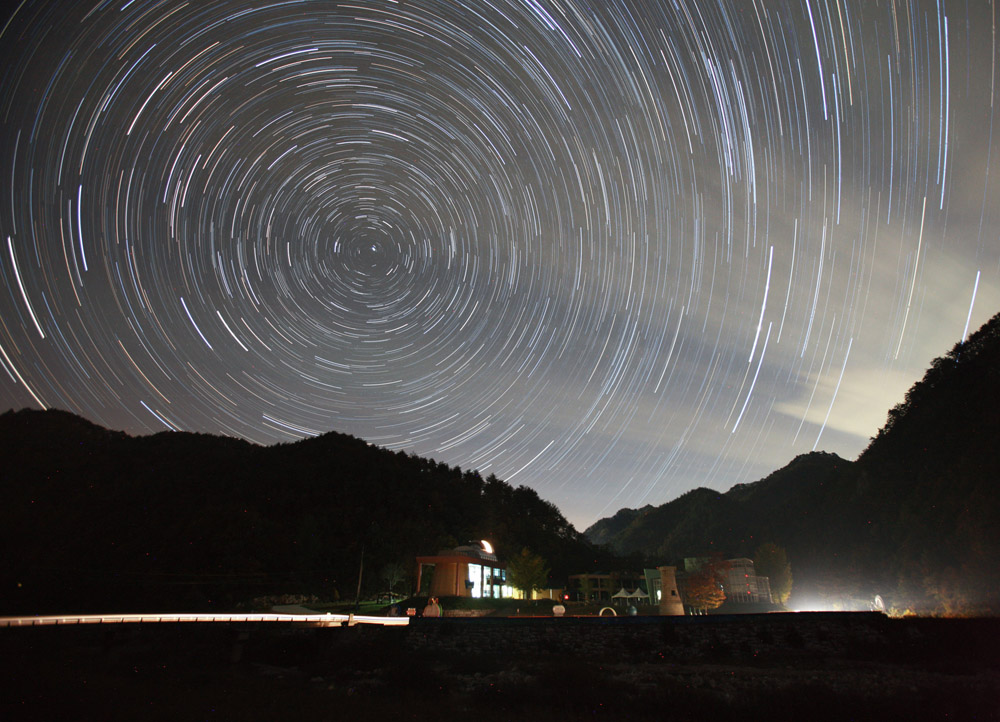
Yeongyang Dark Sky Park is one of South Korea’s most unusual stargazing destinations. Officially designated as an International Dark Sky Park in 2015, Yeongyang Firefly Eco Park protects a naturally dark mountain environment where visitors come for stars, astronomy programs and fireflies.
But Yeongyang is very different from an easy day trip from Seoul. The park is in a remote part of Gyeongsangbuk-do, and getting there is only part of the challenge. If you do not have a car, you also need to think about the final trip to the park, where to stay after stargazing and how you will travel after local transportation stops running.
This guide focuses on those practical questions so you can decide whether Yeongyang Dark Sky Park fits your Korea itinerary and plan the trip realistically.
- Quick Answer: Is Yeongyang Dark Sky Park Worth the Trip?
- What Exactly Is Yeongyang Dark Sky Park?
- Can You Visit Yeongyang Dark Sky Park Without a Car?
- How to Get to Yeongyang from Seoul and Other Cities
- Yeongyang Firefly Observatory: Hours, Fees and Night Programs
- Where to Stay for Stargazing
- Best Time to See Stars, the Milky Way and Fireflies
- What to Do If the Weather Is Bad
- A Realistic 1-Night Yeongyang Stargazing Itinerary
- Who Should — and Should Not — Make the Trip
- Frequently Asked Questions
- Final Thoughts
Quick Answer: Is Yeongyang Dark Sky Park Worth the Trip?
Yes — if seeing a genuinely dark night sky is one of the main reasons for your trip.
Yeongyang is especially worth considering for travelers interested in stargazing, astrophotography, quiet rural Korea or destinations that feel very different from Seoul and Korea’s major tourist cities. It was the first International Dark Sky Park designated in Asia, and the area remains internationally recognized for protecting both its dark skies and firefly habitat.
However, this is not a destination I would recommend as a casual Seoul day trip. For travelers without a car, reaching Yeongyang is possible, but the final journey to the Dark Sky Park and transportation after nighttime stargazing require much more planning than simply getting to Yeongyang town.
For most car-free international travelers, an overnight trip is the more realistic way to visit. If you want an easy attraction that you can reach from Seoul, spend two hours at and return the same evening, Yeongyang is probably not the right choice.
If the night sky itself is the destination, however, the extra planning is part of what makes Yeongyang different.
What Exactly Is Yeongyang Dark Sky Park?
The names around Yeongyang can be confusing because several related places are located in the same dark-sky area.
The internationally designated site is Yeongyang Firefly Eco Park, which DarkSky International recognized as a Dark Sky Park in 2015. The designation covers a broader protected landscape around the Wangpi River valley rather than a single observatory building.
Official Yeongyang Dark Sky Park Information — DarkSky International
Yeongyang Firefly Observatory is a visitor facility within the same firefly eco-experience area. This is where visitors can take part in astronomy programs and use observatory facilities, while the wider eco park protects the natural darkness and habitat that make the area valuable for both stargazing and fireflies.
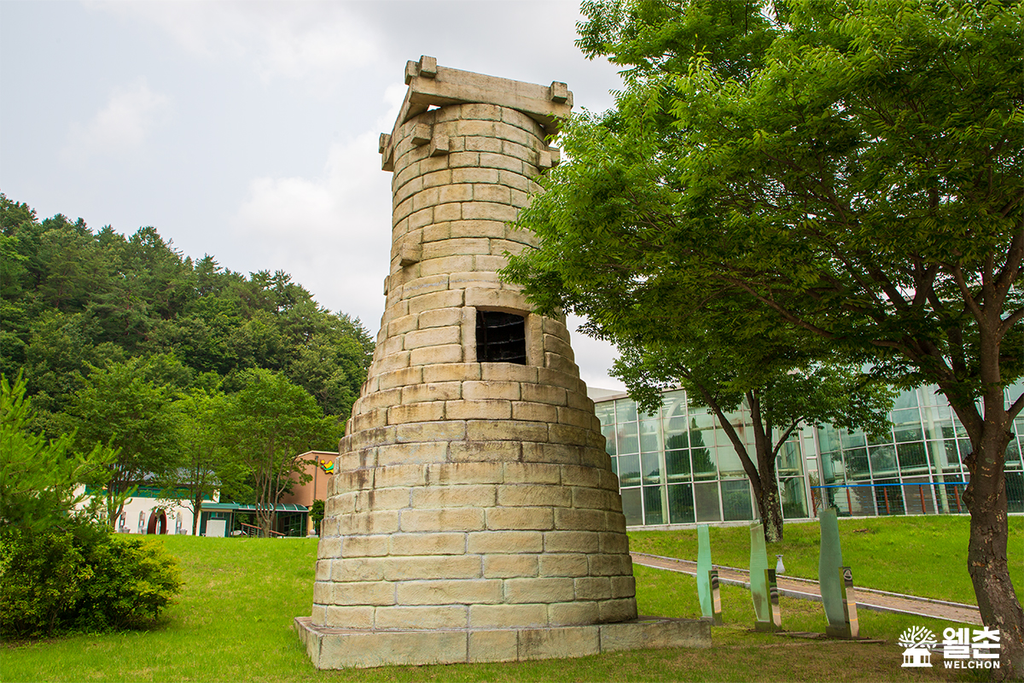
For trip planning, it helps to separate the three names:
• Dark Sky Park — the internationally designated dark-sky area.
• Firefly Eco Park — the broader ecological park and visitor area.
• Firefly Observatory — the facility used for organized astronomy experiences.
This distinction matters because visiting the dark-sky area is not exactly the same as joining an observatory program. Observatory opening hours, reservations and weather-dependent activities need to be checked separately.
Can You Visit Yeongyang Dark Sky Park Without a Car?
Technically, yes. Practically, it requires careful planning.
Current public-transport data shows that rural buses 120, 122 and 124 serve the Yeongyang Firefly Observatory stop from the Yeongyang area. This means you do not necessarily need a rental car just to reach the observatory.
The difficult part is the return trip.
Yeongyang’s local buses are rural services, not frequent city buses. Current national route data confirms that buses serve the observatory, but it does not provide reliable first- and last-bus times that international travelers should build a nighttime itinerary around.
This matters because the main stargazing experience happens after dark. Regular nighttime observation sessions can continue until around 9:50 p.m., while the observatory itself operates into the late evening.
Do not assume that you can finish a nighttime observation session and simply catch another local bus back to Yeongyang town.
For a car-free traveler, the safest approach is to plan the trip around an overnight stay near the dark-sky area, confirm the latest local bus schedule shortly before your visit, or arrange your return transportation in advance.
In other words, Yeongyang Dark Sky Park is reachable without a car, but it is not an easy “take the bus there and come back after dinner” destination.
| Trip stage | Without a car? | Practical reality |
|---|---|---|
| Seoul or another city → Yeongyang | Yes | Intercity transport is possible, but services are limited |
| Yeongyang → Firefly Observatory | Yes | Rural buses currently serve the observatory stop |
| Observatory → Yeongyang after stargazing | Do not rely on it | Confirm the current return schedule before traveling |
| Overnight near the dark-sky area | Recommended | Much more realistic for car-free stargazing |
How to Get to Yeongyang from Seoul and Other Cities
Yeongyang does not have a train station, so the final part of the journey must be made by bus or car.
For most international travelers, Seoul and Andong are the two most useful starting points. A direct intercity bus is the simplest option from Seoul, while Andong works well as a transfer point because it has KTX-Eum train service and more frequent onward bus connections to Yeongyang.
From Seoul: Direct Bus or KTX via Andong?
The simplest public-transport option is a direct intercity bus from Dong Seoul Terminal to Yeongyang. This avoids a transfer, but direct departures are limited, so do not arrive at the terminal assuming there will be a convenient bus at any time of day.
Current timetable data puts the direct journey at roughly 4½ hours, although actual travel time can vary with traffic and stops along the route.
If the direct bus does not fit your schedule, the most useful alternative is to travel through Andong.
KTX-Eum trains connect Seoul with Andong in roughly 1 hour 50 minutes. From the Andong Station and terminal area, you can transfer to an intercity bus for Yeongyang, which normally takes about another 1½ hours.
This route involves a transfer, but it can give you more scheduling flexibility than waiting for one of the limited direct buses from Seoul.
Do not plan your trip around reaching Yeongyang town alone. You still need enough time to continue from Yeongyang to the Dark Sky Park, check in to your accommodation and prepare for nighttime stargazing.
For that reason, arriving in Yeongyang earlier in the day is much safer than choosing the latest possible connection.
| Route | Transfers | Approx. travel time | Best for |
|---|---|---|---|
| Dong Seoul Terminal → Yeongyang | None | About 4½ hours | Simplest option if the direct schedule works |
| Seoul → Andong by KTX-Eum → Yeongyang by bus | 1 | About 3½ hours plus transfer time | More flexibility and travelers combining Andong with Yeongyang |
Official Intercity Bus Reservation — TxBus
Official KORAIL Train Reservation
From Andong or Daegu
Andong is the most useful transfer city for travelers coming from Seoul by train. Current intercity bus schedules show multiple daily connections from Andong to Yeongyang, with the journey taking about 1½ hours.
This can also work well if you want to combine Yeongyang with Andong rather than making a long out-and-back trip from Seoul. Andong itself is well connected to Seoul by KTX-Eum from Cheongnyangni Station, with the journey taking about 1 hour 50 minutes.
Daegu is more useful if you are already traveling in southeastern Korea. Direct intercity buses currently operate from Daegu Bukbu Bus Terminal to Yeongyang, with a typical journey of about 3 hours.
Neither route removes the main challenge of a Yeongyang stargazing trip: after arriving in Yeongyang town, you still need to reach the Dark Sky Park and plan what happens after nighttime observation.
For that reason, choose your route based on where you are already traveling, not simply on which city looks closer on the map.
Yeongyang Firefly Observatory: Hours, Fees and Night Programs
The Firefly Observatory is the easiest place for first-time visitors to add an organized astronomy experience to a Yeongyang stargazing trip.
Under the regular schedule, the observatory operates during the afternoon and again at night, with separate nighttime observation sessions using the telescope facilities. The standard nighttime period is 7:30 p.m. to 10:00 p.m., with 30-minute observation sessions scheduled during the evening.
The regular public schedule currently lists three nighttime observation sessions:
• 8:00 p.m.–8:30 p.m.
• 8:40 p.m.–9:10 p.m.
• 9:20 p.m.–9:50 p.m.
Do not assume these times apply every day of the year. Yeongyang extends or changes observatory hours during some peak periods and special events. For example, during the 2026 summer peak season, nighttime operation was extended until 11:00 p.m. with four observation sessions.
Weather is also important. Telescope observation may not operate during rain or poor observing conditions, even when the facility itself is open.
Admission and Reservations
Current public visitor information lists individual admission at ₩4,000 for adults and ₩3,000 for youth for both the regular daytime and nighttime observatory programs. Additional experiences and special programs can have separate fees.
For ordinary observatory visits, the 2026 peak-season guidance describes on-site ticketing and warns that visitor numbers may be limited when the observatory is busy. Special astronomy camps are different and can require advance registration.
For example, the October 2026 Family Astronomy Camp is a one-night program limited to five teams and requires advance registration by phone. The listed price is ₩180,000 for a team of four, including accommodation, admission and program fees but excluding meals.
That camp is a special event, not the normal price for visiting the observatory.
If telescope observation is the main reason for your trip, confirm the current session schedule shortly before traveling rather than relying on an older timetable.
| Item | Regular information | Important note |
|---|---|---|
| Daytime observatory | 1:00 p.m.–6:00 p.m. | Hours can change seasonally |
| Nighttime observatory | 7:30 p.m.–10:00 p.m. | Peak-season hours may be extended |
| Night observation | Three 30-minute sessions | Weather dependent |
| Adult admission | ₩4,000 | Special programs cost extra |
| Youth admission | ₩3,000 | Special programs cost extra |
Official Yeongyang Firefly Observatory Program Updates
Where to Stay for Stargazing
For a nighttime visit, staying near the Dark Sky Park is much more practical than sleeping in central Yeongyang and trying to travel back after stargazing.
The most convenient option to check first is the accommodation operated by the Yeongyang Eco Park complex in Subi-myeon. It is in the same broader eco-park area as the Dark Sky Park and Firefly Observatory, so it reduces the biggest problem for car-free travelers: what to do after the local buses stop running.
Under the current county rules, reservations can be made up to 60 days before the stay. Payment must be completed within 24 hours of the reservation request, and reservations must be finalized by the day before arrival. The standard check-in window is 2:00 p.m. to 10:00 p.m., with check-out by 11:00 a.m.
For foreign travelers, the booking process is the part that needs extra caution. I could not verify a current English reservation interface or confirm that the county booking system reliably accepts overseas-issued cards or foreign phone numbers.
If you are traveling without a car, do not book accommodation in Yeongyang town simply because it looks easier online. A room close to the dark-sky area can be much more useful than a more conventional hotel that leaves you without transportation after a late observation session.
Backup Option: Geommasan National Recreation Forest
If the Eco Park accommodation is unavailable, Geommasan National Recreation Forest is a useful backup in the same Subi-myeon area.
The official ForestTrip page currently lists 16 lodging units as well as camping facilities. Standard four-person rooms are listed from ₩44,000 on off-season weekdays and ₩76,000 on weekends or during the peak season.
The main drawback for international visitors is booking. Reservations are handled through ForestTrip, Korea’s national recreation-forest platform, and the current reservation system is primarily in Korean and requires a ForestTrip account.
For that reason, treat Geommasan as a backup accommodation option rather than assuming it will be easier for a foreign traveler to book.
| Accommodation | Best for | Main limitation |
|---|---|---|
| Yeongyang Eco Park accommodation | Stargazing-focused trips and car-free travelers | English booking and foreign payment support not confirmed |
| Geommasan National Recreation Forest | Backup stay in the Subi-myeon area | Korean booking platform and account required |
Official Geommasan National Recreation Forest Information & Booking
Best Time to See Stars, the Milky Way and Fireflies
There is no single “best month” for every Yeongyang night-sky experience.
For stargazing, sky conditions matter more than the season alone. A clear night around a new moon can be much better than a cloudy summer night, even if summer is often associated with Milky Way viewing.
Before choosing your dates, check three things: cloud cover, the Moon phase, and when the Moon rises or sets. Bright moonlight can wash out faint stars and much of the Milky Way, even in a protected dark-sky area.
For Stars and the Milky Way
If seeing as many stars as possible is your priority, choose a clear night close to the new moon or a night when the Moon is below the horizon during your observation time.
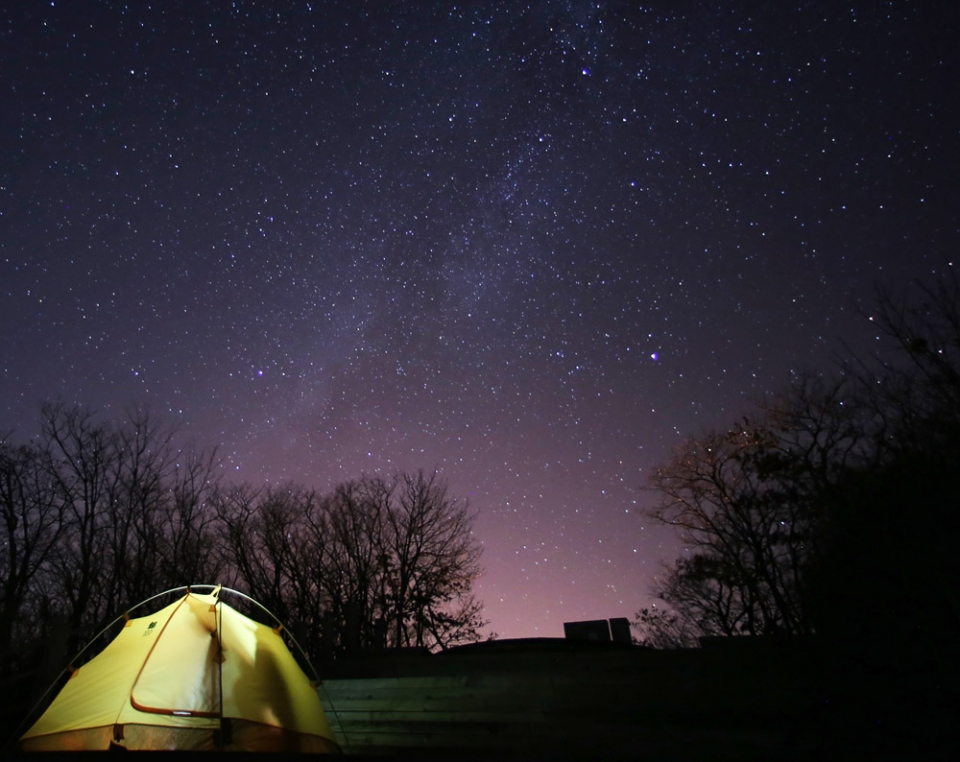
In the Northern Hemisphere, the brighter central region of the Milky Way is especially prominent during the warmer months and can be highest later at night in summer. That makes late spring through early autumn a useful period for travelers interested in Milky Way viewing, but visibility is never guaranteed.
Do not judge the experience only by astrophotography images online. Long-exposure cameras can record much more color and detail than the human eye. Under a dark Yeongyang sky, the Milky Way may appear as a pale, cloudy band rather than the vivid purple or blue structure often seen in edited photographs.
A cloud-free forecast is more important than choosing a famous “Milky Way date.” Check the local weather again shortly before traveling, especially because this trip requires much more effort than visiting an observatory near a major city.
For Fireflies
Fireflies are much more seasonal than stars, and their viewing period depends on the species and conditions that year.
Yeongyang can have different firefly viewing periods from early summer into late summer or early autumn. In 2026, for example, the official late-firefly exploration program ran from September 6 to September 12 at the Firefly Observatory area.
If seeing fireflies is important to you, do not choose your travel dates from a generic monthly guide alone. Check Yeongyang’s current-year firefly program before booking your trip, because the dates can change and sightings are never guaranteed.
Summer and early autumn can therefore be especially interesting if you want to combine fireflies and stargazing. However, warmer months can also bring clouds, rain and humidity, so good firefly timing does not automatically mean good astronomy conditions.
If your main priority is the darkest possible sky rather than fireflies, choose your dates based on the Moon and weather first.
| Your priority | Best approach | Main risk |
|---|---|---|
| Darkest starry sky | Clear night near a new moon | Clouds or poor visibility |
| Milky Way | Warmer months, dark moonless hours | Moonlight and clouds |
| Fireflies + stars | Current-year firefly season or official program dates | Rain, clouds and seasonal variation |
Official Korea Weather Forecast — Korea Meteorological Administration
What to Do If the Weather Is Bad
Do not make the long trip to Yeongyang for stargazing without checking the forecast first.
The Firefly Observatory states that telescope observation may be canceled during rain or poor weather. If stargazing is the main purpose of your trip and the forecast shows persistent clouds or rain, postponing the visit may be better than traveling several hours simply hoping the sky will clear.
If you are already in Yeongyang and the night is cloudy but the daytime weather is still suitable for walking, Yeongyang Birch Forest is one of the most practical backup stops. The forest has two relatively gentle walking routes of about 1.5 km and is currently free to visit.
Cloudy and rainy are not the same situation. A cloudy but dry day can still work for the birch forest or other outdoor sightseeing, while heavy rain makes many of Yeongyang’s nature-based attractions poor alternatives.
If the weather deteriorates after you have already booked accommodation near the Dark Sky Park, use the trip as a quiet rural overnight stay rather than forcing the astronomy plan. Then check the sky again later in the evening or the following morning before deciding whether to continue your itinerary.
The most important rule is simple: build Yeongyang as a weather-dependent trip, not a guaranteed astronomy appointment.
Official Yeongyang Birch Forest Information — VISITKOREA
A Realistic 1-Night Yeongyang Stargazing Itinerary
A one-night trip is the most realistic way to visit Yeongyang Dark Sky Park, especially if stargazing is the main reason for coming.
The key is to arrive early enough that you are not still dealing with transportation or check-in when the sky gets dark. Do not build the trip around the latest possible bus into Yeongyang.
Without a Car
Day 1: Arrive in Yeongyang by early afternoon.
Travel from Seoul directly by intercity bus, or take KTX-Eum to Andong and continue to Yeongyang by bus. From Yeongyang, continue toward the Dark Sky Park and your accommodation while local transportation is still operating.
Check in before the evening, have dinner or bring food with you, and leave enough time to reach the Firefly Observatory before your scheduled nighttime program.
After stargazing, stay near the Dark Sky Park rather than depending on a late local bus back to Yeongyang town.
Day 2: Use the morning for a short local stop before leaving Yeongyang.
If the weather is suitable and you have enough time, you can add a nature stop such as Yeongyang Birch Forest before returning to Yeongyang town and continuing to Andong, Seoul or your next destination.
For car-free travelers, keep the second day flexible. Rural transportation is limited, so trying to fit several distant attractions into the same morning can make the return journey unnecessarily stressful.
With a Rental Car
A car makes this trip much easier.
You can arrive in Yeongyang later in the day, drive directly to your accommodation or the observatory area, and move around after the local buses have stopped.
The biggest advantage is flexibility after dark. You are not tied to the final rural bus, and you can adjust your plans if clouds clear later than expected.
On the second day, a car also makes it much easier to combine the Dark Sky Park with places such as Yeongyang Birch Forest or other rural attractions before continuing through Gyeongsangbuk-do.
Even with a car, avoid rushing back to Seoul immediately after a late observation session. A one-night stay is still the more comfortable option after several hours of nighttime stargazing and rural driving.
Who Should — and Should Not — Make the Trip
Yeongyang Dark Sky Park is not for every Korea itinerary.
It is a good choice if stargazing is one of the main reasons for your trip, especially if you enjoy astrophotography, quiet rural destinations or places that feel very different from Seoul, Busan and Korea’s major tourist cities.
It also suits travelers who are willing to stay overnight and plan around weather, local transportation and nighttime observation schedules.
You may want to skip Yeongyang if you:
• want an easy day trip from Seoul
• need frequent public transportation late at night
• have only a few days in Korea and want to prioritize major attractions
• are not comfortable changing plans because of clouds or rain
• expect a large entertainment complex rather than a quiet nature-based experience
For travelers without a car, the biggest question is not whether you can reach Yeongyang — it is whether you are comfortable planning an overnight trip around limited rural transportation.
If the answer is yes, Yeongyang can offer a type of Korea trip that is difficult to find in the country’s major cities. If convenience matters more than the night sky, another destination will probably fit your itinerary better.
Frequently Asked Questions
Can you visit Yeongyang Dark Sky Park as a day trip from Seoul?
Technically, you could travel to Yeongyang and back in one day, but it is not a realistic stargazing day trip for most travelers. The direct journey from Seoul takes around 4½ hours one way, and the main reason to visit is after dark. Staying overnight is much more practical.
Do you need a car to visit Yeongyang Dark Sky Park?
No, but a car makes the trip much easier. Rural buses serve the observatory area, but late-night transportation after stargazing is the main problem. Car-free travelers should plan an overnight stay and confirm local transportation before visiting.
Can you see the Milky Way with the naked eye in Yeongyang?
Yes, under clear and dark conditions the Milky Way can be visible to the naked eye, especially when moonlight is limited. However, it will usually look much fainter than long-exposure photographs, which capture more color and detail than human vision.
Do you need a reservation for Yeongyang Firefly Observatory?
For regular visits, check the latest observatory notice before traveling because operating procedures can change by season and visitor demand. Special programs and astronomy camps may require advance registration, and some 2026 programs used advance phone registration with limited capacity.
When can you see fireflies in Yeongyang?
There is no single fixed date every year. Different firefly species appear at different times, and weather also affects sightings. In 2026, the official late-firefly exploration program ran in early September.
Check the current-year program before planning a trip specifically for fireflies.
Final Thoughts
Yeongyang Dark Sky Park is not the easiest destination to reach, but that is also part of what makes it different.
For travelers who genuinely want dark skies, stargazing and a quieter side of Korea, Yeongyang is worth the extra planning. The important thing is to treat it as an overnight rural trip rather than a simple attraction you can add casually to a Seoul itinerary.
Check the weather and Moon phase before traveling, confirm the latest observatory program, and plan your transportation after dark before you arrive.
If you do that, Yeongyang can be one of the most distinctive night-sky experiences in South Korea.
Featured image: Gyeongsangbuk-do, licensed under Korea Open Government License Type 3.