

A DMZ tour from Seoul is one of the easiest ways to visit South Korea’s heavily controlled border area, but choosing a tour can be surprisingly confusing. Some packages mention the JSA, Panmunjom, the Third Infiltration Tunnel, or a “JSA Museum,” even though these are not the same experience.
As of October 2026, foreign tourist visits to Panmunjom and the actual Joint Security Area (JSA) are not operating. Regular DMZ tours in Paju are still available, however, and typically focus on places such as the Third Infiltration Tunnel, Dora Observatory and Imjingak.
This guide explains what is actually open, whether you need a passport, the difference between the real JSA and JSA-themed stops, and the main ways to visit the DMZ from Seoul. You’ll also find practical comparisons of guided tours, the official Paju DMZ Peace Tour and other options so you can choose the right trip without paying for something different from what you expected.
Affiliate disclosure: This post may contain affiliate links. If you book through them, Go Trip Room may earn a small commission at no extra cost to you.
- Quick Answer: What’s Actually Open Right Now?
- Where Is the DMZ and Where Do Seoul Tours Actually Go?
- Can Foreigners Visit the JSA and Panmunjom Right Now?
- Three Ways to Visit the DMZ from Seoul
- DMZ Tour Options Compared
- What You Actually See on a DMZ Tour
- Half-Day vs Full-Day DMZ Tour: Which Should You Choose?
- Are the Gondola, Suspension Bridge, Defector Talk or JSA Museum Worth It?
- Passport, ID, Photography and Security Rules
- How to Choose and Book a DMZ Tour from Seoul
- What to Bring on a DMZ Tour
- DMZ Tour from Seoul FAQ
- Final Thoughts
Quick Answer: What’s Actually Open Right Now?
As of October 2026, the standard Paju DMZ tour area is open to foreign visitors, while tourist visits to the actual Joint Security Area (JSA) at Panmunjom are not currently operating for foreigners.
For most travelers, a regular DMZ tour from Seoul can still include major sites such as:
- The Third Infiltration Tunnel
- Dora Observatory
- Imjingak
- Other stops such as Dorasan Station, Unification Village or additional attractions, depending on the tour and operating conditions that day
The Third Tunnel and Dora Observatory are inside a controlled area. You cannot simply drive to these sites independently. Visitors enter through an authorized DMZ tour or the official Paju DMZ Peace Tour, and original identification such as a passport is required.
Be especially careful with tours advertising a “JSA Museum,” “JSA Photo Spot,” or similar stop. These do not mean that the tour enters the actual JSA at Panmunjom.
Because the DMZ is an active military-controlled area, routes and individual stops can change or close with little notice for security, weather or operational reasons. Check your tour’s final itinerary before departure.
Where Is the DMZ and Where Do Seoul Tours Actually Go?
The DMZ is not in Seoul. It stretches across the Korean Peninsula, but most tours marketed as a “DMZ tour from Seoul” take travelers north to Paju in Gyeonggi-do, where several of the best-known DMZ sites are clustered close enough for a half-day or full-day trip.
Imjingak is the main gateway for many Paju DMZ visits. It is about 56 km from Seoul City Hall, while the Third Infiltration Tunnel is about 52 km from Seoul. From the Imjingak area, authorized DMZ tour vehicles continue into controlled zones for stops such as the Third Infiltration Tunnel and Dora Observatory.
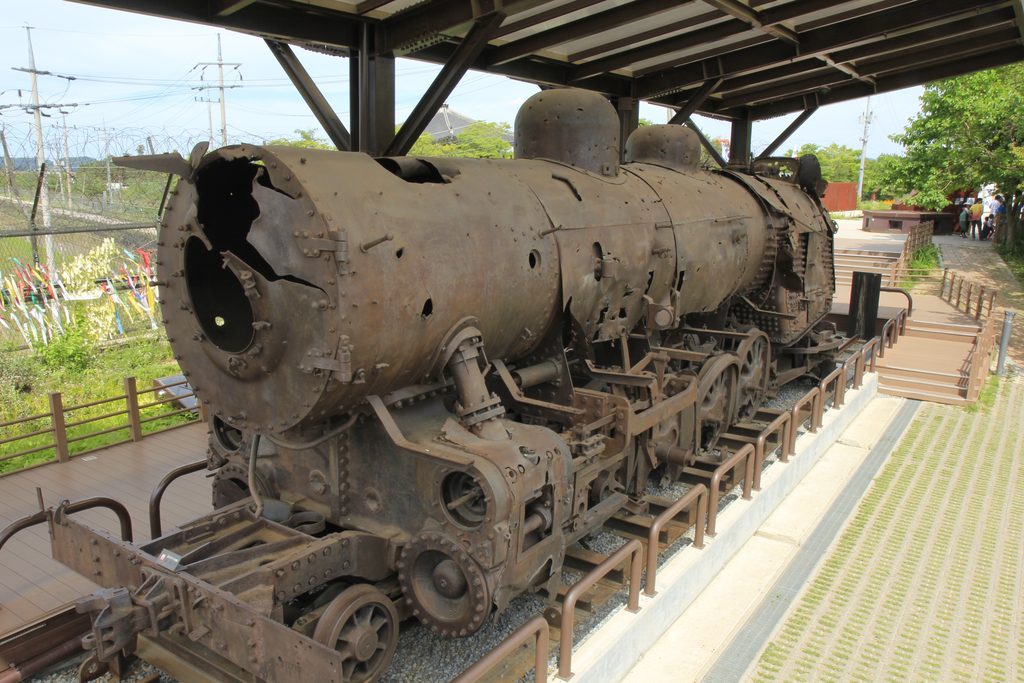
Not every tour follows the same route. Depending on the operator, security conditions and the package you choose, additional stops may include Dorasan Station, Unification Village, Camp Greaves, the Imjingak Peace Gondola or a suspension bridge.
So when you see “DMZ tour from Seoul,” Seoul usually refers to the departure point, not the location of the DMZ itself. Most commercial tours meet or pick up travelers in central Seoul before traveling north to Paju.
If you are planning other day trips outside Seoul, our Gyeonggi-do Travel Guide also covers destinations such as Suwon, Everland and Gapyeong.
Can Foreigners Visit the JSA and Panmunjom Right Now?
As of October 2026, foreign tourists cannot currently visit the actual Joint Security Area (JSA) at Panmunjom.
South Korea’s Ministry of Unification currently limits its Panmunjom visit program to eligible South Korean citizens and states that foreigner visits are not being operated at this time. VISITKOREA also lists Panmunjom as currently closed for civilian tours.
This does not mean regular DMZ tours are closed. Foreign visitors can still take standard Paju DMZ tours to places such as the Third Infiltration Tunnel and Dora Observatory.
JSA Museum Is Not the Actual JSA
This distinction matters when comparing tour packages.
Some current DMZ tours advertise a JSA Museum, JSA Photo Spot or Panmunjom-themed experience. These can be worthwhile additions, but they do not mean that you will cross into the actual Joint Security Area or visit the blue conference buildings at Panmunjom.
If visiting the real JSA is the main reason you want to book a DMZ tour, do not assume that “JSA” in a product title means JSA access. Read the itinerary carefully and look specifically for confirmation of entry to Panmunjom or the Joint Security Area.
Until official foreigner tours resume, choose a DMZ tour based on the sites that are actually operating rather than paying extra because a package uses “JSA” in its marketing.
Official Panmunjom / JSA Visitor Information
Three Ways to Visit the DMZ from Seoul
There are three practical ways to visit the Paju DMZ from Seoul. The best choice depends on whether you value convenience, budget or the train experience itself.
| Option | Best For | Transport from Seoul | Main Trade-Off |
|---|---|---|---|
| Commercial guided DMZ tour | First-time visitors and easiest planning | Tour bus from central Seoul | Costs more than visiting from Imjingak yourself |
| Official Paju DMZ Peace Tour | Budget travelers comfortable arranging their own transport | Travel independently to Imjingak, then use the authorized DMZ shuttle | Getting to Imjingak takes more planning and there is no dedicated tour guide |
| DMZ Peace Link Train | Travelers who want Dorasan Station and the rail journey as part of the experience | Special train from Seoul Station on selected dates | Limited operating dates and the itinerary can change by departure date |
For most first-time foreign visitors, a guided tour from Seoul is the simplest option because transportation, controlled-area entry and the main sightseeing stops are organized together.
Travelers who want to spend less can make their own way to Imjingak and join Paju’s official DMZ Peace Tour. This still uses an authorized shuttle to enter the controlled area, so it should not be confused with independently driving around the DMZ.
Official Paju DMZ Peace Tour Information
The DMZ Peace Link Train is a different experience. KORAIL resumed regular Seoul–Dorasan tourism service in 2026, but departure dates and included attractions vary. Some departures include the Third Infiltration Tunnel, while others may visit places such as Camp Greaves instead, so always check the itinerary for your exact travel date.
Official DMZ Peace Link Train Information
1. Commercial Guided DMZ Tour from Seoul
For most international visitors, a commercial guided tour is the easiest way to visit the DMZ from Seoul. Transportation, DMZ entry procedures and the main sightseeing stops are arranged for you, and English-language tours are widely available.
Standard group tours commonly last around 7–9 hours, although shorter and longer versions are available. Meeting points are usually in central Seoul, with locations such as Hongdae, Myeongdong or the City Hall area depending on the operator. Some premium or private tours include hotel pickup.
A typical standard itinerary includes:
- Imjingak
- The Third Infiltration Tunnel
- Dora Observatory
- A guide and round-trip transportation from Seoul
Depending on the package, you may also get a North Korean defector talk, Imjingak Peace Gondola, JSA Museum, Camp Greaves or a suspension bridge.
For a regular join-in tour, roughly US$40–70 per person is a realistic starting range based on current 2026 listings, but prices change by date, operator and optional add-ons. Private tours can cost substantially more.
The biggest advantage is convenience. You do not need to figure out transportation to Imjingak or organize controlled-area entry yourself, and a guide can explain the historical and political context that is easy to miss when visiting independently.
Before booking, check the itinerary carefully rather than choosing the cheapest product. Confirm:
- whether the Third Infiltration Tunnel and Dora Observatory are included
- whether “JSA” means the actual JSA or only a museum or photo spot
- the exact Seoul meeting and drop-off locations
- whether the tour is half-day or full-day
- the guide language
- cancellation rules
- what happens if a DMZ site closes for security reasons
- whether meals, gondola tickets or other optional attractions cost extra
Bring your original passport. Current commercial tours consistently require it for entry into the controlled DMZ area, and arriving without the required identification can mean missing the tour.
2. Official Paju DMZ Peace Tour from Imjingak
If you are comfortable arranging your own transportation from Seoul to Paju, the official Paju DMZ Peace Tour can be a much cheaper alternative to a commercial tour.
You first travel independently to Imjingak, where the controlled-area portion of the trip begins. Visitors then use an authorized shuttle to reach sites such as the Third Infiltration Tunnel and Dora Observatory. You cannot use your own car to drive freely between these controlled DMZ sites.
For foreign visitors, an original passport or valid Alien Registration Card (ARC) is required. Photos, screenshots or copies of identification are not accepted, and an expired passport cannot be used for entry.
Current VISITKOREA information lists adult DMZ Peace Tour admission at:
- ₩9,200 for the walking option
- ₩12,200 for the monorail option
The tour itself takes roughly three hours, not including the time needed to travel between Seoul and Imjingak.
There is one important difference from a commercial Seoul tour: Paju’s official DMZ Peace Tour does not provide a dedicated tour guide. It is therefore best for travelers who want to save money and are comfortable visiting the sites with less explanation.
You should also avoid arriving too late in the day. Entry is capacity-controlled, and operations can be suspended because of security conditions, bad weather or other safety issues.
For a first visit to the DMZ, a guided Seoul tour is easier. But if your priority is keeping costs low and you can organize the trip to Imjingak yourself, the official Paju option offers access to the same core controlled-area attractions without paying for a full commercial tour package.
Official Paju DMZ Peace Tour Information
3. DMZ Peace Link Train from Seoul Station
The DMZ Peace Link Train is the most distinctive way to travel from Seoul toward the DMZ because the train journey itself is part of the experience.
KORAIL resumed regular Seoul–Dorasan tourism service in April 2026 after a suspension of more than six years. The train normally departs from Seoul Station and travels north toward Dorasan, with a packaged DMZ sightseeing itinerary attached to the rail journey.
This option is especially interesting if you want to visit Dorasan Station, one of the symbolic railway sites near the inter-Korean border, rather than simply using a tour bus from Seoul.
However, do not assume that every departure includes the same attractions. Recent 2026 packages have included combinations such as:
- Dora Observatory
- The Third Infiltration Tunnel
- Dorasan Station
- Unification Village
- Camp Greaves
The itinerary can change by departure date. For example, some September departures included the Third Infiltration Tunnel, while October packages have also been sold with Dora Observatory and Camp Greaves instead.
Regular service was announced for selected Fridays, but additional special departures can also appear. This makes the Peace Link Train less flexible than a daily commercial DMZ tour, so check the exact date, itinerary and remaining seats before planning your trip around it.
Advance booking and valid identification are required because the journey enters the Civilian Control Zone.
For travelers with flexible dates, this is one of the most interesting DMZ options. If you have only one specific day available in Seoul, however, a regular guided bus tour is usually easier to schedule.
Check DMZ Peace Link Train Dates & Booking
DMZ Tour Options Compared
Most DMZ tours from Seoul visit the same core attractions, so the main difference is usually what gets added around the Third Infiltration Tunnel and Dora Observatory.
A lower price does not automatically mean a worse tour, and a package mentioning “JSA” does not mean it enters the actual Joint Security Area. Compare the included stops, guide language, meeting point and cancellation policy before booking.
| Tour Type | Example | Core DMZ Stops | Main Extra | Duration | Current Booking Signal |
|---|---|---|---|---|---|
| DMZ + Defector Q&A | Klook DMZ Insider Tour | Third Tunnel, Dora Observatory, Imjingak | Live Q&A with a North Korean defector; optional suspension bridge | 7–9 hours | 60K+ bookings and 11.9K reviews |
| DMZ + JSA Museum | Klook JSA Museum Tour | Third Tunnel, Dora Observatory, Imjingak | JSA Museum and optional defector talk | 7–9 hours | 50K+ bookings and 6.5K reviews |
| DMZ + JSA Museum | KKday DMZ Tour | Third Tunnel, Dora Observatory, Imjingak | JSA Museum | About 7 hours | 5K+ bookings and 4.9 rating |
| Private DMZ Tour | Creatrip Paju DMZ Private Tour | Third Tunnel, Dora Observatory, Unification Village | Private vehicle and flexible group experience | Varies by package | 33K+ bookings shown on the current listing |
For most first-time visitors, a tour covering the Third Infiltration Tunnel and Dora Observatory is enough to experience the main Paju DMZ sites. Extras are worth paying for only if they match what you actually want from the day.
A North Korean defector Q&A adds a personal perspective that you will not get from simply visiting the sites. Keep in mind that it is one person’s experience rather than a complete representation of life in North Korea.
A JSA Museum can help explain Panmunjom and the Joint Security Area while the real JSA remains unavailable to foreign tourists. Just remember that visiting the museum is not the same as entering Panmunjom.
Suspension bridges and gondolas add scenery and make the trip longer, but they are not essential to the core DMZ experience. If your main interest is the border and its history, a simpler itinerary may give you more than enough.
Private tours are most useful for families, small groups or travelers who value hotel pickup and a more flexible schedule. Because private-tour pricing can change significantly with group size, always compare the total price for your party rather than the advertised starting price per person.
What You Actually See on a DMZ Tour
A standard Paju DMZ tour is not one single attraction. You move between several sites, and each stop shows a different part of the border area, its history and the restrictions that still exist today.
The exact order can change by operator and security conditions, but the following stops are among the most common.
1. Imjingak: The Gateway to the Paju DMZ
Imjingak Resort is usually the first major stop and the starting point for entering the controlled DMZ tour route.
The area itself is much more than a bus terminal. It includes Pyeonghwa Nuri Park, the Freedom Bridge, Korean War memorials, preserved railway structures and several exhibitions related to division and reunification. VISITKOREA places Imjingak about 56 km from Seoul City Hall and roughly 7 km from the DMZ.
Many commercial tours use this stop for registration, security procedures and free time before continuing toward the Third Infiltration Tunnel and Dora Observatory.
The Imjingak Peace Gondola is an optional attraction on some itineraries. It crosses the Imjin River into the Civilian Control Zone toward Camp Greaves, but it is separate from the core Third Tunnel and Dora Observatory tour.
If your package includes free time at Imjingak, keep track of your guide’s meeting time. The complex is large enough that it is easy to wander farther than expected before the tour bus departs.
2. The Third Infiltration Tunnel
The Third Infiltration Tunnel is usually the most physically demanding stop on a Paju DMZ tour. Discovered in 1978, the tunnel is about 1.6 km long and roughly 2 meters wide, and it lies about 52 km from Seoul.
Visitors do not walk the full length of the tunnel, but reaching the underground viewing section involves a narrow and steep route. The return uphill is the part many travelers find tiring.
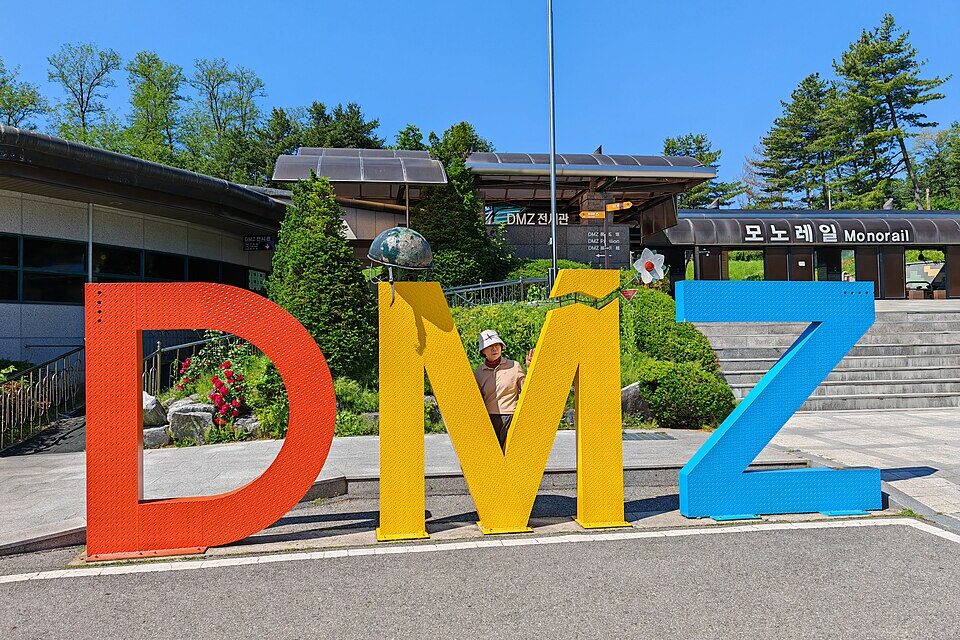
Depending on the tour and ticket, access may be arranged on foot or with the monorail. The monorail reduces the amount of steep access walking, but availability depends on the itinerary you booked.
The tunnel is not a good fit for everyone. Paju City warns that entry may be restricted for travelers with limited mobility, respiratory difficulties, high or low blood pressure, or other conditions that could make the steep and confined environment difficult. Wheelchair users and travelers who cannot comfortably handle steep slopes should not assume they will be able to enter the tunnel itself.
If you are uncomfortable in tight, low-ceilinged underground spaces, you can also choose to skip the tunnel portion while the rest of your group visits. Check with your guide beforehand so you know where and when to meet again.
Photography is restricted in the controlled DMZ tour area, and you should not expect to take photos inside the Third Tunnel. Follow the instructions from military personnel, posted signs and your tour guide rather than relying on older travel photos online.
Wear comfortable walking shoes. Even travelers in good health may find the uphill section more strenuous than expected.
3. Dora Observatory: Looking Across the Border
Dora Observatory is one of the main viewpoints on a standard Paju DMZ tour and the closest DMZ observatory to Panmunjom.
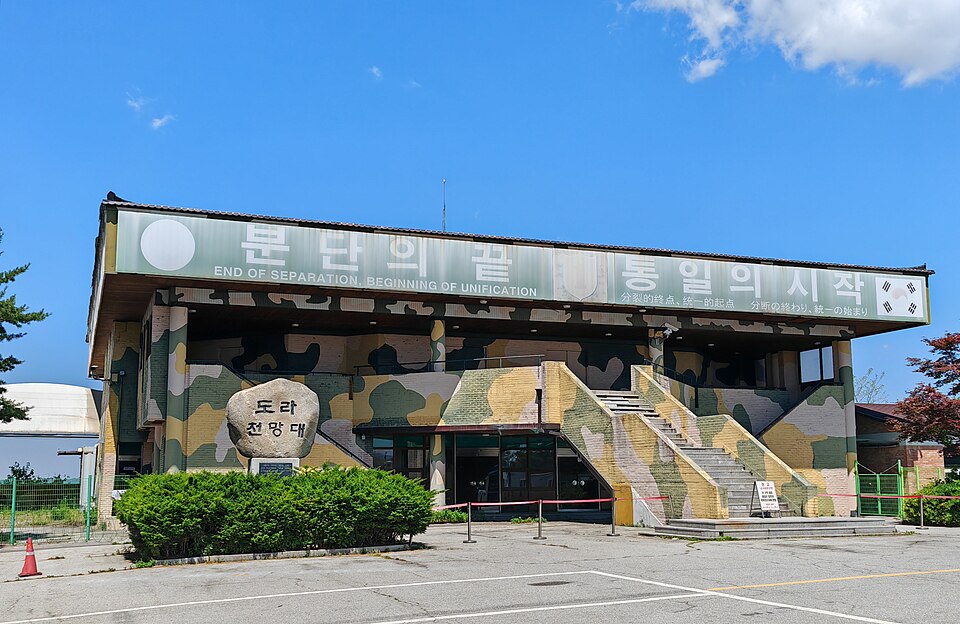
On a clear day, you can look across the border toward Daeseong-dong inside the DMZ, North Korean farmland and mountains, and the city of Kaesong. Visibility varies considerably with weather, haze and seasonal conditions, so the view may be much less clear on some days.
The observatory is inside a controlled area and cannot be visited independently. Foreign visitors normally reach it as part of an authorized DMZ itinerary from Imjingak, and valid identification such as a passport or ARC is required.
This stop is less physically demanding than the Third Infiltration Tunnel, making it a good place to slow down after the tunnel visit and understand the geography of the border from above.
Photography rules can change within the controlled DMZ area. Take photos only where they are permitted and follow posted signs, military instructions and your guide’s directions.
4. Dorasan Station and Unification Village: Optional Stops
Dorasan Station is the northernmost railway station commonly visited on South Korean DMZ tourism routes. Located about 55 km from Seoul, it was rebuilt in 2002 as part of efforts to reconnect the railway across the Korean Peninsula.
Today, the station is better understood as a symbolic border site than as a normal station for travelers heading north. It is also a central part of the DMZ Peace Link Train experience.
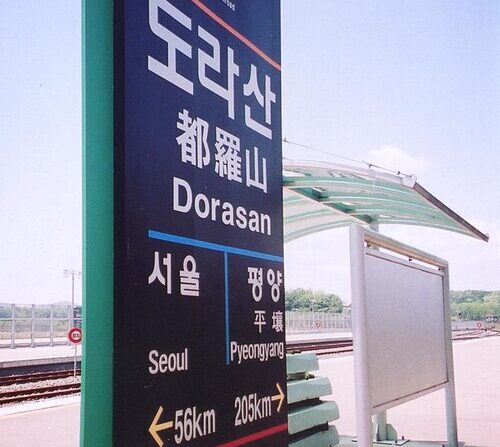
Nearby Unification Village, also known as Tongilchon, is an agricultural community located north of the Civilian Control Line. The village is known for local products such as Jangdan soybeans, rice and ginseng.
These stops are not included on every DMZ tour from Seoul. Depending on the itinerary, you may visit Dorasan Station, pass through Unification Village, stop there for a meal or skip both entirely.
If either place is important to you, check the detailed itinerary before booking rather than assuming it is part of a standard DMZ tour.
Half-Day vs Full-Day DMZ Tour: Which Should You Choose?
DMZ tours are often labeled half-day or full-day, but those labels can be misleading. Some tours advertised as half-day experiences still take around 7–9 hours once transportation from Seoul, security procedures and waiting time are included.
Instead of relying only on the tour name, check the actual departure time, expected return time and included stops.
| Option | Typical Experience | Best For | Main Trade-Off |
|---|---|---|---|
| Standard / “Half-Day” DMZ Tour | Third Tunnel, Dora Observatory, Imjingak; often around 7–9 hours total from Seoul | First-time visitors who want the core DMZ sites | Can still take most of the day despite the “half-day” label |
| Extended / Full-Day DMZ Tour | Core DMZ sites plus a gondola, suspension bridge, Camp Greaves or other add-on | Travelers who want more stops and do not mind a longer day | Often 9–11 hours and may include attractions not essential to the main DMZ experience |
For most first-time visitors, the standard tour is enough. The Third Infiltration Tunnel and Dora Observatory are the two stops that matter most if your priority is experiencing the main Paju DMZ sites.
Choose a longer tour if you specifically want an extra attraction such as the Imjingak Peace Gondola, Camp Greaves or a suspension bridge. These additions can make the day more varied, but they are not necessary simply to say you have visited the DMZ.
A longer itinerary can also mean more waiting, more time on the bus and a later return to Seoul. This matters if you have evening plans, a train to catch or another reservation after the tour.
When booking, look for the scheduled return time to Seoul, not just the words “half-day” or “full-day.” DMZ access procedures and security conditions can also affect the actual timing on the day.
Are the Gondola, Suspension Bridge, Defector Talk or JSA Museum Worth It?
Many DMZ tours offer optional attractions in addition to the Third Infiltration Tunnel and Dora Observatory. None of these extras is essential, but some can make the trip more interesting depending on what you want from the day.
Imjingak Peace Gondola: Worth considering if you want scenery and a different view of the border area. The gondola crosses the Imjin River into the Civilian Control Zone and connects the Imjingak side with the Camp Greaves area. If you visit independently, current adult round-trip fares are ₩12,000 for a standard cabin and ₩15,000 for a crystal cabin.
North Korean Defector Q&A: A good addition if you are interested in hearing a personal account of life in North Korea, escape and resettlement. Treat the discussion as one individual’s experience rather than a complete picture of North Korean society.
JSA Museum: Most useful if you are particularly interested in Panmunjom but cannot visit the actual JSA. Current tours use museum exhibits and recreated conference-room spaces to explain the history of Panmunjom and the Joint Security Area. It is still important to remember that this is not an actual JSA visit.
Suspension Bridge: Best for travelers who want more scenery and outdoor sightseeing. Tours may add places such as Gamaksan or Majang Lake, but these bridges are separate attractions rather than part of the core DMZ experience.
If your main goal is simply to experience the DMZ, Third Infiltration Tunnel + Dora Observatory is enough for most first-time visitors. Choose the extras because they genuinely interest you, not because a longer itinerary automatically means a better DMZ tour.
Official Imjingak Peace Gondola Information
Passport, ID, Photography and Security Rules
The DMZ is a military-controlled area, so the rules are stricter than at a normal tourist attraction. A few preparations can prevent problems on the day of your tour.
Bring Your Original Passport
Foreign visitors should bring their original, valid passport. Paju City also accepts a valid Alien Registration Card (ARC) or U.S. military ID where applicable.
Do not rely on a photo, screenshot or photocopy of your passport. Paju’s official DMZ Peace Tour states that copied or photographed identification and expired passports are not accepted.
Your tour operator may ask for passport information in advance, but that does not replace the need to carry the original document on the day.
Photography Can Be Restricted
Photography rules depend on the specific area and instructions in effect that day.
Paju City currently states that photo, video and drone recording are prohibited on its official DMZ Peace Tour route. On commercial tours, you may encounter designated places where photography is permitted and other areas where cameras must remain away.
Always follow your guide, military personnel and posted signs. Do not assume that a photo you saw online means photography is currently allowed at the same location.
Stay Within Authorized Areas
Visitors cannot freely explore the controlled zone. Remain with your group and use only designated roads, walking routes and viewing areas.
Paju City specifically warns visitors not to leave authorized routes because areas outside designated roads can include unconfirmed minefields.
Weapons, dangerous items and alcohol are also prohibited within the controlled tour area.
Your Itinerary Can Change Without Notice
DMZ access depends on military and security conditions. Tours can be delayed, rerouted, partially restricted or canceled even after a reservation has been confirmed.
Bad weather and other safety concerns can also affect operations.
For that reason, avoid planning an important flight, KTX departure or non-refundable reservation immediately after your DMZ tour. Leave some flexibility in your schedule, especially if you are taking a longer itinerary.
Check Official Paju DMZ Visitor Rules
How to Choose and Book a DMZ Tour from Seoul
For most first-time visitors, start with a tour that clearly includes the Third Infiltration Tunnel and Dora Observatory. Those are the two core attractions worth prioritizing before comparing optional extras.
A good booking checklist is simple:
- First visit: choose a standard guided DMZ tour with the Third Tunnel and Dora Observatory
- Want more context: add a North Korean defector Q&A
- Interested in Panmunjom: consider a JSA Museum option, but remember that it does not enter the actual JSA
- Want more scenery: choose a gondola or suspension bridge add-on
- Traveling with family or a small group: compare the total cost of a private tour with individual group-tour tickets
Also check the meeting point carefully. Many tours depart from Myeongdong, City Hall or Hongdae, but the exact location and departure time vary by product.
Do not choose based on price alone. Compare the actual itinerary, guide language, expected return time, cancellation policy and what happens if access to part of the DMZ is restricted on the day.
A Good Standard Choice for First-Time Visitors
The Klook DMZ Insider Tour currently includes the Third Infiltration Tunnel and Dora Observatory, with a North Korean defector Q&A and optional bridge add-ons. It is offered in English and currently shows more than 60,000 bookings and over 11,000 reviews.

Check the DMZ Insider Tour on Klook
If You Specifically Want the JSA Museum
KKday currently offers an English-guided DMZ tour combining the Third Infiltration Tunnel, Dora Observatory and JSA Museum. It also clearly states that visitors must bring a passport and currently offers free cancellation up to two days before the experience date.
Whichever tour you choose, read the final package description again shortly before departure. DMZ itineraries operate under military restrictions and can change even after you book.
Check the JSA Museum DMZ Tour on KKday
What to Bring on a DMZ Tour
You do not need special equipment for a DMZ tour, but a few items can make the day much easier.
Original passport: This is the most important item. Keep it with you throughout the tour rather than leaving it at your hotel.
Comfortable walking shoes: The Third Infiltration Tunnel includes steep walking and can be tiring on the way back up. Non-slip walking shoes are a better choice than sandals or dress shoes.
Weather-appropriate layers: Much of the tour involves moving between indoor and outdoor sites. In spring and autumn, temperatures can change noticeably between early morning departure and midday.
Water and a small snack: Some itineraries include free time at Imjingak or a meal stop, while others do not. Check whether food is included before departure.
A charged phone: Meeting points and return locations can differ from the pickup point, so keeping your phone charged helps with maps and communication after the tour.
Avoid bringing a drone or other prohibited items into the controlled area. Large luggage is also inconvenient on group tours, and some operators do not provide luggage storage.
Finally, arrive at your Seoul meeting point before the stated departure time. DMZ tours operate on fixed entry schedules, and late arrivals may be unable to join once the bus has departed.
DMZ Tour from Seoul FAQ
Can I visit the DMZ without booking a commercial tour?
Yes, but not completely independently. You can travel to Imjingak on your own and join the official Paju DMZ Peace Tour from there. Controlled sites such as the Third Infiltration Tunnel and Dora Observatory cannot simply be visited by driving in yourself.
Do foreigners need a passport for a DMZ tour?
Yes. Foreign visitors should bring their original, valid passport. A valid ARC may also be accepted for the official Paju tour. Do not rely on a photo, screenshot or photocopy of your identification.
Is the JSA open to foreign tourists in 2026?
No. As of October 2026, foreign tourist visits to the actual Joint Security Area at Panmunjom are not operating. Tours advertising a JSA Museum or JSA Photo Spot do not enter the real JSA.
How long does a DMZ tour from Seoul take?
Most commercial tours take around 7–9 hours, although longer itineraries with extra attractions can take 9–11 hours. The official Paju DMZ Peace Tour itself takes about three hours, not including transportation between Seoul and Imjingak.
Is the Third Infiltration Tunnel difficult?
It can be. The tunnel route is narrow and steep, and the uphill return is the hardest part. Travelers with mobility, respiratory or certain cardiovascular difficulties should check the current restrictions before entering.
Can I take photos inside the DMZ?
Photography is restricted in controlled areas. The official Paju DMZ Peace Tour currently prohibits photo, video and drone recording on its tour route, while commercial tours may allow photography only at designated locations. Always follow current signs, military instructions and your guide.
Final Thoughts
A DMZ tour from Seoul can be one of the most memorable day trips in Korea, but the best option depends on what you want from the experience.
For most first-time visitors, a guided tour that includes the Third Infiltration Tunnel and Dora Observatory is the easiest choice. If you want to save money, traveling independently to Imjingak and joining the official Paju DMZ Peace Tour can be a good alternative.
The most important thing is to read the itinerary carefully. A tour mentioning the JSA Museum does not mean you are entering the actual Joint Security Area, and optional attractions such as gondolas or suspension bridges are extras rather than essential parts of the core DMZ visit.
Bring your original passport, wear comfortable shoes and leave some flexibility in your schedule in case access conditions change.